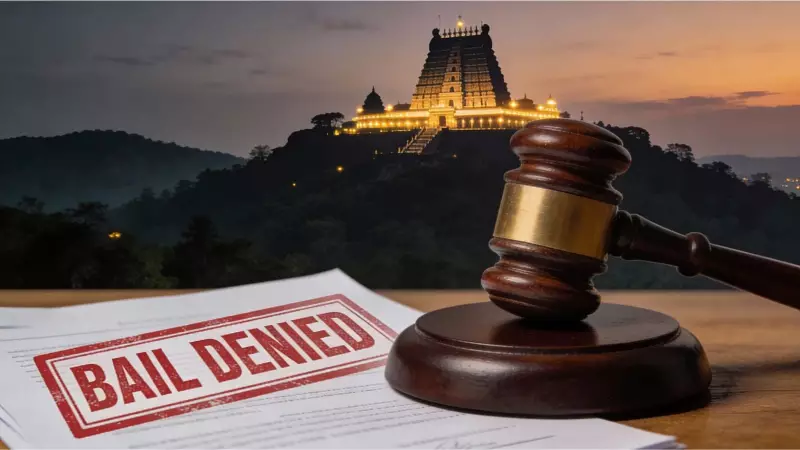
In a significant ruling, the Kerala High Court has refused to grant bail to three accused individuals in the high-profile Sabarimala temple gold theft case. The court, in its order dated December 20, 2025, strongly observed that releasing the accused at this stage would be detrimental to the interests of the holy deity and lakhs of devotees who hold the shrine in reverence.
Court's Stern Observations on Corruption and Investigation
Justice A Badharudeen, while dismissing the bail pleas, delivered a powerful message on handling serious corruption cases. The court described the case as a classic instance where the protectors turned destroyers or guardians became executioners. It emphasized that while bail is typically the rule and jail the exception, serious cases of this nature fall squarely into the category of exceptions where the rule may vanish.
The bench issued a caution against equal moiety, flaws, laziness, and willful lapses during the investigation of serious corruption cases. It stressed the need for a defect-free investigation and successful prosecution. The court warned that if investigations in serious corruption cases are not airtight, the corrupt, including the big guns, would escape the legal process, adversely affecting the country's development, social equilibrium, and economic fabric.

Arguments and Medical Grounds Rejected
The bail petitions were filed by the accused, who are former officials of the Travancore Devaswom Board. They are alleged to have conspired to misappropriate gold belonging to the famed Sabarimala temple. One of the accused, B Murari Babu, aged 75, was represented by advocate S Rajeev. The counsel argued that his client's custodial interrogation was practically over and highlighted Babu's age and medical conditions, including diabetes and high blood pressure, as grounds for bail.
However, the court explicitly stated that age-old ailments like diabetes and hypertension should not be grounds for granting bail in serious corruption cases. It noted that such medical issues can be adequately addressed by jail authorities or the investigating agency with proper care.
Opposing the bail, the state's representative, Additional Director General of Prosecution Gracious Kuriakose, argued that releasing the accused would severely impede the ongoing investigation. He contended that the petitioners were capable of influencing witnesses and destroying crucial evidence yet to be collected.
Broader Implications and Instructions
The court's order carries significant implications for how high-stakes corruption cases involving religious institutions are handled. It instructed the prosecutor and the investigator to remain vigilant in serious corruption cases to prevent the escape of the culprits, safeguard society, and protect broader public interests.
By denying bail, the Kerala High Court has reinforced the principle that the sanctity of public trust, especially in religious institutions, and the integrity of criminal investigations must be upheld above all else in cases of this magnitude. The decision underscores the judiciary's role in ensuring that the process of law is not undermined by those in positions of authority.