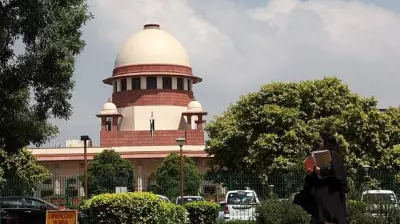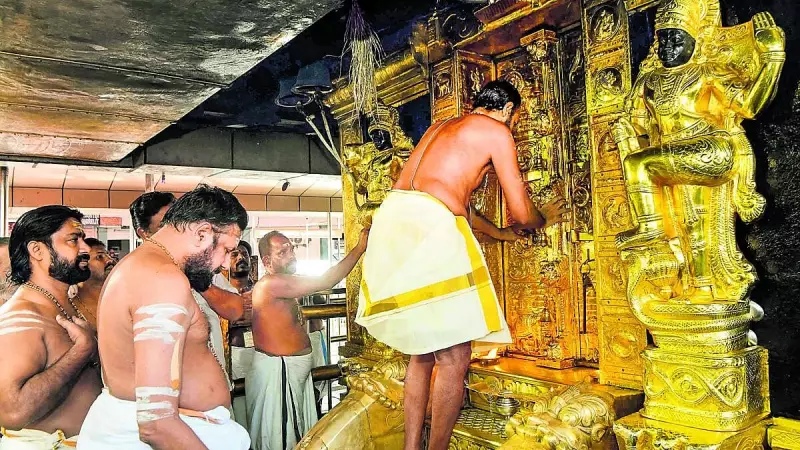
The Kerala High Court delivered a significant setback to the accused in the high-profile Sabarimala gold smuggling case on Tuesday. The court refused to grant bail to former Travancore Devaswom Board (TDB) President N. Vasu and three other individuals linked to the scandal. This decision underscores the gravity of the allegations involving the illegal import of gold through the sacred pilgrimage center.
Court Cites Serious Allegations in Bail Rejection
Justice K. Babu, presiding over the single bench, pronounced the order denying pre-arrest bail to the four petitioners. The individuals affected are former TDB President N. Vasu, former Deputy Chief Engineer V. Sudeep, temple employee S. Vijayan, and a private individual named V. Renjith. The court's decision was heavily influenced by the prima facie evidence presented by the prosecution, which painted a picture of a well-organized operation.
The judge noted that the accusations were of a very serious nature, involving the smuggling of foreign-origin gold by exploiting the trusted systems of the Sabarimala temple. The prosecution successfully argued that the accused had allegedly misused their official positions to facilitate the crime, creating a compelling case for custodial investigation.

The Intricacies of the Sabarimala Gold Smuggling Case
The case, which has sent shockwaves through Kerala, revolves around the smuggling of gold through the Sabarimala temple's 'thattu' (offering) system. The Customs Department initiated the probe after discovering that gold bars, disguised as offerings for the temple's treasury, were being smuggled into the country. Investigations revealed a complex modus operandi where gold was allegedly concealed within specially designed locks and other items meant for the temple.
The prosecution contended that the accused played pivotal roles in this scheme. The alleged involvement of a former TDB president, the body that administers the temple, pointed to a deep-seated exploitation of religious faith and administrative loopholes. The court took cognizance of the fact that the investigation is still ongoing, with agencies looking into the larger network and the final recipients of the smuggled gold.
Legal Proceedings and Future Implications
During the bail hearing, the defense counsel for the petitioners argued for relief, but the court remained unconvinced. The judge emphasized that granting bail at this juncture could potentially hamper the ongoing investigation and influence witnesses. The court also referenced the possibility of the accused tampering with evidence if released.
This ruling is a major development in a case that has significant political and religious ramifications in Kerala. The denial of bail indicates the judiciary's firm stance on crimes that allegedly misuse religious institutions. It keeps the four accused within the legal process as investigative agencies, including the Customs Department, continue to unravel the full extent of the smuggling racket.
The next legal steps for the accused will be closely watched. The case not only highlights issues of smuggling and corruption but also raises critical questions about the security and integrity of management systems in India's major pilgrimage centers. The court's order reinforces the principle that positions of trust, especially in religious administration, carry a heavy burden of accountability.