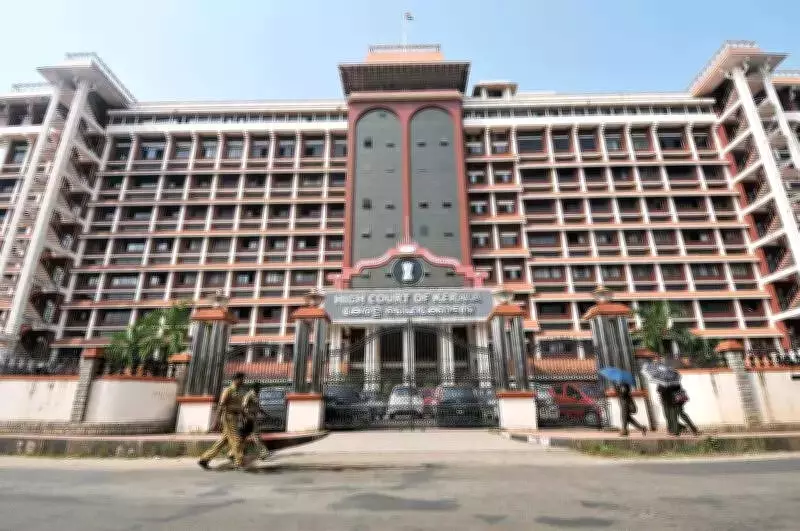
Kerala Government Files High Court Appeal in 2017 Actor Assault Case
The Kerala state government has taken decisive legal action by moving the High Court to challenge the trial court verdict in the highly publicized 2017 actor assault case. This significant development comes after the principal sessions court in Ernakulam delivered its judgment following an exhaustive seven-year trial period.
Contesting Acquittals and Inadequate Sentences
In its comprehensive appeal, the government has raised two primary objections to the trial court's decision. First, it challenges the acquittal of four out of the ten accused individuals, including prominent actor Dileep. Second, the state contends that the sentences awarded to the six convicted accused are highly disproportionate and inadequate, particularly considering the gravity of the offenses committed.
The government's legal plea specifically argues that the convicted individuals received only the minimum prescribed punishment for the principal offense of gang rape. Furthermore, the appeal states that appropriate punishment was not imposed for certain other offenses for which they were found guilty, thereby seeking modification of the sentences to reflect the severity of the crimes.
The Disturbing Incident and Investigation Timeline
According to prosecution details, the horrific incident occurred on February 17, 2017, when the survivor actor was traveling from Thrissur to Kochi for a film shoot. The prosecution alleges that Pulsar Suni, acting pursuant to a criminal conspiracy allegedly hatched with Dileep (the eighth accused), agreed to carry out the crime against the survivor for monetary consideration.
The accused allegedly staged a fake road accident, abducted and wrongfully confined the actor in a vehicle, intimidated and sexually assaulted her, and recorded the entire assault on a mobile phone. The police initially arrested the first six accused, and during subsequent investigation into the alleged conspiracy, the purported role of Dileep was revealed, leading to his arrest along with other accused individuals.
Trial Court Verdict and Government's Legal Arguments
After the lengthy trial, the principal sessions court convicted Pulsar Suni along with five other accused—Martin Antony, B Manikandan, V P Vijeesh, H Salim, and Pradeep—sentencing them to 20 years of rigorous imprisonment along with fines. The remaining accused—Charlie Thomas, Dileep, Sanil Kumar, and Sarat G Nair—were acquitted.
The government's appeal presents several compelling legal arguments. It contends that although the first six accused and Dileep were all alleged participants in the conspiracy to attack the survivor, the trial court erroneously adopted a separate approach and applied different standards when appreciating evidence against the actor.
Evidence and Motive Considerations
Furthermore, the state has claimed that despite presenting ten pieces of evidence to establish the presence of Pulsar Suni at the shooting location of the movie 'Sound Thoma' (in which Dileep played the lead role) to prove the conspiracy, the trial court arrived at what the prosecution considers an erroneous conclusion that this presence was not sufficiently proven.
The appeal also addresses the prosecution's case regarding motive, which rested on the alleged animosity of Dileep toward the survivor. This animosity reportedly stemmed from the breakdown of his marital relationship with his first wife, after she was allegedly informed by the survivor about his illicit relationship with another actress. The prosecution contends that the trial court erroneously appreciated this evidence while acquitting Dileep.
The High Court is likely to consider this significant appeal next week, marking a crucial next chapter in this long-running legal saga that has captured national attention and raised important questions about justice in high-profile criminal cases.