Karnataka Tribunal Upholds Protection of Ecologically Sensitive Kanu Forests
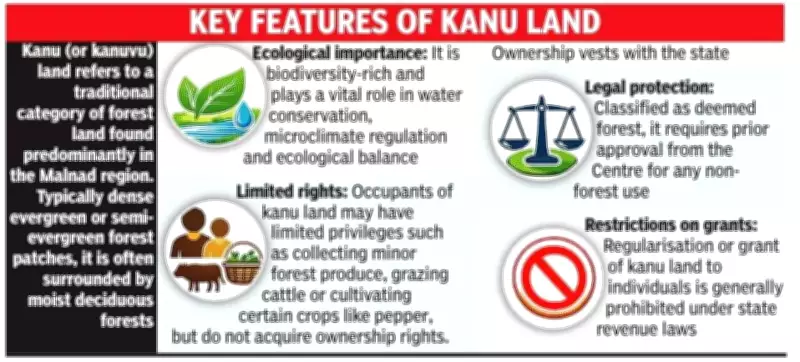
In a landmark decision with significant environmental implications, the Karnataka Appellate Tribunal (KAT) has firmly dismissed an appeal seeking government regularisation of 413 acres of land located in Hireshakuna village within the Soraba taluk of Shivamogga district. The tribunal's ruling reinforces the legal principle that kanu land—classified as ecologically sensitive evergreen forest patches—cannot be diverted or granted for private cultivation purposes.
Statutory Protection Upheld Against Land Grant Cancellation
The tribunal specifically upheld the earlier cancellation of land grants in survey number 113, determining that the area is definitively classified as kanu forest land. This classification affords it statutory protection under both the Karnataka Land Revenue Act and the Forest (Conservation) Act of 1980. The verdict arrives at a critical juncture, as ecologically fragile kanu forests along the Western Ghats region face mounting pressures from various quarters, including:
- Unauthorised cultivation activities
- Infrastructure development projects
- Persistent attempts to regularise parcels through revenue proceedings
While the tribunal did condone a substantial delay of 728 days in the filing of the appeal, it ultimately declined to interfere with the previous orders issued by the Assistant Commissioner of the Sagar sub-division and the District Deputy Commissioner, who had originally set aside the land grants.
Legal Ineligibility and Threats to Forest Survival
The appellants had based their claim on assertions of long-standing occupation and cultivation dating back to before 1991. However, the KAT ruled decisively that the allotted land was unequivocally recorded as kanu across multiple official documents, including:
- Village maps
- Revenue records
- Forest working plans
Consequently, the land was deemed legally ineligible for grant. The tribunal issued a stern warning, stating that if such grants were left unchecked, they would pose a serious threat to the very survival of kanu land ecosystems. It clarified that occupants of kanu land possess only limited privileges regarding forest produce and do not acquire any ownership or cultivation rights. Furthermore, the regularisation of unauthorised occupation on these lands is expressly prohibited under the Karnataka Land Revenue Rules of 1966 and the Karnataka Land Revenue Act.
Additional Legal Violations and Precedent Cited
In its comprehensive ruling, the KAT also highlighted that the land in question falls within a 3-kilometer radius of Soraba town limits. This proximity triggers statutory protections that prohibit the grant of government land within specified distances from town boundaries. The tribunal observed that both the land grant committee and the local tahsildar had ignored these specific prohibitions when initially granting the land.
Referencing the Supreme Court's order in the pivotal Godavarman case and subsequent High Court verdicts, the KAT emphasised that prior approval from the central government is mandatory for any diversion of forest land for non-forest purposes. It pointed out a critical lapse: no such approval was ever sought or obtained in this particular case.
Conservationists Applaud the Ruling
Environmental conservationists have welcomed the tribunal's decision, celebrating it as a significant reaffirmation of the legal safeguards designed to protect kanu land from gradual erosion. They view the ruling as a crucial check against administrative lapses or unlawful regularisation attempts. Additionally, it serves as a cautionary message to revenue authorities, warning them against granting forest land under the guise of regularising unauthorised occupation, thereby strengthening the framework for ecological preservation in Karnataka's vulnerable forest regions.