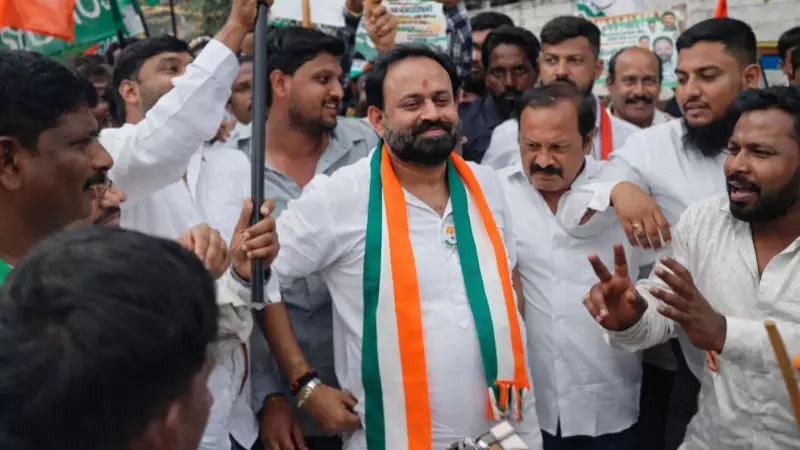
Karnataka High Court Dismisses Congress Leader's Petition in Threat Case Against Municipal Official
The Karnataka High Court has firmly rejected petitions filed by Congress leader Rajeev Gowda seeking to quash First Information Reports (FIRs) registered against him for allegedly abusing and threatening a municipal commissioner over the telephone. The court emphasized that legislators must exercise caution and restraint in their speech, particularly when addressing public servants performing their duties.
Court Questions Premature Relief Sought by Petitioner
Justice M Nagaprasanna, in his detailed order, noted that Gowda sought the relief of quashing the FIRs within just five days of their registration, while the investigation had not yet "meaningfully unfolded." The bench expressed concern that such premature petitions could interfere with proper legal processes.
The case originated from public complaints about unauthorized flex banners promoting a Kannada film displayed in Shidlaghatta town within Chikkaballapur district. Following these complaints, the municipal corporation removed the illegal banners as part of their statutory duty.
Alleged Threatening Phone Call to Municipal Commissioner
According to the prosecution's case, Rajeev Gowda allegedly called Municipal Commissioner Amrutha Gowda to complain about the banner removal. During this conversation, he is said to have shouted expletives at the official and demanded that the banner be returned to its original location.
The police registered a case under Section 132 of the Bharatiya Nyaya Sanhita, which deals with assault or criminal force used to deter a public servant from discharging their duty, along with other relevant provisions of the Act.
Legal Arguments Presented Before the Court
Senior Advocate Vivek Subba Reddy, representing Gowda, argued that no criminal force had been used by the Congress leader to prevent the public servant from performing her duties. He further submitted that his client was willing to tender a public apology for any perceived misconduct.
Additional State Public Prosecutor B N Jagadeesha countered these arguments, stating that the investigation was still at an initial stage. He emphasized that Section 79 of the Bharatiya Nyaya Sanhita could potentially be invoked by police during their investigation based on the words spoken by Rajeev Gowda.
Court's Analysis of Legal Provisions
The bench rejected Gowda's contention that the charges invoked in the FIR were improper, stating clearly: "It is always open to the investigating officer, in the course of investigation, to seek appropriate permission from the jurisdictional Court, for addition of offences, should the material so warrant."
After examining the transcript of the conversation between Rajeev Gowda and the municipal commissioner, along with the complaint placed on record by the prosecution, the bench observed: "The language and tenor attributed to the petitioner would, prima facie, disclose offences under Section 79 of the BNS."
The court expressed surprise that the FIR did not initially contain this particular provision, which deals specifically with words intended to insult the modesty of a woman.
Significance of Section 79 of Bharatiya Nyaya Sanhita
Section 79 of the Bharatiya Nyaya Sanhita mandates punishment for anyone who, intending to insult the modesty of any woman, utters words, makes sounds or gestures, or exhibits objects intending that such words or sounds be heard or such gestures or objects be seen by the woman, or intrudes upon her privacy. The punishment can extend to three years of simple imprisonment along with a fine.
Court's Emphasis on Legislators' Responsibility
In a significant observation, the court highlighted that elected representatives are expected to be circumspect and restrained in their speech, especially when addressing a woman public servant who is merely discharging her statutory responsibilities. This expectation forms part of the decorum and responsibility associated with public office.
Dismissal of Petition and Legal Principles
While dismissing the petition, the court stated: "At the very least, the language employed deserves investigation, as it is a settled principle of law that an FIR is not an encyclopaedia of offences." This reinforces the legal principle that initial complaints need not contain every possible charge, as investigations may reveal additional offenses.
The court also suggested that the state government should strictly enforce laws against illegal banners, flexes, and placards to prevent similar conflicts in the future. This observation underscores the importance of consistent application of municipal regulations to maintain public order and urban aesthetics.
The ruling serves as a reminder about the boundaries of political expression and the legal consequences when such expression crosses into alleged intimidation or threats against public officials performing their lawful duties.