
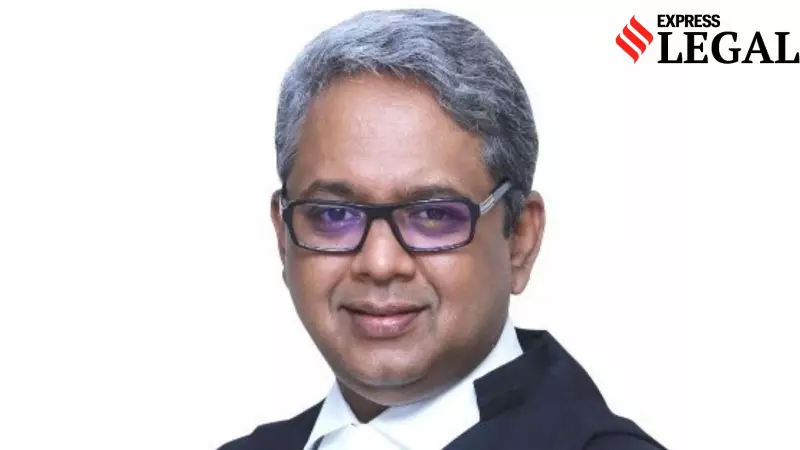
In a significant ruling upholding the fundamental right to practice a profession, the Karnataka High Court has come to the aid of a senior advocate whose application for re-registration was rejected by the state bar council. The court declared that such a refusal constitutes an unreasonable and unconstitutional restriction on rights guaranteed by the Constitution.
Court Upholds Fundamental Right Under Article 19(1)(g)
The bench of Justice Suraj Govindaraj was hearing a writ petition filed by advocate M A Hameed. The petitioner, who had practiced law for over 25 years, had surrendered his sanad (right to practice) during the COVID-19 pandemic and applied for benefits under the Karnataka Advocates Welfare Fund Act, 1983. His surrender was accepted by the Karnataka State Bar Council.
However, when Hameed later sought to withdraw his surrender and have his registration restored, citing changed circumstances, the bar council rejected his request. The council's stance was based on the argument that the 1983 Act does not explicitly provide for the withdrawal of a surrender once it is made.
The High Court firmly rejected this interpretation. It emphasized that the right to practice any profession is a fundamental right protected under Article 19(1)(g) of the Indian Constitution. The court observed that the petitioner's case did not stem from any disciplinary proceedings or findings of professional misconduct, unfitness, or moral turpitude.
Statutory Silence Cannot Extinguish Fundamental Rights
The court delivered a crucial legal principle, stating that statutory silence cannot be construed as a disabling prohibition, especially when such an interpretation leads to the permanent deprivation of a fundamental right. “Such rejection proceeds on the erroneous assumption that statutory silence amounts to statutory prohibition,” the court noted in its order.
Justice Govindaraj held that the regulatory power of the bar council cannot be exercised in a manner that extinguishes a fundamental right in the absence of express statutory sanction. A permanent exclusion from the profession under these circumstances would be “wholly arbitrary and constitutionally impermissible.”
The court highlighted that the refusal to permit re-enrolment resulted in a complete and irreversible deprivation of the petitioner's right to practice law, which was disproportionate to the situation.
Court's Directive and Implications
Consequently, the Karnataka High Court allowed the writ petition. It directed the Karnataka State Bar Council to consider the petitioner's representation and restore his registration or re-register him on its rolls. The order is subject to the condition that Hameed refunds any monetary benefits he received following the surrender of his sanad.
This judgment, delivered on January 5, 2026, reinforces the primacy of fundamental rights over procedural technicalities. It serves as a precedent that administrative bodies cannot hide behind the absence of a specific enabling provision to deny citizens their constitutional rights. The ruling affirms that the right to pursue one's livelihood through a chosen profession is sacrosanct and can only be curtailed under explicitly defined legal circumstances.