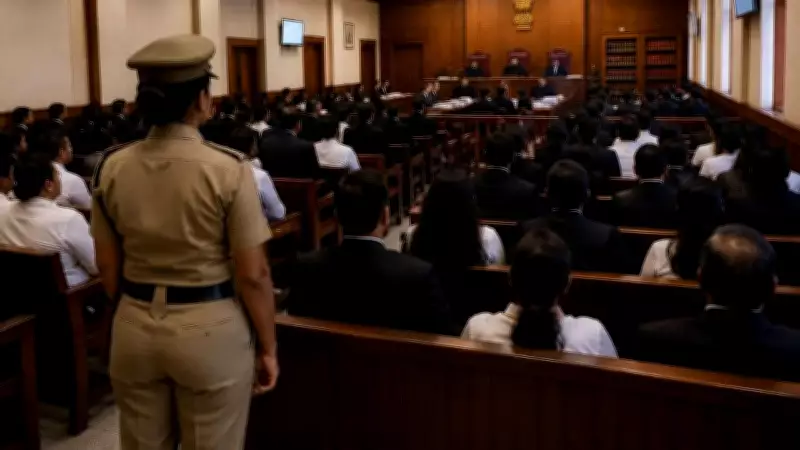
The Karnataka High Court has dismissed a petition filed by a woman Sub-Inspector seeking to quash an FIR lodged against her for allegedly kicking a woman advocate inside a police station. The court also imposed a fine of Rs 1 lakh on the officer for concealing crucial evidence from the court.
Background of the Case
The case originated from an earlier petition filed by a woman advocate who sought to quash an FIR against her for unruly behavior inside a police station following a road rage incident. While hearing that petition on April 17, 2026, Justice M. Nagaprasanna of the Karnataka High Court reviewed CCTV footage from the station, which revealed that the Sub-Inspector had repeatedly kicked the advocate. The court then directed that a criminal case be registered against the police officer, observing that such misconduct could not be addressed solely through a departmental inquiry.
Suppression of Judicial Order
Despite the existence of that earlier order, the officer subsequently approached the high court's vacation bench on May 21, 2026, and secured an interim stay on the investigation without disclosing the prior order that had directed the registration of an FIR against her. When the suppression came to light, the high court took a firm view of the omission. The court observed that a litigant seeking equitable relief must approach the court with clean hands and make full disclosure of all relevant facts.

Court's Findings and Penalty
Justice Nagaprasanna found that the officer had suppressed material facts, which amounted to an abuse of the judicial process and warranted exemplary costs. The court held that such conduct could not be tolerated, especially in cases involving alleged police misconduct and interference with the administration of justice. Rejecting the officer's plea, the court vacated the protection granted earlier and allowed the investigation to proceed.
The court directed the officer to pay Rs 1 lakh as costs to the Karnataka State Legal Services Authority (KLSA) within eight weeks. It emphasized that allegations of assault on a lawyer by a police official could not be brushed aside without a proper probe.
Legal Principles Reinforced
The ruling reinforces the principle that courts will not tolerate suppression of material facts. It serves as a reminder that litigants must approach the court with clean hands and full transparency. The decision underscores the judiciary's commitment to upholding the rule of law and ensuring accountability, particularly in cases involving law enforcement officials.
About the Author: The TOI Legal Desk is a dedicated team of journalists committed to tracking and reporting on courts, legal developments, and judicial proceedings across the country and world.