

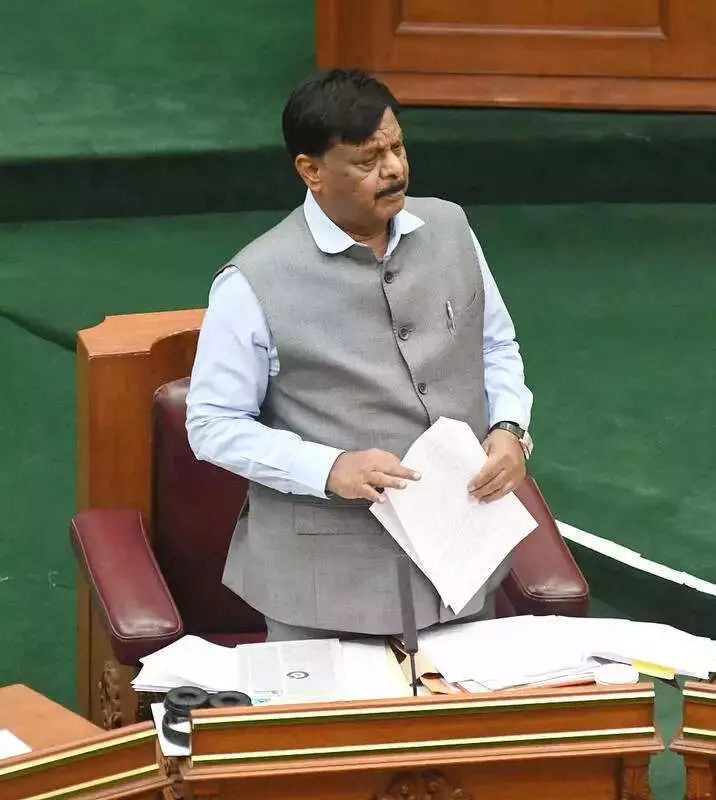
In a significant move to protect marginalized communities, the Karnataka Legislative Assembly in Belagavi unanimously passed a groundbreaking bill on Thursday that makes social boycott a criminal offence. The new legislation aims to eradicate the deep-rooted practice of ostracizing individuals or groups based on caste or class.
A Strong Legal Shield Against Discrimination
The House approved The Karnataka Social Boycott (Prevention, Prohibition and Redressal) Bill, 2025, which was introduced by Social Welfare Minister HC Mahadevappa. During a detailed discussion, Mahadevappa expressed concern that despite existing laws, incidents of social boycott persist. He stated that privileged sections of society often treat underprivileged communities as second-class citizens and exploit them, highlighting the need for a more robust legal framework.
The bill defines social boycott comprehensively, including acts such as:

- Refusing to engage in social or professional dealings with a person.
- Denying employment or business opportunities.
- Boycotting an individual or family within a community.
Those found guilty of committing, aiding, or abetting social boycott face severe penalties: imprisonment of up to three years, a fine of up to Rs 1 lakh, or both.
Empowering Police for Proactive Action
A crucial amendment strengthened the bill's enforcement mechanism. Initially, only victims or their family members could file complaints with the police or a first-class judicial magistrate. However, former Law Minister TB Jayachandra of the Congress pointed out a potential loophole in Clause 12. He argued that in many cases, victims fear retaliation and may not come forward, rendering the law ineffective.
Jayachandra advocated for empowering the police to act on their own whenever instances of social boycott come to light. Minister Mahadevappa accepted this suggestion. Consequently, the bill was passed with an amendment granting police the power to register complaints suo motu (on their own initiative), ensuring stronger implementation and immediate redressal.
Streamlining Healthcare Regulation
On the same day, the assembly also passed The Private Medical Institutions (Amendment) Bill. Piloted by Health and Family Welfare Minister Dinesh Gundu Rao, this bill amends the Karnataka Private Medical Institutions Act, 2007. The amendment aims to widen regulatory oversight and simplify registration procedures for private healthcare facilities.
Minister Rao noted that several private medical institutions, including mental health establishments, previously operated outside the law's purview, creating significant regulatory gaps. The amended law seeks to:
- Bring mental health institutions under a clear regulatory framework.
- Streamline the process for issuing and renewing provisional registration certificates, which faced delays.
- Provide for nominations to the Private Medical Institutions Registration and Grievance Redressal Authority.
The unanimous passage of both bills, with cross-party support, marks a decisive step by the Karnataka government towards strengthening social justice and improving healthcare governance in the state.






