Justice Yashwant Varma Resigns to Avoid Historic Parliamentary Removal Motion
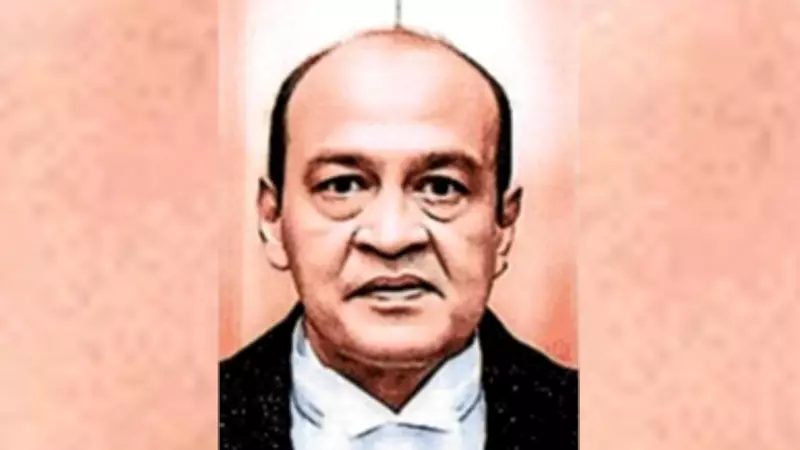
In a significant development in India's judicial history, former Allahabad High Court judge Justice Yashwant Varma resigned on Friday, thereby averting the unprecedented scenario of becoming the first judge to be formally "removed" through a motion adopted by Parliament. His resignation came just as parliamentary proceedings were advancing towards a potential removal, saving him from the considerable embarrassment associated with such an action.
Parliamentary Motion and Constitutional Framework
The Lok Sabha had officially admitted the motion to initiate removal proceedings against Justice Varma in August of last year. According to the established legal framework, the removal of a judge from a constitutional court requires a motion to be endorsed by a minimum of 100 Members of Parliament in the Lok Sabha for adoption. In the Rajya Sabha, the threshold is lower, with only 50 MPs needed to endorse such a motion.
This process is grounded in Article 124(4) of the Constitution, which stipulates that a judge of the Supreme Court or a High Court can only be removed "by an order of the President passed after an address by each House of Parliament." This address must be supported by a majority of the total membership of that House and by a majority of not less than two-thirds of the members present and voting, based on grounds of "proved misbehaviour or incapacity."

Historical Context of Judicial Removal Motions
Prior to Justice Varma, there have been five judges of constitutional courts against whom a removal motion was adopted in Parliament. The first instance dates back to 1991, involving Supreme Court Justice V. Ramaswami. However, he escaped removal because the motion failed to secure the required two-thirds majority in the Lok Sabha.
In 2011, Justice Soumitra Sen of the Calcutta High Court became the first judge against whom the Rajya Sabha voted with the necessary majority on a removal motion. However, he resigned before the motion could be voted on in the Lok Sabha. That same year, Justice P.D. Dinakaran, then Chief Justice of the Sikkim High Court, also resigned before removal proceedings were initiated against him in the Rajya Sabha.
More recently, in 2015, a motion was moved in the Rajya Sabha against Justice J.B. Pardiwala of the Gujarat High Court, who has since been elevated to the Supreme Court. He later removed a controversial statement from his judgment that had prompted the action, thereby escaping the proceedings. Also in 2015, another removal motion was moved in the Rajya Sabha against Justice S.K. Gangele of the Madhya Pradesh High Court, but an inquiry committee ultimately absolved him of sexual harassment charges.
Specifics of Justice Varma's Case
In the case of Justice Yashwant Varma, the Lok Sabha Speaker admitted a motion for his removal on August 12, 2025. Following this, a committee of inquiry was constituted to investigate the allegations. The legality of this committee was upheld by the Supreme Court, ensuring the proceedings adhered to constitutional norms.
The inquiry process is guided by The Judges (Inquiry) Act, which provides for a three-member committee under Section 3(2). This committee typically comprises the Chief Justice of India or a Supreme Court judge, a Chief Justice of a High Court, and a noted jurist. Their role is to probe, based on evidence, whether the judge in question is indeed guilty of "misbehaviour or incapacity."
Justice Varma's resignation effectively halted this inquiry, preventing a full parliamentary vote and sparing him from the distinction of being the first judge removed via this constitutional mechanism. This event underscores the delicate balance between judicial independence and accountability within India's democratic framework.