Justice Nagarathna Condemns Menstrual Taboos in Sabarimala Temple Debate
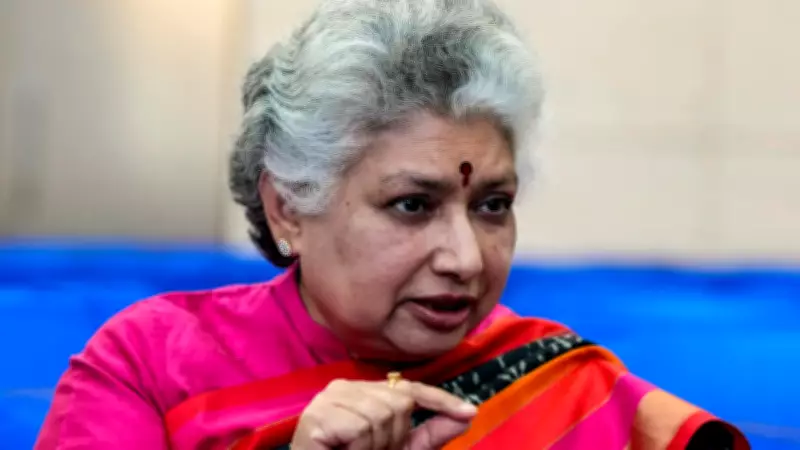
In a landmark constitutional debate over faith versus fundamental rights, Justice B V Nagarathna of the Supreme Court strongly criticized the traditional practice of barring menstruating women from the Lord Ayyappa Temple at Sabarimala. The discussion arose from the court's 2018 decision to strike down the customary ban, with Justice Nagarathna, who is set to become India's first woman Chief Justice in September next year, expressing firm disagreement with the historical treatment of women during menstruation.
Questioning Social Practices and Untouchability
Justice Nagarathna, serving on the nine-judge constitution bench led by Chief Justice Surya Kant, addressed the issue during intense deliberations on equality, religion, and legal principles. She stated, "As a woman, I do not agree" with the social practice that isolated menstruating women, adding, "There cannot be three days of untouchability in a month for women, after which they are treated normal." Her remarks highlighted the deep-seated societal norms that have long marginalized women based on biological processes.
Solicitor General's Defense of Temple Practices
Solicitor General Tushar Mehta challenged the rationality of the 2018 Supreme Court judgment in the Indian Young Lawyer Association vs Kerala case. He argued that applying Article 17, which abolishes untouchability, to the Sabarimala custom stretched jurisprudence beyond its intended scope. Mehta emphasized that women are revered in India, holding positions such as President, Prime Minister, and governors, and that gender equality is a cornerstone of government policies.

Mehta explained that the ban on women aged 10-50 entering Sabarimala is unique due to devotees' belief that the deity Lord Ayyappa is a "naistik brahmachari" (celibate ascetic). He contended that this attribute of the deity should not be subject to judicial testing, warning against the overuse of gender equality as a litmus test in constitutional matters. "Women are equal in every aspect and must be treated equally," he asserted, while defending the temple's distinct practices.
Constitutional Bench Deliberations on Faith and Rights
Justice M M Sundresh noted the Centre's argument that the deity's attributes are intrinsically linked to the faith of Sabarimala devotees, making such beliefs beyond judicial validation. Mehta further described the Sabarimala practice as 'sui generis' (of its own kind), suggesting similar unique attributes exist in other religious institutions. He gave examples like covering one's head in a mazhar or gurdwara, which might conflict with individual rights to freedom of expression.
The bench's proceedings promise to be a thorough exploration of competing constitutional principles, balancing religious freedom with fundamental rights. This debate underscores the ongoing struggle to reconcile traditional customs with modern legal standards in India's diverse societal fabric.