In a significant tribute, a prominent Bangladeshi journalist has publicly honored former Prime Minister Begum Khaleda Zia, describing her as a lasting symbol of inclusiveness and democratic values in the nation's political landscape. The remarks come at a time when the health and political future of the 78-year-old opposition leader remain subjects of intense national discourse.
A Voice from the Media: Pintu's Public Tribute
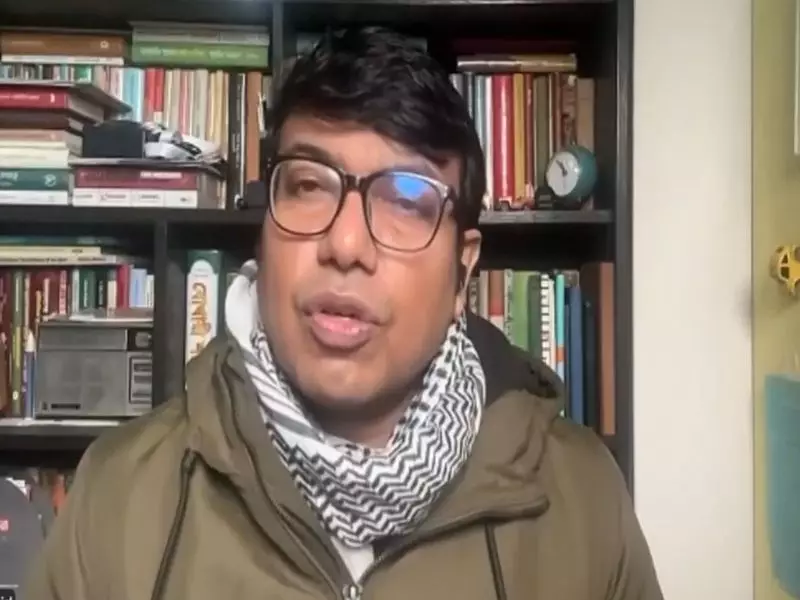
Zayadul Ahad Pintu, a well-known journalist and executive editor of the Bangladeshi news outlet Bangla Tribune, made these observations during a recent television interview. Pintu emphasized that Khaleda Zia's political career and personal conduct have consistently embodied a spirit of inclusivity, setting a standard for democratic engagement.
"She is a symbol of inclusiveness and democracy," Pintu stated unequivocally. He elaborated that her approach has historically welcomed diverse viewpoints and communities, fostering a broader political dialogue. This public acknowledgment from a media figure underscores the complex legacy of the former prime minister, who leads the Bangladesh Nationalist Party (BNP).
Context: Health, Politics, and a Nation's Attention
The journalist's comments are set against a backdrop of ongoing concern for Khaleda Zia's health. The BNP chairperson has been grappling with serious liver complications and other age-related ailments for several years. Her medical treatment has been a contentious political issue.
Currently, Khaleda Zia is receiving medical care at Evercare Hospital in Dhaka. She was admitted there on August 9 after being diagnosed with liver cirrhosis. Her medical board has indicated that a liver transplant may be necessary, a procedure that cannot be performed within Bangladesh. This has led to repeated appeals from her family and party for the government to permit her to travel abroad for advanced treatment.
The ruling Awami League government, led by Prime Minister Sheikh Hasina, has previously allowed Khaleda Zia to receive medical treatment at home under special conditions, suspending her prison sentence in a corruption case. However, permission for foreign travel has not been granted, with legal complexities cited as the reason.
Legacy and the Current Political Divide
Khaleda Zia, who served as the Prime Minister of Bangladesh from 1991 to 1996 and again from 2001 to 2006, is one of the two most dominant political figures in the country's modern history, alongside her long-time rival Sheikh Hasina. Pintu's characterization of her as a symbol of inclusiveness touches upon a key aspect of her political identity, often highlighted by her supporters.
This portrayal stands in contrast to the narrative often presented by her political opponents. The journalist's intervention brings the discussion back to her perceived democratic credentials and unifying potential, even as the nation remains sharply polarized between the two major political camps.
The public discourse around her health and legacy continues to influence Bangladesh's volatile political environment. As the next general election cycle approaches, the status and perception of key opposition figures like Khaleda Zia remain critically important. Tributes such as Pintu's serve to remind the public of the historical roles these figures have played beyond the immediate political fray.
Ultimately, the journalist's words highlight a figure who, whether in office or in opposition, in health or in illness, continues to command attention and symbolize a significant strand of Bangladesh's democratic aspiration for millions of her followers.