Jharkhand High Court Upholds Divorce, Cites 'Dead Wood' Marriage
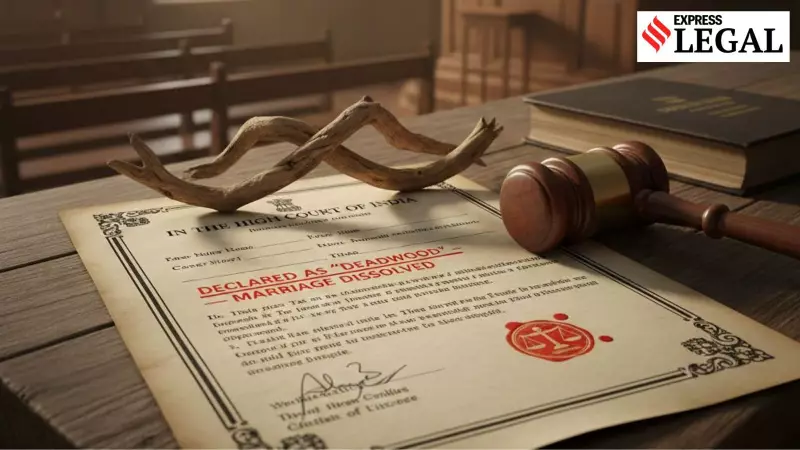
The Jharkhand High Court has made a significant ruling in a family dispute. It dismissed a wife's appeal against a divorce decree granted to her husband. The court described their marriage as a "dead wood" relationship. This term means the marriage had lost all emotional and practical value.
Court Orders Monthly Alimony of Rs 35,000
The bench, comprising Justices Sujit Narayan Prasad and Arun Kumar Rai, issued clear directives. They ordered the husband, a constable in a para-military force, to pay monthly alimony. The amount is set at Rs 35,000. This payment aims to secure the future of the couple's 15-year-old daughter.
The court specified the breakdown of this amount. Rs 25,000 will go to the wife, and Rs 10,000 is for the daughter. This arrangement will continue until the daughter reaches the age of majority. After that, the daughter's portion will be deposited directly into her own account.
The court also included a provision for inflation. The awarded amount will increase by 5% every two years. In case of non-payment, the wife has the right to initiate legal proceedings.
Rationale Behind the 'Dead Wood' Decision
The court explained its reasoning in detail. It stated that forcing a couple to remain in a lifeless marriage only prolongs their suffering. The judges emphasized that no purpose is served by continuing such a union.
Several factors contributed to this classification. The couple had been separated for a prolonged period. The husband has since remarried and has a son from his second marriage. The court found no possibility of reconciliation between the original spouses.
The welfare of the child was a primary consideration. The court noted that a female child requires financial support for her education, upbringing, higher studies, and marriage. It stressed that the child should not suffer due to the dissolution of her parents' marriage.
The bench affirmed the father's duty to maintain his daughter. It stated he must discharge his accountability to help her become a responsible member of society.
Background of the Marital Dispute
The couple married on November 23, 2008, in Rohtas, Bihar, according to Hindu rites. They have a daughter who is currently a minor and lives with her mother.
The husband alleged severe issues in the marriage. He claimed his wife frequently used abusive language against him and his family members. He also accused her of making derogatory remarks and disrupting peace at home.
Despite attempts at reconciliation, the situation worsened. On September 16, 2014, the wife left the matrimonial home with her parents and the child without his consent. Following this, she filed criminal complaints and maintenance proceedings in Bihar and Jharkhand.
The husband approached the family court, which granted him a divorce in April 2023. The divorce was granted on the grounds of cruelty under the Hindu Marriage Act, 1955. After obtaining the divorce, the husband remarried, and a boy was born from this second marriage last year.
Dissatisfied with the family court's decision, the wife appealed to the High Court.
Arguments Presented in Court
Advocate Vijay Bahadur Singh represented the wife. He argued that reconciliation was impossible, especially as the husband was allegedly in an illicit relationship. Singh focused on the quantum of alimony and maintenance, highlighting that the minor daughter resides with the mother.
Advocates Robin Kumar, Nishi Rani, and Akanksha B Raje appeared for the husband. They presented his financial constraints. The husband has several dependents, including an ailing father suffering from paralysis, a separated sister with two children, his second wife, and his son.
The Jharkhand High Court delivered this judgment on January 8, 2026. It reinforces the legal principle that marriages without substance should not be forced to continue. The ruling balances the dissolution of a broken marriage with the ongoing responsibility towards children.