Jaipur Literature Festival Panel Condemns Israel's Gaza Actions as Genocide
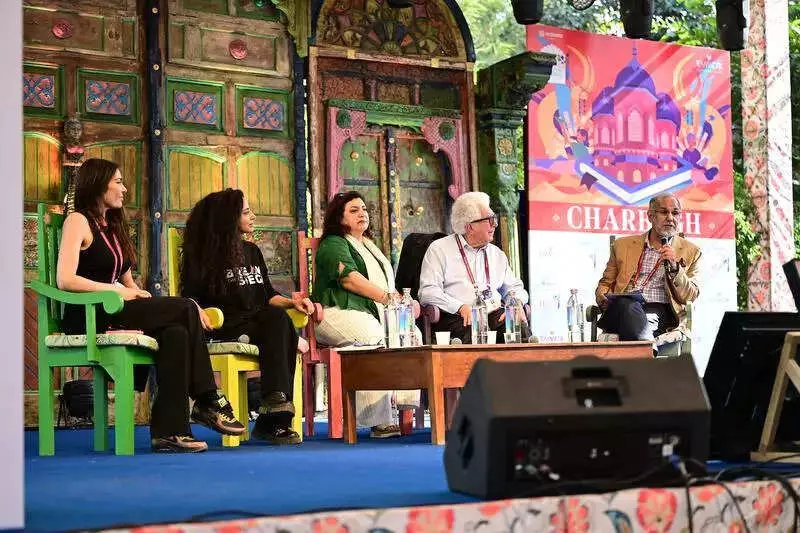
Speakers at the Jaipur Literature Festival delivered powerful statements on Saturday. They participated in a session titled "Gaza Genocide." The panelists described Israel's actions against Palestinians as genocide. They called for global acknowledgment of this reality. They also urged sustained civil society engagement worldwide. Their goal is to ensure such atrocities are never repeated.
Panelists Present Their Case
The session featured several prominent voices. Former diplomat Navdeep Suri moderated the discussion. Historian Avi Shlaim, activist Noa Avishag Schnall, journalist Ramita Navai, and writer-poet Lena Khalaf Tuffaha formed the panel. They addressed a packed audience at the festival.
Panelists presented a clear argument. They stated the violence in Gaza meets the definition of genocide under international law. They pointed to the scale of the violence. They highlighted the systematic nature of the actions. They emphasized the intent behind them. The speakers called it the world's first live-streamed genocide. They claimed Israel planned this for years.

Historical Context and Universal Standards
Israeli-British historian Avi Shlaim spoke about historical precedent. He referenced the 1948 Genocide Convention. This convention emerged after the Holocaust. Its core principle is "never again." Shlaim argued this principle must apply universally. It should not be selective in its application.
"The same standards must apply to all states," Shlaim stated firmly. He asserted that Israel's rhetoric and actions fulfill multiple criteria outlined in the convention. His comments underscored a demand for consistent application of international law.
First-Hand Accounts from Activists
Activist Noa Avishag Schnall shared personal experiences. She described a freedom flotilla mission to Gaza in October. Activists undertook a non-violent humanitarian journey. Israeli forces intercepted them. They were detained and abused according to her account.
Schnall made an important distinction. She stressed their suffering was insignificant compared to daily Palestinian life. Palestinians endure occupation and siege constantly. She called for widespread discussion of this genocide.
"This genocide should be talked about by students, women, and professionals, irrespective of how far away you are from their geography," Schnall said. She responded to a question about civil society action in nations like India. "Our role is to amplify Palestinian voices and resist the erasure that makes genocide possible," she added.
Targeting of Healthcare and Media Criticism
British journalist Ramita Navai discussed her documentary work. She focused on attacks against Gaza's healthcare system. Navai alleged systematic targeting by Israeli forces. Doctors, hospitals, and medical infrastructure faced deliberate attacks.
She reported that dozens of Palestinian doctors were detained. They were tortured and later released without charge. Navai also criticized Western media institutions sharply. She accused them of self-censorship when reporting on Israel-Palestine issues.
Distinguishing Ideology from Religion
Arab American poet Lena Khalaf Tuffaha highlighted a crucial distinction. She emphasized the difference between Judaism and Zionism. Challenging Zionism is not antisemitism but a political stance.
"Challenging Zionism is a moral and political responsibility," Tuffaha declared. She explained that Palestinian erasure begins with denial. This denial targets language, culture, and basic humanity. The panel collectively criticized Western governments.
They accused these governments of hypocrisy and complicity. Unconditional diplomatic and military support enables continued violations of international law. The speakers argued this support must end to achieve justice.