The Devastating Reality of Instant Triple Talaq
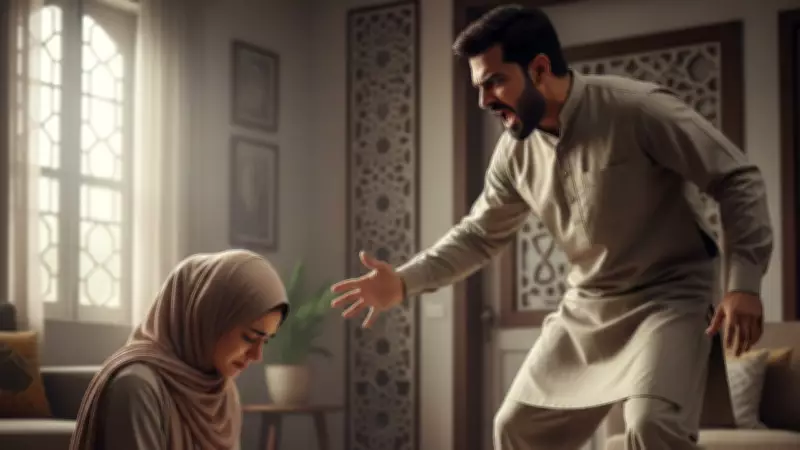
Instant triple talaq represents far more than an abstract religious practice—it constitutes a brutal exercise of power that shatters lives within moments. When a husband pronounces those three words, a woman can instantly lose her home, financial security, and entire future. This practice creates immediate devastation that extends far beyond the marital relationship.
Lives Destroyed in Seconds
Nazreen Ansari, national president of the Muslim Mahila Foundation, describes the heartbreaking reality: "Some marriages last only six months, while others endure for ten years. Regardless of duration, everything can end in a single moment." She recounts particularly disturbing cases, including one where a husband living in Saudi Arabia divorced his wife through an email message. "The woman was uneducated and completely helpless—she possessed no means to seek justice or support herself."
When marriages end so impulsively, women bear the full impact of the consequences. Joint bank accounts freeze immediately, bills accumulate rapidly, and societal pressure to "adjust" often translates into suffering silently to avoid public scandal. Even when adult children or parents exist, practical support frequently evaporates under social pressure.
The Economic Freefall
Priyanka Sharma, counselor at Shanti Sahyog, explains the gendered impact: "Who bears the blow of these impulsive actions? Always the woman. The man can simply walk away, but her family may refuse to allow her to remarry, leaving her in permanent limbo."
The fundamental questions become painfully practical: Where will she go? and Who will pay her expenses? This isn't courtroom theater but a doorstep disaster manifesting as ration lists being slashed, landlords demanding overdue rent, school fees piling up unpaid, and phones buzzing with judgment-laden sympathy.
At the heart of this crisis lies a concept India continues to struggle with emotionally: maintenance represents legal recognition rather than charity. It acknowledges that unpaid domestic labor, shared households, and dependent lives don't simply disappear when a husband declares the marriage over.
When Survival Becomes Political
Yet repeatedly, a woman's basic survival claims—for food, shelter, medicine, children's education—get reframed as political disputes about identity, community autonomy, and state boundaries. While this topic has long captured public attention, recent discourse has intensified with the release of the film 'Haq,' bringing these issues back into public consciousness.
The Doorstep Economy Versus Courtroom Debates
In separation and divorce scenarios, losses prove immediate and material. Women describe sudden cash flow stoppages, inaccessible joint accounts, persistent monthly expenses, and intense social pressure to "adjust" because litigation risks public scandal.
Priyanka Sharma recalls a representative case: "I remember one woman who faced triple talaq pronounced in anger. Her husband said it impulsively. Later, her parents insisted she reconcile, but she had already endured tremendous suffering. In such situations, women suffer most, pressured by both society and family."
For many women, the marital home represents not just residence but the only affordable shelter available. Sharma elaborates: "The man can break away from the marriage, but frequently the woman's family won't permit her to remarry someone else, trapping her in economic dependency."
The Halala Exploitation
Nazreen Ansari highlights another disturbing dimension: "If the husband later regrets his decision and wishes to return, the practice of halala becomes another form of exploitation for women." This religious requirement for remarriage often places women in vulnerable positions.
Ansari poses critical questions about long-term sustainability: "Even after complete marriage dissolution, how long can a woman support herself? How long can her parents care for her and her children?" These uncertainties define the fates of countless women.
Why Maintenance Matters
For women who haven't been earning or earn insufficiently to restart life overnight, maintenance represents the crucial barrier between dignity and destitution. The political controversy emerges when this basic safety net gets framed not as essential protection in a modern republic but as state intrusion into personal law.
Intervention and Reconciliation Efforts
Both Nazreen Ansari and Priyanka Sharma have handled numerous triple talaq cases, some arriving before divorce proceedings and others afterward. Sharma describes their approach: "We first ask women what they want—whether they wish to continue living with their families. Then we arrange counseling sessions with both parties. Many families reconcile and continue together after such interventions." When reconciliation fails, cases get referred to CAW Cells or legal authorities.
Ansari shares two contrasting cases: "In the first, a woman I knew personally was expecting her first child when her husband stopped speaking to her under family pressure. We guided her to family court, and eventually the couple reconciled, now living happily with two children."
"In the second case," she continues, "a woman abandoned by her husband had no means to support herself or her child. Initially dependent on parents, we counseled her and helped establish a small shop. Today she's financially independent and raising her child alone."
Section 125: The Legal Flashpoint
Within India's legal system, Section 144 of the Bharatiya Nagarik Suraksha Sanhita (formerly Section 125 of the Criminal Procedure Code) functions as an anti-destitution measure designed to prevent dependents—wives, children, parents—from being abandoned without support.
Its logic remains secular: the state intervenes so private abandonment doesn't create public poverty. However, when religious minority women invoke this uniformly-applied provision, arguments quickly shift from home to identity politics. Critics perceive state imposition of uniform morality, while supporters view it as the state finally protecting vulnerable citizens regardless of faith.
The woman herself typically seeks something less philosophical: a sum sufficient to keep her family afloat.
The Shah Bano Watershed
The Shah Bano case became a national turning point by exposing these questions to intense scrutiny. Shah Bano Begum, an elderly divorced Muslim woman, sought maintenance under Section 125 CrPC. The Supreme Court ultimately ruled in her favor, affirming that religion-neutral maintenance provisions could apply and that preventing destitution represented both constitutional and civic concern.
The verdict signaled that equality and welfare language could reach into domains governed by religious personal law. While women's rights advocates celebrated overdue justice, many within the community perceived a warning: if the state could intervene on maintenance, what might come next? These political anxieties transformed a maintenance dispute into a referendum on minority identity and state power.
Political Backlash and Dilution
The Shah Bano backlash proved swift and powerful. Protests, public mobilization, and political messaging turned the case into a government pressure test: support the court's expansive reading of women's protection or defuse community anger by narrowing the verdict's effect.
Parliament responded with the Muslim Women (Protection of Rights on Divorce) Act, 1986, widely criticized as diluting the Supreme Court's reasoning. Though courts later interpreted the law to maintain destitution-prevention goals, the damage to the broader principle was done. The episode demonstrated that even the highest court's gender-justice moments could be politically managed into diminished outcomes.
Triple Talaq: Words as Weapons
Decades after Shah Bano, the conversation returned through instant triple talaq—pronouncement thrice in one sitting, treated by some as immediate marriage termination. For women, the complaint involved not abstract theology but lived harm: marriages ended abruptly without due process or meaningful negotiation, pushing women into economic and social freefall.
Moral and political arguments divided predictably: reformers called the practice arbitrary and cruel, while defenders warned against state interference and majoritarian impulses. The practical urgency remained: instant divorce multiplied vulnerability for women with limited income, family support, and legal access.
Legal Evolution
Legal change occurred in two phases. First, in 2017, the Supreme Court set aside instant triple talaq, holding it couldn't survive constitutional scrutiny. Essentially, the practice was invalidated—pronouncement alone couldn't instantly dissolve marriages while leaving women unprotected.
Second, in 2019, Parliament enacted legislation making instant triple talaq pronouncement void and illegal, adding criminal penalties. This raised new, politically charged questions: Should civil vulnerability be addressed through criminal law? Supporters argued strong deterrence was necessary after prolonged neglect, while critics warned criminalization could harden family conflicts, enable misuse, and complicate maintenance needs by involving criminal justice systems.
The Unresolved Implementation Challenge
Law on paper represents only the beginning. Lived reality depends entirely on access: whether women can find lawyers, afford repeated court dates, approach police stations as protection rather than intimidation, resist family pressure for unfavorable settlements, and actually enforce maintenance orders.
Politically, personal law reform remains high-voltage territory. Every intervention gets interpreted through partisan lenses, every verdict packaged into slogans, and every woman entering the system quietly bears the weight of national arguments she didn't start.
Returning to the Doorstep
India's grand debates about personal law, religious law, and minority rights ultimately arrive at women's homes in small, sharp forms: neighbors' whispers, relatives' ultimatums, landlords' deadlines.
The questions women actually live with don't concern whether India will eventually adopt uniform family law. They worry whether their children can remain in school, whether they can afford medicine, and whether they'll have a bed to sleep on next month. In India's personal-law battles, the loudest slogans rarely address what actually keeps women housed and fed.