In a dramatic development that has sent shockwaves through Pakistan's political landscape, former Prime Minister Imran Khan has been handed a severe 17-year prison sentence. The verdict, delivered by an accountability court in Islamabad, stems from the high-profile Toshakhana corruption case, marking a significant escalation in the legal troubles facing the embattled cricketer-turned-politician.
The Verdict and Its Immediate Aftermath
The court, presided over by Judge Mohammad Bashir, announced the sentence on January 31, 2024. The ruling not only imposes a lengthy prison term but also includes a disqualification from holding any public office for a period of ten years. Furthermore, the court imposed a hefty fine of 1.37 billion Pakistani rupees. In a swift follow-up action, the National Accountability Bureau (NAB) arrested Khan from Adiala Jail, where he was already incarcerated in connection with the cipher case.
This case, officially known as the Toshakhana II reference, accused Imran Khan and his wife, Bushra Bibi, of unlawfully retaining state gifts. The charges alleged that gifts received from the Toshakhana, a state repository for presents given to government officials by foreign dignitaries, were sold for substantial personal profit without declaring them properly. The prosecution argued that this constituted a corrupt practice and abuse of authority.

Khan's Defiant Response and Call to Action
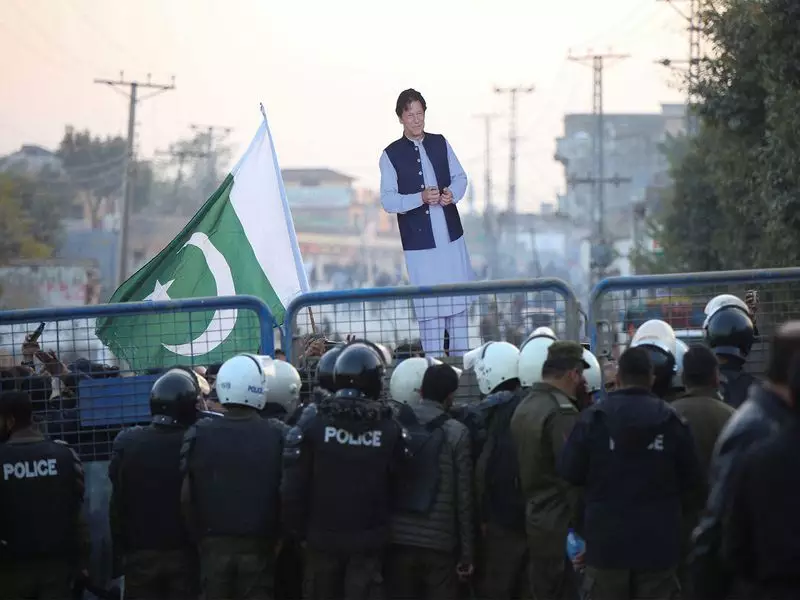
Reacting with characteristic defiance, Imran Khan immediately rejected the verdict, labeling it a "sham" and politically motivated. From behind bars, he issued a powerful call to his supporters, urging them to stage peaceful nationwide protests. In a statement released by his Pakistan Tehreek-e-Insaf (PTI) party, Khan framed the sentence as part of a broader campaign to sideline him and his party from the political arena, especially ahead of the crucial general elections.
The PTI has vehemently condemned the sentencing, declaring it a predetermined outcome designed to crush political opposition. Party leaders have alleged a complete absence of a fair trial, citing the rushed nature of the proceedings and the denial of Khan's fundamental right to a defense. They have vowed to challenge the decision in higher courts, asserting their confidence that it will be overturned.
Political Repercussions and a Nation on Edge
This verdict plunges Pakistan into deeper political turmoil. With general elections looming, the disqualification of the country's most prominent opposition leader fundamentally alters the electoral dynamics. The sentence intensifies the existing climate of polarization and raises serious concerns about political victimization and the state of judicial independence.
Security has been tightened across major cities, particularly in Islamabad, Rawalpindi, and Lahore, as authorities brace for potential unrest following Khan's protest call. The situation presents a severe test for the interim government, which must balance maintaining law and order with upholding democratic norms. International observers and human rights organizations are closely monitoring the developments, with many expressing apprehension about the state of democracy and civil liberties in Pakistan.
The Toshakhana case verdict against Imran Khan is more than a legal judgment; it is a seismic political event. It consolidates his transformation from a sitting prime minister to a convicted prisoner and sets the stage for a period of intense confrontation. As his party mobilizes its base and legal appeals are prepared, Pakistan stands at a volatile crossroads, with the nation's immediate future hanging in the balance.