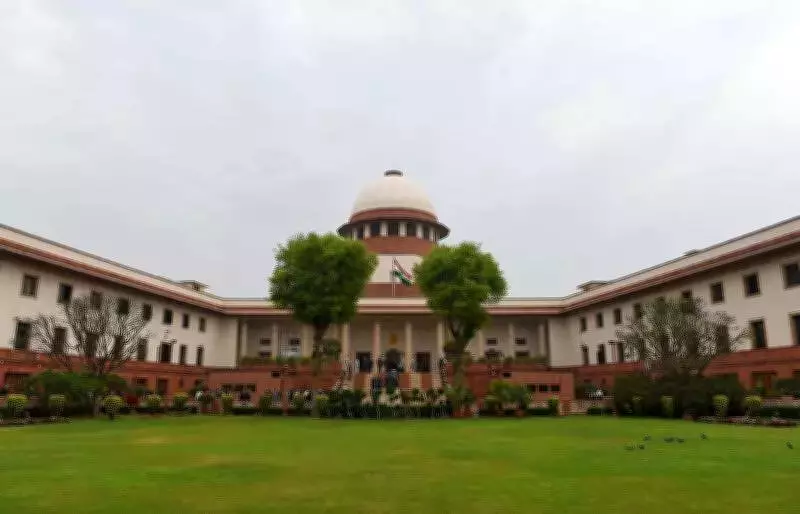
The Himachal Pradesh government has approached the Supreme Court of India, filing a special leave petition to challenge the state high court's January 9 judgment that mandated the completion of panchayat elections before April 30. This legal move comes as the state grapples with complex constitutional questions regarding electoral processes during ongoing disaster conditions.
Legal Grounds for the Challenge
In the petition filed on Tuesday, the state government has raised two significant legal arguments against the high court's directive. The primary contention questions whether the state election commission, as a statutory constitutional body, can legally proceed with panchayati raj institution elections while the Disaster Management Act of 2005 remains actively enforced in Himachal Pradesh due to prevailing disaster conditions.
The government has argued that conducting elections amid such circumstances could potentially undermine the statutory disaster management provisions legislated by Parliament. This position reflects concerns about balancing democratic processes with public safety and legal compliance during challenging environmental conditions.
Contradiction with Previous Judgment
The second key argument presented by the state government highlights that the recent high court ruling contradicts a 2021 judgment on the same issue. The earlier verdict had established a different legal framework and timeline for holding PRI polls, creating what the state contends is a legal inconsistency that warrants Supreme Court intervention.
The petition further claims that the high court did not sufficiently consider ground realities, particularly the impact of last year's monsoon-related disasters, while delivering its judgment. The special leave petition is expected to come up for hearing before the apex court later this week.
Background of the Legal Dispute
In its January 9 judgment, the high court had rejected the state government's justification for postponing the PRI elections. The court specifically dismissed reliance on an October 8, 2025, order issued by the chief secretary as chairman of the state disaster management authority, which had cited extensive monsoon damage as a reason to defer elections.
The high court made it clear that the order passed by the SDMA chairman cannot have an overriding impact on the functioning of constitutional machinery, particularly the state election commission. This established a significant precedent regarding the relationship between disaster management authorities and electoral bodies.
Current Status of Panchayat Institutions
Except for a few segments in Chamba, Lahaul-Spiti and Kullu districts, the five-year term of 3,577 gram panchayats, 90 panchayat samitis, and 11 zila parishads in Himachal Pradesh has already ended as of January 31. This creates an urgent governance vacuum that requires resolution through either elections or alternative administrative arrangements.
The state government has established committees to exercise all powers and functions of these panchayati raj institutions until newly elected representatives can assume office. This interim arrangement aims to maintain administrative continuity while the legal questions are resolved through proper judicial channels.
The case represents a significant constitutional question about balancing electoral democracy with disaster management priorities, particularly in a state like Himachal Pradesh that frequently faces environmental challenges. The Supreme Court's eventual ruling will likely establish important precedents for how similar situations should be handled across India in the future.