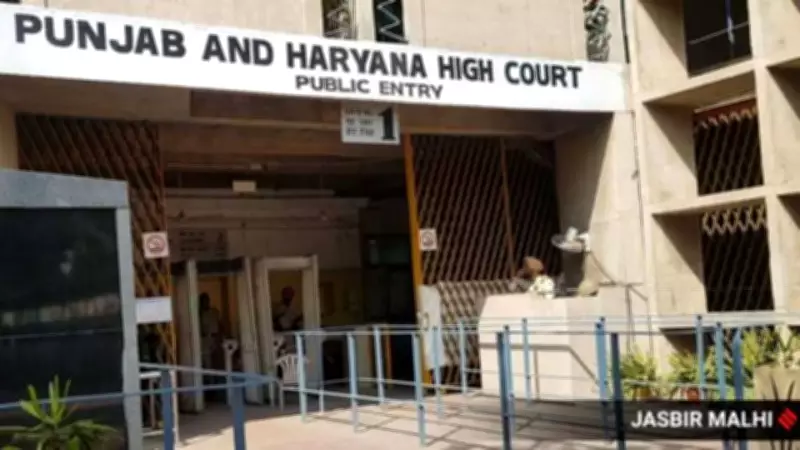
The Punjab and Haryana High Court has issued a significant directive, calling upon the states of Punjab and Haryana to collaboratively prepare and submit a detailed comparative statement outlining the eligibility norms for the remission and premature release of prisoners. This judicial move comes in response to the court's observation that the two neighboring states are operating under distinctly different legal and policy frameworks, leading to inconsistencies in how prisoner eligibility is assessed and determined.
Court's Concern Over Divergent State Policies
During a resumed hearing on Monday, a Bench led by Chief Justice Sheel Nagu expressed deep concern over the lack of uniformity in remission practices. The Bench pointed out that effective judicial monitoring of these policies would be impossible without a clear understanding of whether the existing state practices are in full compliance with the law. "We have been asked to monitor. How will we monitor unless we know whether what you are doing is correct or in accordance with law?" the Bench remarked, highlighting the necessity for transparency and legal adherence.
Background and Supreme Court's Directive
The issue was brought before the High Court as part of a broader judicial initiative spearheaded by the Supreme Court. The apex court had taken suo motu cognisance of concerns related to the remission and premature release of inmates, directing all High Courts across the country to oversee and track the implementation of such policies. This directive is a key component of wider jail reform measures aimed at addressing systemic issues such as prison overcrowding and procedural delays.
State-Specific Frameworks and Chandigarh's Position
The court noted a critical divergence in how remission is handled. The Union Territory of Chandigarh aligns its policies with those of Punjab, whereas Haryana operates under a separate statutory regime. This discrepancy results in significant variations in eligibility assessment, creating potential inequities in the treatment of prisoners across the region. "It appears that the Union Territory, Chandigarh, follows the policy of the State of Punjab, while the State of Haryana follows a different policy," the court recorded, underscoring the need for a harmonized approach.
States' Responses and Judicial Directive
In response to the court's queries, Punjab informed the Bench that it is implementing its Premature Release Policy dated December 14, 2017. Haryana, on the other hand, stated that it is guided by the Haryana Prison Rules, 2022, which are framed under the Prison Act. Seeking clarity and a standardized benchmark, the Bench has directed both states to jointly prepare a comprehensive comparative chart. This chart must detail the eligibility conditions under their respective executive instructions and statutory rules.
The court has mandated that this comparative document, along with supporting affidavits, be submitted within three weeks. This submission is intended to facilitate thorough judicial monitoring of remission and premature release policies, ensuring that they are applied consistently, timely, and equitably.
Broader Implications for Prison Reform
This suo motu proceeding is part of a larger effort by the Supreme Court to reform the prison system across India. Earlier, the apex court had requested Chief Justices of High Courts to initiate suo motu writ petitions and constitute division benches to supervise the implementation of remission and premature release policies. The goal is to promote uniformity, reduce overcrowding, and eliminate delays, thereby upholding the rights and welfare of inmates.
The High Court's directive to Punjab and Haryana marks a pivotal step towards achieving these objectives, emphasizing the judiciary's commitment to ensuring that state practices align with legal standards and promote justice within the correctional system.