
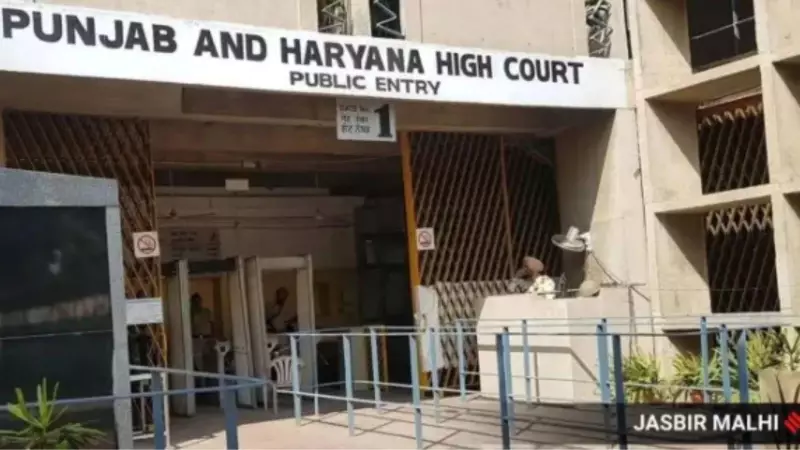
High Court Seeks Haryana's Reply on Prosecution Rules Challenge
The Punjab and Haryana High Court has taken up a significant legal challenge. On Monday, the court issued a formal notice to the Haryana government. This action follows a writ petition filed by a senior advocate. The petition questions recent amendments to the state's prosecution service rules.
Bench Admits Petition, Directs State Response
A division bench comprising Justice Ashwani Kumar Mishra and Justice Rohit Kapoor admitted the petition. The bench directed the Haryana state government to file its response. The petitioner argues the amended rules create a separate and discriminatory class of advocates. This classification allegedly takes away rights from advocates with fifteen years of experience.
The petitioner is Pardeep Kumar Rapria. He is a practicing advocate with more than eighteen years of legal experience. Rapria appeared before the court in person. He has previously appeared before both the high court and the Supreme Court. He has also served as a law officer with national agencies.
Challenging the 2025 Amendment Rules
In his petition, Rapria specifically challenges the Haryana State Prosecution Legal Services (Group A) Amendment Rules, 2025. The state notified these rules on December 18, 2025. The advocate also questions a promotion order dated December 31, 2025. This order elevated several serving officers to the post of deputy director of prosecution.
Rapria contends the state amendments contradict central law. He cites Section 20 of the Bharatiya Nagarik Suraksha Sanhita, 2023. This central law replaced the Code of Criminal Procedure. The provision states clear eligibility criteria for senior prosecution posts.
A person can be appointed as director or deputy director only if they have practiced as an advocate for at least fifteen years. Alternatively, they must have served as a sessions judge. For the post of assistant director, the requirement is a minimum of seven years of advocacy practice. Experience as a first-class magistrate also qualifies.
Allegations of Exclusion and Violation
The petitioner argues the amended state rules allow senior posts to be filled entirely through internal promotion. They can also be filled by transfer or deputation from other governments. This system effectively excludes private practicing advocates. These advocates otherwise fulfil the eligibility conditions under the central law.
Rapria describes the amendments as being beyond the legislative competence of the state government. He argues they are void from the outset. Subordinate legislation framed by the state cannot override or contradict a central statute, according to his petition.
The petition further states the December 31 promotion order was issued without any public advertisement. The state did not invite applications from eligible advocates. Rapria calls this process opaque and arbitrary. Around twenty-four serving officers were promoted through this order. Their names are now arrayed as private respondents in the case.
Petitioner's Qualifications and Demands
The petitioner submits that he fulfils the fifteen-year experience requirement. He also holds additional postgraduate qualifications. These include diplomas in cyber law and intellectual property law.
Rapria seeks the quashing of both the amendment rules and the promotion order. He contends they violate constitutional guarantees of equality and equal opportunity in public employment. These guarantees are enshrined under Articles 14 and 16 of the Constitution.
The advocate has also sought an interim stay. He wants the court to halt the operation of the rules and the promotion order during the pendency of the case.
Court's Next Steps
The Punjab and Haryana High Court has now formally sought the state government's reply. The matter is expected to be listed for further hearing after the state files its response. This case highlights an important tension between state rules and central legislation. It also raises questions about fair access to public employment for qualified legal professionals.