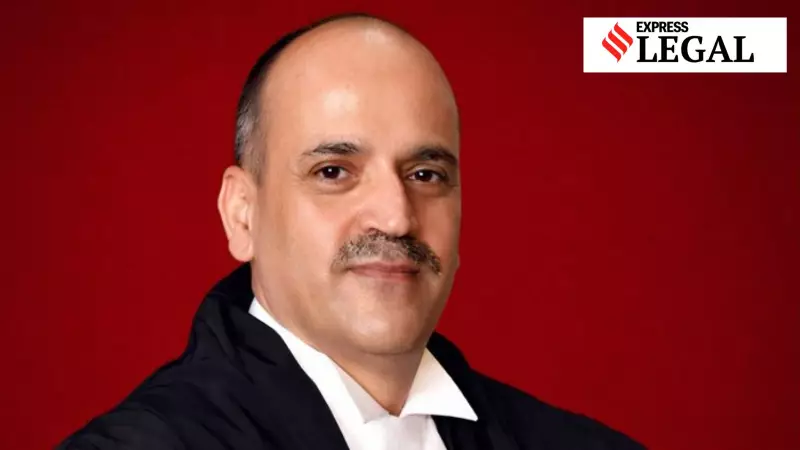
In a significant ruling that underscores the boundaries of the sedition law, the Himachal Pradesh High Court has granted bail to an accused, observing that a desire for peace between India and Pakistan and an end to hostilities cannot be construed as an act of sedition. The bench of Justice Rakesh Kainthla delivered the order while hearing the bail plea of Abhishek Singh Bhardwaj.
Court's Rationale on Peace Advocacy
Justice Kainthla meticulously examined the case details, which involved allegations that the petitioner had uploaded photos and videos on Facebook showing prohibited weapons and the flag of Pakistan, along with certain chat histories. In these chats, Bhardwaj and another individual, Niaz Khan, were found criticising the ongoing hostilities between the two neighbouring nations.
The court noted that the chats advocated for communal harmony, stating that all people, irrespective of religion, should coexist, and that war serves no fruitful purpose. "It is difficult to see how a desire to end the hostilities and a return to peace can amount to sedition," Justice Kainthla observed, drawing a clear line between dissent and disloyalty.
Scrutiny of Evidence and Charges
The judgment highlighted critical gaps in the prosecution's case. Firstly, the First Information Report (FIR) contained no allegation of the accused inciting "hatred or discontent" against the government, a core ingredient for sedition. Secondly, no prohibited weapon was physically recovered from the petitioner's possession.
The court perused the pen drive containing the controversial images and videos, as well as data extracted from Bhardwaj's mobile phone. On the specific allegation of raising the slogan "Khalistan Zindabad," the court stated it could not locate any such evidence in the extracted data. Furthermore, it emphasised that even if such a slogan was assumed to be raised, relying on a Supreme Court order, it did not automatically constitute a criminal offence.
Regarding the images of weapons, the court said that merely posting pictures of arms bearing someone's name does not amount to sedition, especially in the absence of any recovery.
Arguments and Bail Conditions
Advocate Sanjeev Kumar Suri, representing the petitioner, argued for bail since the police had already filed the charge sheet and no purpose was served by further custody. Opposing the plea, Deputy Advocate General Prashant Sen contended that Bhardwaj was involved in anti-national activities and was in touch with Pakistani nationals, describing the offence as "grave."
The court, however, granted bail to Abhishek Singh Bhardwaj subject to stringent conditions:
The petitioner must not intimidate witnesses or influence evidence. He is required to attend every trial hearing and avoid seeking unnecessary adjournments. If he intends to leave his registered address for more than seven days, he must inform the concerned court and police of his destination.
Additionally, Bhardwaj must surrender his passport, provide his mobile number and social media contact details to the police and court, and comply with all summons. Any change in his mobile number or social media profiles must be reported to the authorities within five days. Justice Kainthla clarified that any violation of these conditions would entitle the prosecution to seek cancellation of the bail.
This ruling adds to the evolving judicial discourse on the application of sedition laws in India, particularly concerning expressions of political opinion and advocacy for peace.