
The Allahabad High Court has delivered a significant verdict, upholding the cancellation of a fair price shop dealer's licence from Ghaziabad. The dealer was found to have used just three Aadhaar card numbers to illegally withdraw subsidised ration meant for a staggering 697 registered cardholders.
Court Dismisses Dealer's Plea, Cites Unexplained Irregularities
Justice Arun Kumar Singh dismissed the writ petition filed by the dealer, who was challenging the order that cancelled her licence. In its ruling, the court noted that the petitioner had failed to provide a reasonable explanation for the massive discrepancy.
"It is evident that use of three Aadhaar cards to withdraw ration of 697 cardholders has not been reasonably explained by the petitioner," the court held. It further pointed out that there was no evidence to prove that 162 affidavits submitted by the dealer, where individuals accepted receiving commodities from her, actually came from the 697 affected cardholders.
The Case: How the Scam Unfolded
The case originated from a statewide enquiry initiated in August 2018. The Food Commissioner of Uttar Pradesh had flagged widespread irregularities across 43 districts in the state. The modus operandi involved the alleged withdrawal of ration supplies against multiple beneficiaries using the same Aadhaar numbers.
Following an ex-parte inquiry, a First Information Report (FIR) was registered against the petitioner dealer under the Information Technology Act and the Essential Commodities Act. Her fair price shop dealership was suspended on the specific allegation of black marketing by diverting essential commodities destined for 697 cardholders using only three Aadhaar cards.
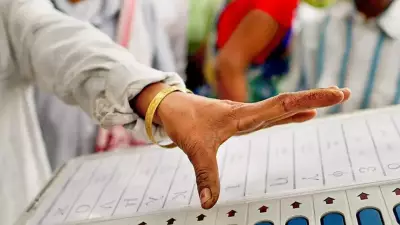
The dealer, in her defence, claimed the duplication was a result of a technical glitch in the E-PoS (Electronic Point of Sale) machine and denied any manual manipulation. An E-PoS machine is the digital system used at fair price shops to authenticate transactions and beneficiaries, typically using Aadhaar-based biometric verification.
Legal Proceedings and Final Verdict
Despite her explanations, the dealer's licence was formally cancelled in 2019. An appeal against this cancellation was also dismissed, leading her to approach the High Court.
The court, in its detailed order, rejected the dealer's argument that state officials had committed gross irregularities and were framing her to save themselves. The judgment stated that in the absence of any specific allegations of mala fide intent against named officers, such arguments could not be sustained.
"In absence of any specific pleadings alleging mala fides against the Officers of the State Government, by name, the argument... that officials have committed gross irregularities... falls flat," the order read. Consequently, the court found no merit in the petition and dismissed it, letting the licence cancellation stand.
This ruling reinforces the judiciary's strict stance against corruption and fraud within the public distribution system, a critical social safety net for millions of Indians.