

The Chhattisgarh High Court has upheld the acquittal of 10 accused in the 2010 Tadmetla Maoist attack case, one of the deadliest attacks on security forces in which 76 personnel were killed. The court cited a lack of direct evidence and lapses in the investigation.
Court's Order and Observations
In an order dated May 5, uploaded on the court's website on Thursday, the high court dismissed the state government's appeal challenging the trial court's acquittal of all 10 accused, while noting the seriousness and scale of the attack. A division bench of Chief Justice Ramesh Sinha and Justice Ravindra Kumar Agrawal upheld the trial court's acquittal, citing serious lapses in the investigation and prosecution.
The headnote in the order stated that the acquittal of the accused in a mass attack on CRPF personnel was upheld due to lack of direct evidence, incomplete circumstantial proof, procedural lapses in investigation, and failure to establish guilt beyond reasonable doubt, despite the gravity of the offence.

The Incident
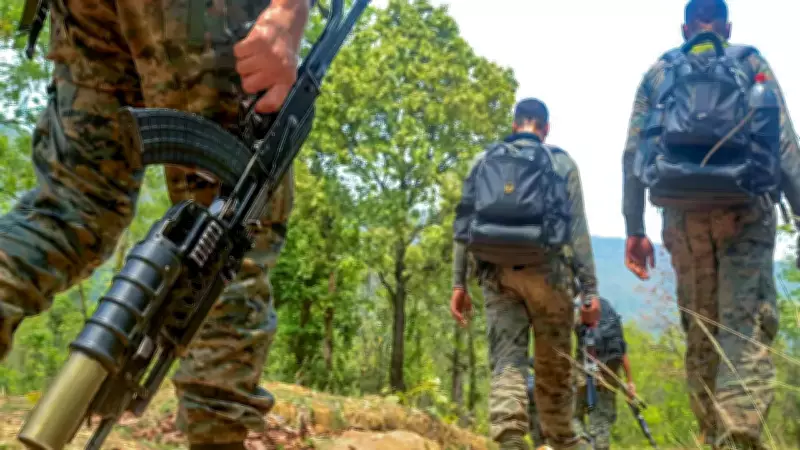
The case relates to the deadly Maoist ambush on April 6, 2010, in the forests of Tadmetla village under the Chintagufa police station limits. At the time, the area fell under Dantewada district, which has since been bifurcated and is now part of Sukma district. A team from the 62nd battalion of the Central Reserve Police Force (CRPF), along with state police personnel, was conducting an area domination patrol when heavily armed Maoists launched a massive attack, killing 75 CRPF personnel and one state policeman.
Legal Proceedings
Ten accused were arrested in connection with the case, and a chargesheet was filed before the Judicial Magistrate First Class court in Konta. The case was later transferred to the Sessions Court in Dantewada. The accused were booked under various provisions of the Indian Penal Code, the Arms Act and the Explosive Substances Act on charges including criminal conspiracy, rioting and dacoity with murder. On January 7, 2013, the Additional Sessions Judge, Dantewada, acquitted all 10 accused, holding that the prosecution had failed to prove the charges beyond reasonable doubt. Two of the 10 acquitted persons have since died.
Challenging the acquittal, the state government filed an appeal in the High Court in 2014. In the HC, Advocate General Vivek Sharma, assisted by Deputy Advocate General Saurabh Pande, argued that the trial court failed to properly appreciate crucial evidence, including the confessional statement of one accused recorded under Section 164 of the Code of Criminal Procedure (CrPC) and seizure of explosives from the spot. The state also contended that the trial court erred in rejecting an application under Section 311 of the CrPC seeking examination of seven injured CRPF personnel who were eyewitnesses to the attack.
High Court's Reasoning
However, the High Court held that there was no direct evidence or eyewitness testimony linking the accused to the killings and none of the eyewitnesses had identified them as perpetrators. The alleged confessional statement under Section 164 CrPC is not corroborated by any independent evidence, the HC observed. The court also noted that the explosives and weapons cited by the prosecution were recovered from the scene of crime and not from the possession of the accused. The forensic science laboratory (FSL) report confirming the seized materials as explosives was not produced before the court, it added.
It is deeply painful to note that despite the loss of 75 CRPF personnel and one member of the state police in a brutal attack allegedly carried out by Maoists, the prosecuting agencies have not been able to establish the identity of the real perpetrators, the HC bench said. We are equally distressed to observe that a case of such a serious magnitude, involving mass casualties and grave consequences to national security, has ultimately been dealt with in a manner where no legally admissible and reliable evidence could be produced against the accused persons. As a result, the learned trial court was constrained to acquit them, it said.
The order of acquittal passed by the trial court cannot be termed perverse, unreasonable, or one that defies logic or judicial propriety, the HC said while dismissing the state government's appeal.

Directions for Future Investigations
The High Court expressed concern over deficiencies in the investigation and directed the state government to ensure higher standards in future probes involving serious crimes, particularly those concerning mass casualties and threats to national security. It also directed the state to conduct training programmes to improve investigative competence and ensure strict adherence to legal procedures in future cases. Such measures were necessary to prevent procedural lapses, secure justice for victims, uphold the presumption of innocence and maintain public confidence in the criminal justice system, the HC said in its order.





