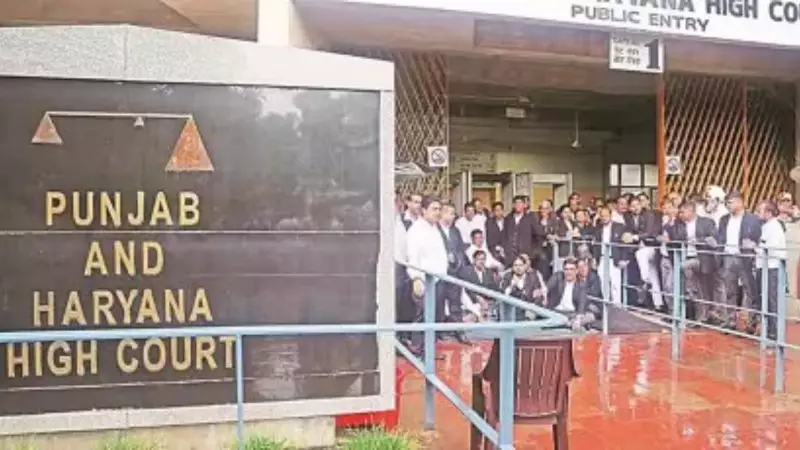
The Punjab and Haryana High Court has issued a significant directive to all deputy commissioners in Punjab, instructing them to impose prohibitory orders under the new Bharatiya Nagarik Suraksha Sanhita (BNSS) only in cases of genuine urgency and not as a routine administrative tool. The court disposed of a Public Interest Litigation (PIL) on Tuesday, emphasizing that the power under Section 163 of the BNSS—which replaces the old Section 144 of the CrPC—must be used judiciously and with recorded reasons.
Court's Stern Adherence to Statutory Limits
Chief Justice Sheel Nagu, leading the bench, underscored that the statutory provision empowers district authorities to act solely in "urgent cases of nuisance or apprehended danger." He stated that the law must be "followed to the hilt" and that the power "must not be applied in a mechanical manner, without application of mind." The court advised all district magistrates in Punjab to ensure strict compliance with Section 163 BNSS and related provisions.
The Chief Justice further directed that whenever this emergent power is exercised, the concerned district magistrate, deputy commissioner, additional deputy commissioner, or sub-divisional magistrate must not only apply their mind but also "pass a speaking order." This means the order must detail the reasoning behind invoking the prohibitory powers.
Petitioner's Allegations of Indiscriminate Use
The PIL was filed alleging the indiscriminate and prolonged use of prohibitory orders. The petitioner argued that several districts had imposed orders under the erstwhile Section 144 "continuously for 300 days" without a break. He contended this created an "anti-democratic narrative" where citizens could be booked on "flimsy grounds" even for peaceful assembly, often using farmer protests as a blanket excuse.
The petitioner highlighted a transparency issue, revealing that Right to Information (RTI) applications filed with all Punjab districts regarding these orders yielded responses from only eight. He argued that such blanket orders, sometimes applied to entire districts without specific reasoning, hurt the state's investment climate and deepened economic distress. He also pointed out that Section 163 BNSS limits the enforcement period to two months, extendable to six only by a reasoned state government notification.
State's Defense and Court's Final Disposition
Opposing the petition, Senior Deputy Advocate-General Salil Sabhlok argued that the petitioner's case was based on "assumptions and presumptions." The state contended that many cited orders were date-bound, related to the farmer protest period of February 2024 to March 2025, and were no longer in force. The law officer asserted that the independence of the Deputy Commissioner to maintain law and order could not be taken away.
The petitioner challenged this, stating he would withdraw the case if the state produced even a single order explicitly linking the prohibitions to farmer protests. After hearing both sides, the bench noted that "none of the orders illustrated... exist today" and found issuing a formal notice unnecessary. The court disposed of the matter with the clear directions to ensure future compliance with the statutory safeguards built into Section 163 BNSS.