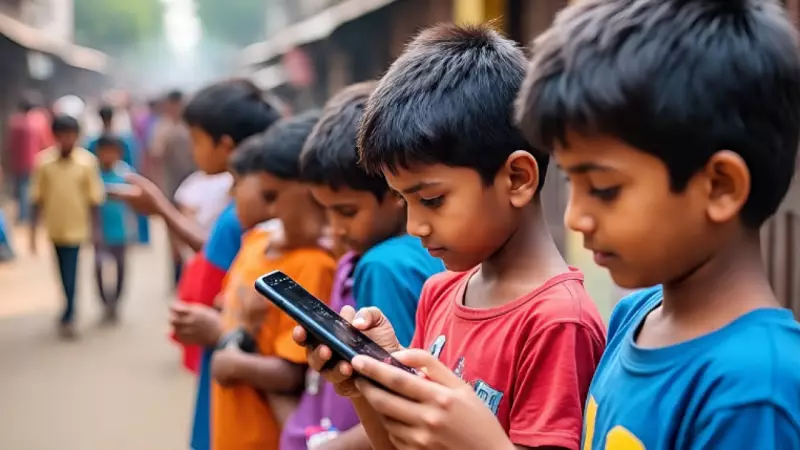
In a significant move aimed at bolstering child safety in the digital realm, the Madras High Court has proposed that the Union government consider enacting a law to prohibit social media access for children below the age of 16. The suggestion draws inspiration from recent legislation passed by the Australian government.
Court's Directive on PIL for Online Safety
The recommendation came from a division bench comprising Justice G Jayachandran and Justice K K Ramakrishnan. They were hearing a Public Interest Litigation (PIL) filed back in 2018 by S Vijayakumar from Madurai district. The PIL raised alarms about the easy availability and accessibility of pornographic content to young children online. It sought directives for Internet Service Providers (ISPs) to implement a parental window service.
The bench acknowledged the high vulnerability of children using the internet and stated that parental responsibility is even higher. Expressing dissatisfaction with the current efforts, the judges noted that the counter-affidavits filed by concerned authorities failed to convince the court that they were adequately fulfilling their statutory duties.

Awareness Campaigns and Legislative Action
The court pointed out that while certain awareness programs are conducted in schools, they are insufficient. It urged the National Commission for Protection of Child Rights (NCPCR) and the Tamil Nadu Commission for Protection of Child Rights (TNCPCR) to create and implement a robust action plan. "The commission has a statutory duty... to spread child right literacy... Though certain awareness campaigns are organised... the same is not adequate," the bench observed.
Until potential legislation is enacted, the court directed authorities to intensify and effectively spread awareness campaigns through all available media to reach the vulnerable groups.
Role of ISPs and End-User Responsibility
Regarding the role of Internet Service Providers, the bench noted that ISPs are governed by separate laws, including the Information Technology (Intermediary Guidelines and Digital Media Ethics Code) Rules, 2021. Counsel for some ISPs submitted that they periodically review and block objectionable websites when brought to their notice.
However, the judges emphasized that control is also needed at the user end. "There must also be control at the user-end which can be achieved only if there is a parent control app available in the device," they said. The court stressed the need to make end-users aware of the menace of child pornography and preventive measures, while ultimately acknowledging the individual's choice to access or avoid such material.
Disposing of the PIL, the bench expressed hope that both central and state commissions would draw and implement an action plan in letter and spirit, paving the way for a safer online environment for India's children.