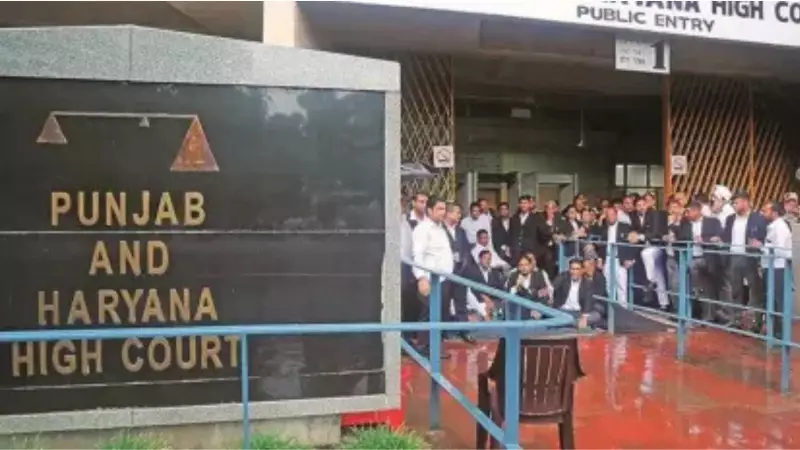
The Punjab and Haryana High Court has taken serious note of the alleged assault on an advocate by Haryana Police personnel and the subsequent failure to register a First Information Report (FIR). Acting on its own motion, the court has demanded an immediate explanation from the Punjab police chief.
Court Questions Unexplained Delay in FIR Registration
On Tuesday, a division bench led by Chief Justice Sheel Nagu and comprising Justice Sanjiv Berry took suo motu cognisance of the incident. The matter pertains to the alleged assault on advocate Amit by plainclothes Haryana Police personnel in Nayagaon, Mohali district, Punjab, on November 30.
Expressing dismay, Chief Justice Nagu observed that the written complaint, submitted by the victim at the Nayagaon police station on the day of the incident itself, prima facie disclosed cognisable offences. Yet, no FIR had been registered even after more than two weeks had passed. The court has directed the state of Punjab to explain this delay and ordered the Punjab Director General of Police (DGP) to file an affidavit by Wednesday afternoon.
Lawyers Protest, Allege Pattern of Police Inaction
The court's intervention came as lawyers of the Punjab and Haryana High Court abstained from work in protest. The Bar Association, represented by president S S Narula, informed the bench that their general body had passed a resolution to resume work only after an FIR is registered in this case.
Narula highlighted a disturbing pattern of inaction from the Nayagaon police station. He stated that nearly 400 lawyers reside in the area and multiple complaints by advocates, including cases of assault at residences and threats, have been pending without action. "If an advocate approaches the police, the matter is delayed week after week. But if the police want to act against an advocate, it is done immediately," he submitted.
Senior bar members presented a grave account of the November 30 event. They alleged that Haryana Police personnel crossed into Punjab without informing local authorities, entered the advocate's house in plain clothes, assaulted him, and attempted to take him away forcibly. Local residents' intervention reportedly prevented the abduction. The lawyers termed this an act of trespass and an attempted cover-up by both police forces.
Court Urges Bar to Return, Stresses Legal Duty of Police
While acknowledging the lawyers' grievances, the bench expressed concern over the impact of the work abstention on litigants. Chief Justice Nagu urged the protesting lawyers to return to court, reminding them of their duty. "You are intellectuals... You don't have to get into a brawl with the police," he said, adding, "If the police do not act within one day, come to us. Why did you not come to the court?"
The Chief Justice reiterated settled legal principles, noting that under Section 154 of the CrPC and Supreme Court mandates, police are duty-bound to register an FIR when a cognisable offence is disclosed. The failure to do so provides a clear legal remedy before the courts.
The Bar Association maintained that the decision to abstain was collective. However, they assured the court that they had consciously refrained from extending the protest to district courts to ensure the lower judiciary's functioning remained unaffected.
The High Court, now seized of the matter, has made it clear that FIR registration is mandatory in such cases. The case will be heard next on Wednesday at 2 pm.