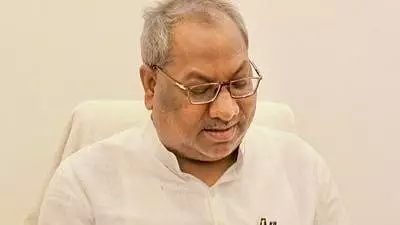
The Orissa High Court has intervened in the case of a 63-year-old man from Khurda, directing state authorities to swiftly decide on his request for an enhanced monthly quota of medical opium. The petitioner, Ram Chandra Senapati, approached the court after facing an alleged administrative delay that was worsening his health condition.
Court's Directive to Excise Authorities
On December 4, a bench comprising Chief Justice Harish Tandon and Justice M S Raman issued a clear order to the state's excise commissioner. The court mandated that a "conscious decision" must be taken on Senapati's representation within two weeks. Furthermore, the final order must be communicated to him within one week of its issuance.
The bench referenced the provisions of Rule 20 of the Orissa Narcotic Drugs and Psychotropic Substances Rules, 1989. It emphasized that the concerned authority must consider the petitioner's plight and grievance while adhering to the legal framework.

Five-Decade Dependency and Escalating Need
Ram Chandra Senapati claims to have been dependent on opium for 46 years. His legal journey for a regulated supply began in 2002 when he was first issued a medical opium card. The initial entitlement was 10 grams per month, based on a recommendation from the Khurda Chief District Medical Officer (CDMO).
As his dependency and health condition worsened over the years, his sanctioned quota was progressively increased:
- First raised to 15 grams per month.
- Later enhanced to 22 grams.
- Eventually increased to 40 grams per month.
Medical Review and Administrative Hurdle
Earlier this year, citing further deterioration in health and severe withdrawal symptoms, Senapati sought another increase. The Khurda Collector-cum-District Magistrate directed the CDMO to conduct a fresh medical review.
A district medical board examined him on June 5. The board concluded that his existing 40-gram quota was "not sufficient for his health condition" and formally recommended an enhancement to 60 grams per month.
The collector forwarded this recommendation to the excise commissioner for issuing a revised permit. However, with no decision forthcoming for months, Senapati was compelled to file a petition in the High Court on September 15, arguing that the delay was aggravating his suffering.
Legal Proceedings and Rehabilitation Concerns
During the hearing, Additional Government Advocate Debashis Tripathy did not contest the factual timeline presented by Senapati's counsel. However, he stressed that the case must be assessed strictly under the parameters of Rule 20. This rule, while allowing registered addicts a regulated supply of medicinal opium, also places an obligation on authorities to promote de-addiction and rehabilitation.
The bench acknowledged this dual mandate. It stated that while processing applications for quota enhancements, efforts must also be taken to explore the possibility of curative treatment for chronic addicts. This observation underscores the state's responsibility to balance immediate medical need with long-term rehabilitation goals.
The court's order now places the ball firmly in the court of the excise commissioner, who must act within the stipulated two-week deadline to provide relief to the ailing senior citizen from Khurda.