The Punjab and Haryana High Court has issued a significant directive to the Punjab government, giving them exactly one week to make a decision on the parole application filed by Amritpal Singh, the controversial Khalistani leader currently in custody.
Court's Stern Directive to State Authorities
During the hearing on Thursday, the division bench comprising Justice Sureshwar Thakur and Justice Lalit Batra made it clear that the state authorities cannot indefinitely delay their decision on Singh's parole plea. The court emphasized that the Punjab government must reach a conclusion and communicate its decision within the next seven days, setting a firm deadline for the long-pending matter.
The bench specifically instructed the state counsel to ensure that the competent authority examines all aspects of the parole application and arrives at a definitive decision within the stipulated timeframe. This judicial intervention comes after Singh's legal team approached the court seeking relief regarding his parole request that had been pending with state authorities.
Background of Amritpal Singh's Legal Situation
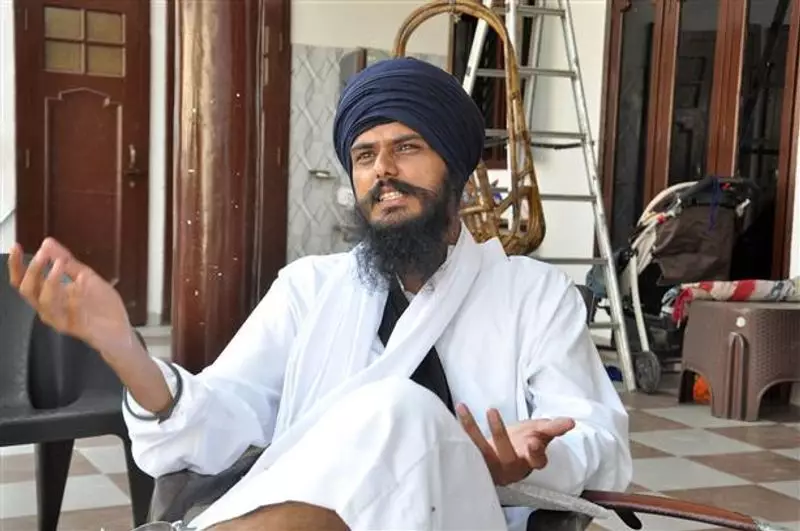
Amritpal Singh, who leads the pro-Khalistan organization 'Waris Punjab De,' has been in custody since April 2023 under the National Security Act (NSA). The radical preacher was arrested following a massive manhunt across Punjab after he and his supporters stormed a police station in Ajnala, demanding the release of one of his aides.
The 30-year-old leader has been detained at Dibrugarh Central Jail in Assam along with several of his associates. His detention under the NSA has been extended multiple times by the Punjab government, citing continued threat to public order and national security.
The current parole application before the court relates to Singh's request for temporary release from custody. While the specific reasons for seeking parole haven't been disclosed in court proceedings, such requests are typically made for medical reasons, family emergencies, or other compelling circumstances.
Legal Proceedings and Government's Stance
During the court proceedings, the state government's legal representatives sought additional time to file their detailed response regarding Singh's parole application. However, the bench was unequivocal in its position that the matter had been pending for sufficient time and required immediate resolution.
The court's order specifically states that the competent authority must consider the parole application on its merits and convey the decision to Singh within the one-week timeframe. This puts pressure on the Bhagwant Mann-led Punjab government to take a clear stand on whether they will grant temporary release to the controversial figure.
Security agencies have consistently expressed concerns about Singh's potential to disturb peace in Punjab if released, even temporarily. The state government has previously defended his continued detention, arguing that his release could lead to law and order problems and revive Khalistani activities in the state.
What Comes Next in the Legal Battle
The High Court's directive now sets the stage for a crucial decision from the Punjab government within the coming days. The authorities will have to carefully weigh legal considerations against security concerns while making their determination.
If the government rejects the parole application, Singh's legal team may approach the court again challenging the decision. Conversely, if parole is granted, it would likely come with stringent conditions and security monitoring given the sensitive nature of the case.
The development represents a significant moment in the ongoing legal saga surrounding Amritpal Singh, whose arrest and detention have been closely watched by both his supporters and security establishments. The court has scheduled further hearing in the matter after the expiry of the one-week deadline to ensure compliance with its directions.
This case continues to highlight the complex balance between individual rights and state security concerns in matters involving individuals accused of threatening national unity and public order.