India Commemorates 77th Republic Day with Spectacular Celebrations
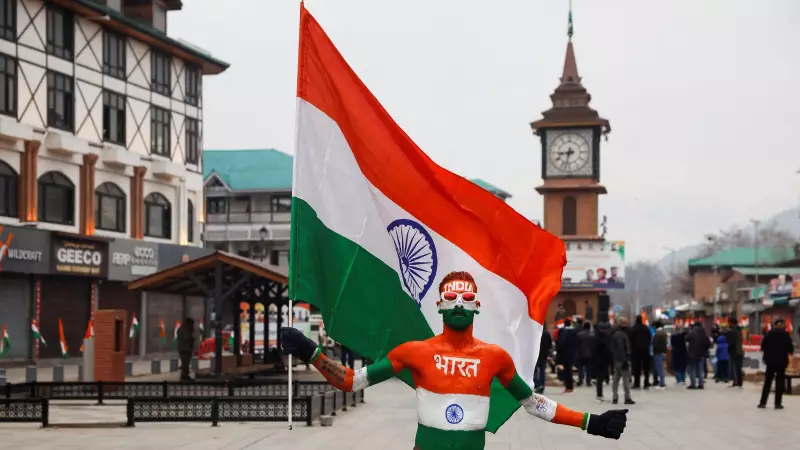
India is joyously celebrating its 77th Republic Day today, commemorating the historic moment when the Constitution of India came into effect on 26 January 1950, formally establishing the nation as a Sovereign Democratic Republic. This annual observance honors the foundational document that guides the world's largest democracy, reflecting on the journey of independence and self-governance.
Republic Day Parade Schedule and Broadcast Details
The grand Republic Day parade is scheduled to commence at 9:30 AM, showcasing the country's military prowess and cultural richness. The event will be broadcast live on state-run television channels such as DoorDarshan (DD) and radio services like Akashwani (All India Radio). Additionally, viewers can tune in via the official YouTube channel for a seamless digital experience. The parade is expected to last approximately 90 minutes, with entry gates at the venue opening as early as 7 AM for attendees.
Distinguished Chief Guests from the European Union
This year's Republic Day celebrations are graced by two eminent chief guests: Antonio Costa, President of the European Council, and Ursula von der Leyen, President of the European Commission. Their presence underscores the strengthening ties between India and the European Union. In a traditional gesture, the chief guests will arrive aboard the ceremonial buggy, escorted by President Droupadi Murmu and her elite bodyguard from the senior-most regiment of the Indian Army.

Ceremonial Traditions and the 21-Gun Salute
As per established protocol, Prime Minister Narendra Modi will unfurl the National Flag, followed by the rendition of the National Anthem and a resounding 21-gun salute. This year's salute will be executed by the 1721 Ceremonial Battery of the 172 Field Regiment, utilizing indigenously developed 105 mm Light Field Guns, symbolizing India's self-reliance in defense technology.
Historical Origins of the 21-Gun Salute
The tradition of the 21-gun salute at Republic Day traces its roots to the British colonial era, originating in the 17th century. Historical accounts from defense archives indicate that naval forces used this practice to signal peaceful intentions by firing ammunition into the sea. According to sources like the Arlington National Cemetery website, warships would discharge all their cannons to demonstrate non-aggression.
British naval ships typically fired seven shots, a number with astrological and biblical significance, to convey peace. Shore-based weapons, with ample gunpowder, responded with three shots per naval shell, culminating in the 21-gun tribute. By 1818, U.S. naval regulations codified this practice, and by 1875, nations including Britain and France formally adopted it as a standard honor.
Evolution and Significance of Gun Salutes in India
In pre-independent India, gun salutes varied based on rank and colonial hierarchy. The Imperial Salute of 101 guns was reserved for the King-emperor, while a 31-gun salute honored members of the royal family and the governor general. Indian rulers received salutes ranging from 21 to 9 guns, depending on their relationship with the British Raj.
Notably, when Dr. Rajendra Prasad became India's first president in 1950, he received a 31-gun salute during his procession on Rajpath, now known as Kartavya Path. Today, the 21-gun salute has transformed from a colonial indicator to a symbol of popular sovereignty, exclusively accorded to the President during swearing-in ceremonies and on national occasions like Republic Day and Independence Day.
Modern Execution of the 21-Gun Salute
Every Republic Day, the 21-gun salute is performed with meticulous precision, synchronized with the duration of the National Anthem, Jana Gana Mana. The salute begins as the Commandant of the President's Body Guards lowers his sword at the command of Rashtriya Salute, continuing throughout the anthem. Special clocks measure intervals, with seven cannons fired at 2.25-second intervals over three rounds. Backup guns are prepared to ensure flawless execution, using blank rounds for sound without projectiles.

Transition to Indigenous Artillery for the Salute
Until 2023, the 21-gun salute relied on British-era 25-pounder guns, which saw action in the 1965 and 1971 wars with Pakistan before being decommissioned in the 1990s for ceremonial use. In line with the government's initiative to shed colonial remnants and promote indigenous equipment, these have been replaced by Indian-made 105 mm Field Guns. Designed by the Armament Research and Development Establishment (ARDE) in 1972 and produced at the Gun Carriage Factory in Jabalpur since 1984, these guns now symbolize national pride and technological advancement.
Highlights of the Republic Day 2026 Parade
The day's festivities will kick off with Prime Minister Modi paying homage at the National War Memorial, followed by his attendance at the saluting dais on Kartavya Path. The parade theme, '150 years of Vande Mataram', will be vividly displayed through 30 tableaux—17 from states and Union Territories, and 13 from various government departments and services.
A special European Union contingent will participate, featuring four flag bearers on three gypsies, showcasing flags of the EU, its Military Staff, and naval forces Atalanta and Aspides. The audience, estimated at around 10,000, will include diverse representatives such as farmers, scientists, corporate leaders, and para-athletes, reflecting India's inclusive spirit.
This Republic Day, as the indigenous guns resonate across Kartavya Path during the 90-minute parade, India not only celebrates its constitutional legacy but also showcases its cultural diversity and commitment to self-reliance, marking a proud moment in the nation's history.