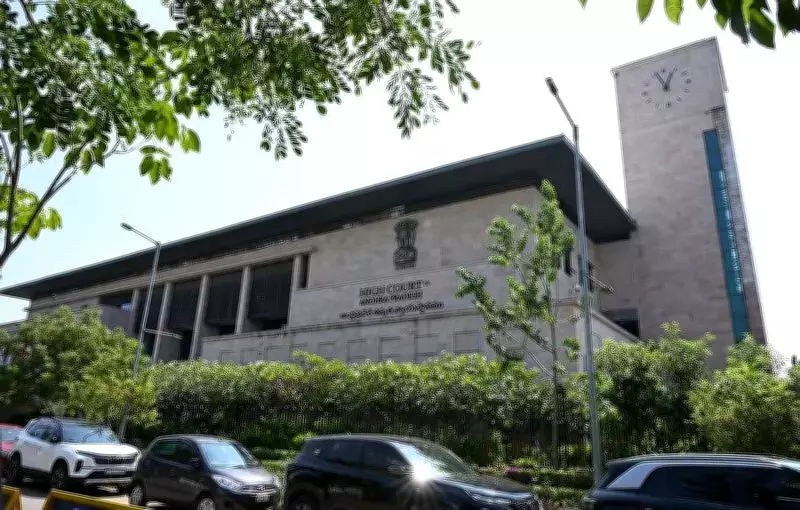
A division bench of the Vijayawada High Court, presided over by Chief Justice Dhiraj Singh Thakur and Justice R Raghunandan Rao, has issued a significant directive to the Tirumala Tirupati Devasthanams (TTD). The bench has ordered the TTD to file a detailed counter affidavit concerning the Parakamani theft case and the procedures followed to resolve the matter through the Lok Adalat.
Background of the Parakamani Theft Case
The case centers around the accused, C V Ravi Kumar, who was apprehended in the act of stealing $900 from the Parakamani. Following this incident, a single judge of the High Court had previously ordered an investigation by the Criminal Investigation Department (CID) and the Anti-Corruption Bureau (ACB). This inquiry was mandated to probe the alleged irregularities and illegal assets linked to the accused.
Appeal and Legal Arguments
C V Ravi Kumar subsequently filed an appeal challenging the single judge's order. Represented by senior counsel C Nageswara Rao, the appellant argued that the single judge overstepped by issuing a series of directives while referring the issue to the division bench. The referral was intended to determine the legality of the Lok Adalat order that had compromised the case.
Senior counsel Rao contended that the single judge erred in treating the accused as a public servant, which influenced the decision to order the CID and ACB probe. This classification, according to the defense, was incorrect and led to an unjustified expansion of the investigation scope.
High Court's Directive and Next Steps
After considering the submissions from both sides, the division bench has taken a measured approach. The High Court has instructed the TTD to submit a counter affidavit that includes all relevant rules and guidelines pertaining to the case. This step aims to provide a comprehensive understanding of the institutional framework and procedures involved.
Furthermore, the High Court has directed the registry to consolidate the matter by tagging it with the single judge bench's proceedings alongside the current appeal. This consolidation is expected to streamline the judicial process and ensure a holistic review of all related aspects.
The case has been scheduled for further hearing on February 5, allowing time for the TTD to prepare and file the required counter affidavit. This development marks a critical juncture in the legal proceedings, as the court seeks to clarify the roles and responsibilities in the Parakamani theft case.
Implications for TTD and Legal Precedents
The High Court's order underscores the importance of transparency and adherence to procedural norms in cases involving religious institutions like the TTD. By mandating a detailed counter affidavit, the court is emphasizing the need for clear documentation and accountability in handling such sensitive matters.
This case also highlights the ongoing legal debates surrounding the jurisdiction and appropriateness of Lok Adalat resolutions in criminal matters. The division bench's involvement suggests a careful examination of whether such alternative dispute resolution mechanisms are suitable for cases with potential public interest implications.
As the proceedings continue, stakeholders will be closely watching how the TTD responds to the court's directives and how the legal arguments evolve in the upcoming hearing. The outcome could set important precedents for similar cases in the future, affecting both judicial processes and institutional governance.