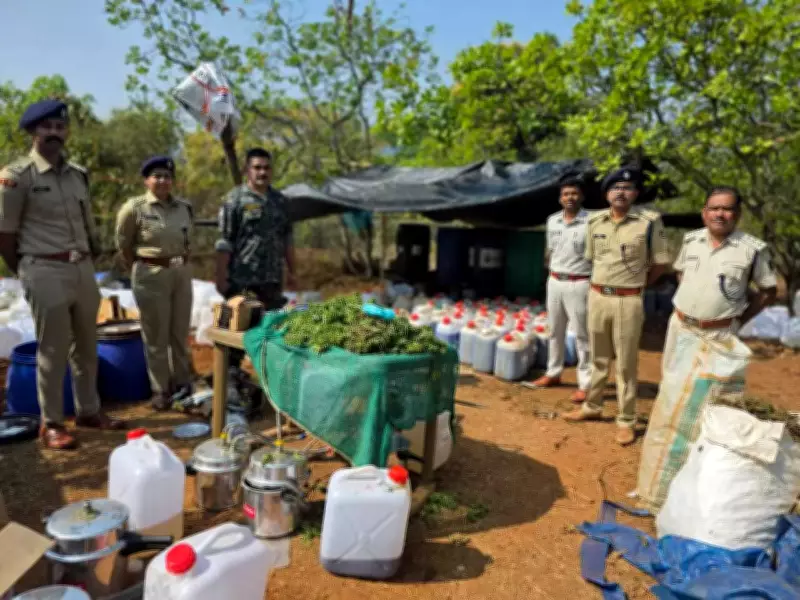
Odisha Confronts New Narcotics Challenge with Potent Hashish Oil
For decades, the districts of Malkangiri and Koraput in Odisha have been notorious centers for illegal ganja cultivation and trafficking. However, law enforcement agencies now face a more sophisticated and dangerous adversary: hashish oil, a highly concentrated form of cannabis that presents unprecedented detection and interception challenges.
Shift in Smuggling Tactics
According to Odisha Police authorities, drug traffickers are increasingly abandoning traditional bulk ganja shipments in favor of hashish oil. This strategic shift comes as frequent police raids have made transporting large quantities of dried cannabis increasingly risky. Vinaytosh Mishra, Director General of the Crime Branch, explained the traffickers' rationale: "Unlike dry cannabis, hash oil is easier to conceal and transport. Smugglers are favoring it as an alternative to evade law enforcement."
Unprecedented Seizures Reveal Growing Problem
Odisha, which had never previously reported hashish oil seizures, has dismantled three major trafficking networks in just three months along the Odisha-Andhra Pradesh border. The enforcement timeline reveals an escalating threat:
- November 2, 2025: Chitrakonda police in Malkangiri district seized 60 liters of hashish oil and arrested two individuals.
- February 9, 2026: Authorities confiscated two liters of the substance and apprehended four traffickers.
- Most recently: Police executed their largest operation yet, seizing a staggering 1,800 liters of hashish oil valued at over Rs 200 crore.
Police officials described this final seizure as unprecedented in scale, noting it represents the largest single-day hashish oil confiscation in Indian history, surpassing the 424.2 kilograms seized nationwide throughout all of 2024.
The Potency and Production of Hashish Oil
Hashish oil represents a significant escalation in drug potency. Police sources confirm it contains high concentrations of tetrahydrocannabinol (THC), the primary psychoactive compound in cannabis responsible for its powerful effects. DG Mishra emphasized: "Hashish oil, extracted by crushing dry ganja in machines, is considered more than four times stronger than traditional cannabis."
The production process itself demonstrates why this substance has become attractive to traffickers. Approximately 40 kilograms of raw cannabis are required to produce just one liter of hashish oil, creating an extremely concentrated and valuable product that can appear in liquid form or as wax, making it compact and easily transportable.
Law Enforcement Response and Concerns
In response to this disturbing trend, Odisha Police have significantly intensified intelligence gathering and surveillance operations along the Andhra Pradesh and Telangana borders. These regions have long been associated with ganja cultivation and are now increasingly linked to hashish oil production networks.
Police have issued appeals to local communities, urging residents to share any information related to hash oil manufacturing or smuggling activities. "We have asked the Superintendents of Police to remain vigilant and launch intelligence-based crackdowns," Mishra stated.
Enforcement officials express serious concerns about the challenges posed by hashish oil's potency and discreet packaging. They fear this new development could significantly complicate the state's ongoing battle against narcotics, as the compact form allows traffickers to move substantial quantities undetected through traditional smuggling routes.
Broader Implications for Narcotics Control
The emergence of hashish oil trafficking represents a troubling evolution in Odisha's drug trade landscape. What began as a regional issue with traditional cannabis has transformed into a more complex challenge involving highly processed, concentrated substances that demand new detection methods and enforcement strategies.
As authorities adapt to this changing threat, the coming months will test whether traditional anti-narcotics approaches can effectively counter this more sophisticated form of drug trafficking that leverages technological processing to create harder-to-detect substances with greater profit potential for criminal networks.