Gujarat High Court Dismisses Congress Leader's Revision Plea in MGNREGA Scam Case
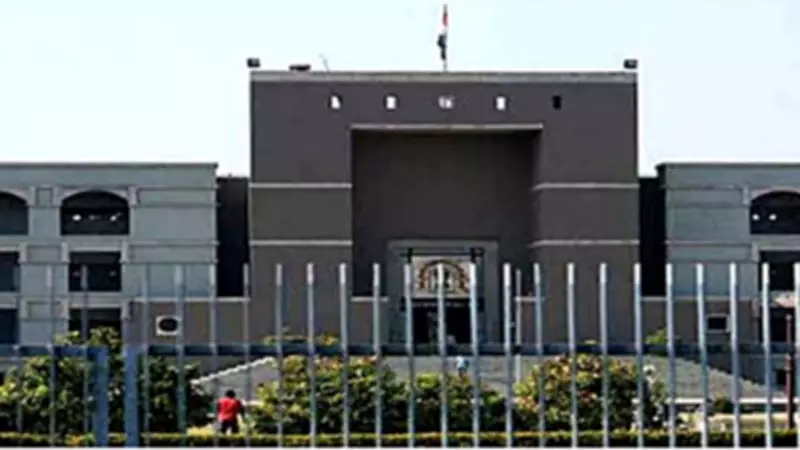
The Gujarat High Court has firmly rejected a revision application filed by Congress leader Hira Jotva and his son Digvijay Jotva, along with seven other accused, challenging the cancellation of their bail in an alleged Rs 7.3 crore MGNREGA scam case originating from Bharuch district. In a significant oral order delivered on Thursday, Justice P M Raval declared the plea "not maintainable," while granting the accused an extension until February 16 to surrender, allowing them time to pursue other legal avenues.
Court Cites "Huge Loss" of Public Funds
The court's decision heavily referenced the prosecution's submission, which characterized the case as involving a "huge loss and misappropriation of government money running into crores of rupees." The prosecution argued that the financial irregularities are likely to spread across multiple districts, underscoring the scale of the alleged fraud. The court order explicitly noted the state prosecutor's claim that this is not an isolated incident but a widespread misappropriation affecting substantial public funds.
Details of the Alleged Scam and Legal Arguments
The case stems from an FIR registered at the Bharuch A-Division police station in May 2025. The complaint was filed by P U Chaudhary, the assistant MGNREGA account officer of the Bharuch District Rural Development Authority, against two companies: Veraval-based Jalaram Enterprises, owned by Piyush Nukani, and Murlidhar Enterprises, operated by Jodha Sabhad. Both firms are allegedly linked to Hira Jotva. Nine individuals, including Jotva, his son Digvijay, Nukani, and Sabhad, have been arrested in connection with the case.
In their defense, advocates for the Jotvas argued that their clients are "victims of political vendetta" due to their opposition faction status. They further contended that the MGNREGA scheme involves multiple layers of administrative scrutiny, making a large-scale conspiracy highly improbable. The defense also pointed out that the complainant in the FIR was the same officer responsible for monitoring compliance with the scheme's 60:40 material-to-labour ratio, yet no issues were raised at the relevant time.
Prosecution's Stance on Seriousness of Charges
The prosecution presented a detailed account of the alleged misappropriation, revealing that out of 430 parts of MGNREGA works across 56 villages in Amod, Hasot, and Jambusar Talukas of Bharuch district, reports for only 98 parts have been received so far. In these, a misappropriation of Rs 2,30,22,744.01 has been identified. With reports for the remaining 332 parts still pending, the prosecution warned of a "possibility of high stake" further losses.
Opposing the bail plea, the public prosecutor emphasized that the accused face charges carrying life imprisonment, justifying the sessions court's decision to cancel bail. The prosecutor also highlighted that the chargesheet includes witness statements and technical analyses of road constructions, and argued that the applicants, as influential persons, could jeopardize the ongoing investigation if granted bail at this crucial stage.
Legal Grounds for Rejection
The High Court's rejection was primarily based on legal maintainability. Citing relevant precedents, the court noted that orders related to bail—whether granting, rejecting, or cancelling it—are considered interlocutory orders. Under Section 438 of the Bharatiya Nagarik Suraksha Sanhita (BNSS), revision cannot be sought against such orders, as they lack finality and bail applications can be renewed periodically. The court stated that the objective of revision petitions is to correct patent defects or jurisdictional errors, which did not apply in this instance.
The order clarified, "...it is manifestly clear that the orders granting, rejecting and cancelling the bail are interlocutory orders against which, revision cannot lie as there is no finality to such orders for an application for bail can always be renewed from time to time... only on the ground of maintainability, these applications are rejected..."
Implications and Next Steps
This ruling reinforces the judiciary's stance on handling cases involving significant misappropriation of public funds, particularly in government schemes like MGNREGA. The extension of surrender time until February 16 provides the accused a brief window to explore other legal options, but the rejection of their revision plea underscores the serious nature of the allegations. As the investigation continues, with reports for the majority of MGNREGA works still awaited, the case may unveil further financial irregularities, potentially impacting multiple districts in Gujarat.