Gujarat High Court Intervenes in Medical College Affiliation Fee Dispute
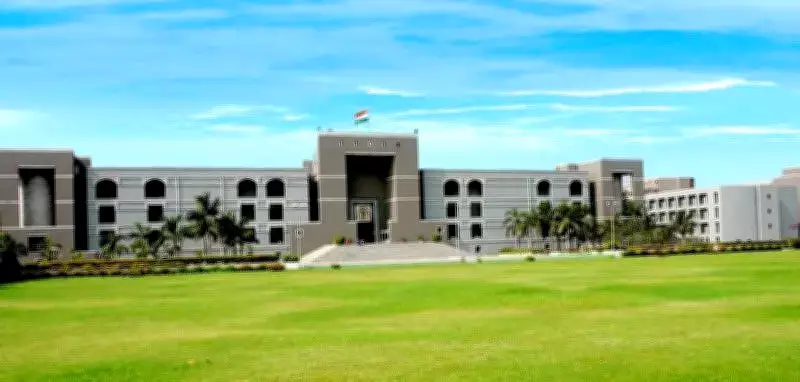
The Gujarat High Court has issued a significant directive in an ongoing financial dispute between a prominent medical institute and a state university. The court has ordered the Gujarat Adani Institute of Medical Sciences (GAIMS) located in Bhuj to deposit a sum of Rs 12 lakh with the Krantiguru Shyamji Krishna Verma Kachchh University. This order comes as a partial resolution to the university's demand for a total of Rs 34 lakh, which includes affiliation fees, penalties for late submissions, and applicable Goods and Services Tax (GST).
Background of the Financial Conflict
The core of the disagreement stems from the university's request for affiliation fees amounting to Rs 1.65 lakh for each of the 21 courses offered by the medical college. This cumulative demand has been contested by GAIMS, particularly regarding the penalty component. The medical college has raised objections by citing provisions under the newly enacted Gujarat Public Universities Act, which stipulates a consolidated penalty and interest structure rather than separate charges.
Compounding the urgency, the medical college's petition was pending before the High Court while it faced a critical deadline. The institute required submission of affiliation certificates to regulatory bodies to secure additional seats for its postgraduate courses. Failure to meet this deadline threatened to jeopardize the expansion of educational opportunities.

Legal Proceedings and Submissions
During the hearing, counsel for the medical college presented compelling arguments highlighting the potential consequences of delay. They emphasized that university authorities were allegedly avoiding signing the necessary affiliation forms, which could result in the institute losing the coveted extra seats. The ultimate sufferers, as argued, would be the students and society at large, who stand to benefit from increased medical education capacity.
With a pressing deadline of April 20 to submit the affiliation certificates, the college demonstrated its bona fide intentions by offering to deposit Rs 12 lakh with the High Court registry. This amount was proposed as a consolidated payment towards the penalty and late fees demanded by the university. However, the university's advocate insisted that the deposit be made directly with the university, while assuring no objection to signing the affiliation certificates for all 21 courses.
Court's Directive and Assurances
Presiding over the case, Justice Nirzar Desai considered the submissions from both parties. Acknowledging the university's total demand of approximately Rs 34 lakh per course, the judge stated, "In view of the above submissions, as well as considering the fact that the total amount demanded by the respondent University in respect of each course comes to around Rs 34 lakh, the interest of justice would be served if the petitioner is directed to deposit an amount of Rs 12 lakh with the respondent University by April 23."
Furthermore, the High Court issued a clear mandate to the university to cooperate and countersign whatever forms are required for an increase of courses in the petitioner college. This formality is directed to be completed no later than the evening of April 18, ensuring the medical college can proceed with its seat expansion plans without further hindrance.
Future Proceedings and Implications
The court has scheduled the next hearing for the medical college's petition on June 25, allowing time for compliance with the current directives. This case underscores the intricate balance between institutional financial obligations and the broader educational mission. The resolution aims to prevent adverse impacts on student admissions and healthcare education infrastructure in the region.
This legal intervention highlights the ongoing challenges in aligning administrative processes with legislative frameworks like the Gujarat Public Universities Act, while prioritizing the welfare of students and societal needs in the medical education sector.