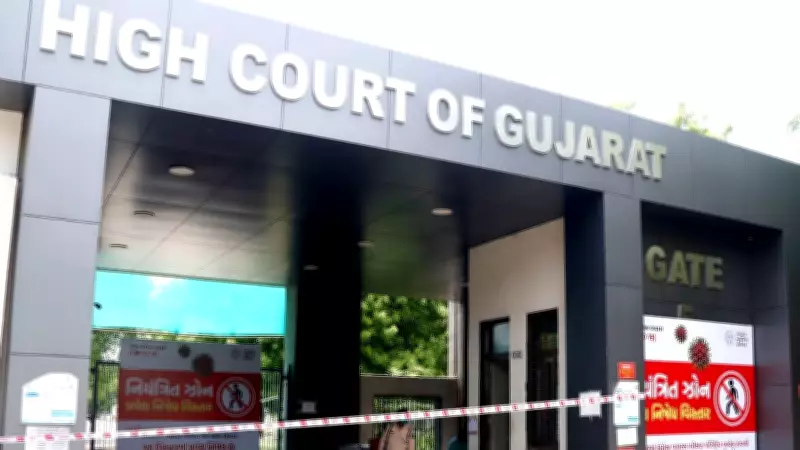
Gujarat High Court Issues Contempt Notice to Petitioner for Remarks Aimed at 'Lowering Court Dignity'
The Gujarat High Court has taken a stern stance against a party-in-person petitioner, issuing a contempt notice for remarks that the court found were made "with an intention to lower the dignity" of judicial institutions. This significant development occurred during a hearing on Tuesday, where Justice M R Mengdey delivered a detailed 28-page judgment addressing the petitioner's conduct.
Background of the Case and Petitioner's Remarks
The case involves Surat-based Vishwas Bhamburkar, who has been actively filing petitions concerning alleged violations of building height regulations around the Surat airport. In his applications, Bhamburkar made several contentious remarks against the Supreme Court, Gujarat High Court, and Magistrate courts, particularly after courts directed him to pursue alternative remedies.
During a January 16 hearing, Bhamburkar's comments were extensively quoted in the judgment. He reportedly prayed to the High Court that the Magistrate "who has passed the impugned order be sent for training since he seems unaware of law of the land…" The court noted that these remarks, along with others made during the hearing, displayed a propensity to misread and misinterpret directions from higher judicial authorities.
Court's Strong Reaction and Contempt Proceedings
Justice Mengdey's judgment came down heavily on the petitioner, stating that "a disgruntled litigant after having failed to obtain favourable orders from the institution is out to defame the august institution." The court emphasized that the petitioner's averments in the petition and his remarks during the hearing were made with the clear intention of lowering the dignity of the judicial institution at large.
The court directed the High Court registry to issue a notice to Bhamburkar, asking him to explain why contempt proceedings should not be initiated under the Contempt of Courts Act. Additionally, the court ordered that a video clip of the hearing be attached with the judgment for reference. The judgment further questioned the competency certificate issued by the Registry that allowed Bhamburkar to appear in-person, suggesting it "needs to be revisited."
Details of the Building Height Violation Petition
Bhamburkar's petition centered on allegations that several builders obtained No Objection Certificates (NOCs) from the Airports Authority of India by submitting forged documents regarding building locations and coordinates. He claimed that buildings were constructed at locations substantially different from those approved, constituting offences under relevant sections of the Indian Penal Code for forgery, cheating, and criminal conspiracy.
The petition highlighted that NOCs stipulate any deviation in location renders the permission void, with documents showing lateral deviations ranging from 43 meters to 1,609 meters in multiple building complexes. However, the court noted that the Airport Authority's affidavit did not mention any forged documents being submitted by builders for NOC grants.
Court's Assessment of the Petition and Alternative Remedies
The Gujarat High Court characterized the petition as "a classic example of the petition which is thoroughly misconceived and an abuse of process of law." The court pointed out that Bhamburkar approached the High Court directly without availing alternative remedies available to him.
Public Prosecutor Hardik Dave and Assistant Public Prosecutor Himanshu Patel argued for the petition's dismissal with costs, noting it was repetitive and successive. They revealed that similar prayers had been dismissed earlier by the High Court on grounds of available alternative remedies before the Magistrate. The prosecutors also submitted that Bhamburkar had filed a private complaint where the Magistrate had taken cognizance, with proceedings currently pending.
Judicial Process and Petitioner's Approach
The court noted that while the petitioner's contention seeking investigation under Section 156(3) of the CrPC was not accepted, the Magistrate had decided to inquire into the complaint under Section 200 of the CrPC and had summoned the petitioner for inquiry purposes. "The petitioner, instead of participating in the process, has approached this court by filing a present petition," the judgment observed.
Furthermore, the High Court stated that prayers made in the current petition were identical to those in an earlier application dismissed by the court on September 19, 2022, and confirmed by the Supreme Court on December 9, 2022. The court concluded that the Magistrate was "right and justified" in holding that no cognizable offence was made out from the facts presented by the petitioner.
This case highlights the judiciary's firm stance against remarks perceived as undermining judicial authority while addressing complex issues of building regulations around critical infrastructure like airports.