
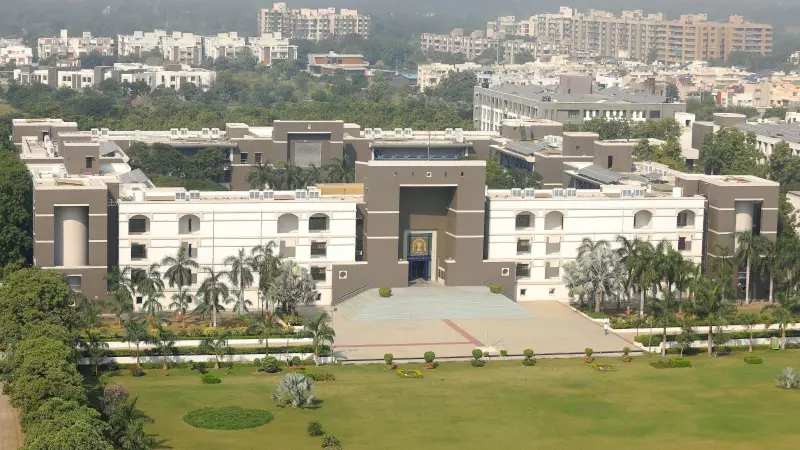
The Gujarat High Court has delivered a split verdict in a significant international cyber slavery case, denying bail to a Mumbai-based professional accused of laundering cryptocurrency proceeds while granting relief to two other accused. The court highlighted the distinct roles played by each individual in the elaborate racket.
Court Sees 'Important Cog', Denies Bail to Crypto Handler
On Tuesday, January 6, 2026, a bench of Justice N S Kariel rejected the regular bail plea of Shashank Saxena, a 24-year-old MBA professional from Mumbai. The court orally observed that Saxena was not an innocent victim but a "willing accomplice" and an "important cog in the wheel of crime." The court stated that without his support, the crime may not have taken place.
Saxena was arrested by the Surat Cyber Crime police in a September 2025 case for his alleged role in converting cryptocurrency worth over Rs 1.54 crore into US dollars. The prosecution argued that these funds were proceeds from an international cyber slavery operation run by Chinese agents in Myanmar.
The court noted that while Saxena's role was not directly linked to luring victims, he acted as an agent for the main accused, Neepender alias Nirav Lavkush Chaudhary. His task was to convert cryptocurrency received from the crime syndicate into e-wallets and then into US dollars for a commission. "The present applicant may not have been an innocent victim but…a willing accomplice," the court remarked, dismissing his bail application despite the chargesheet being filed.
Two Accused Granted Bail: 'Small-Time Players' Unaware of Consequences
In contrast, the same bench granted bail to the two other accused in the case—Akib Husen Saiyed, a clothing shop owner from Chhatral, Gujarat, and Danish Dantreliya from Sabarkantha. The court accepted that they were "small-time players" who acted in a "bonafide" manner, attempting to find good employment for their friends without knowing the devastating consequences.
The prosecution case stated that Dantreliya contacted Saiyed to refer individuals seeking jobs abroad. They allegedly received commissions of Rs 28,000 and Rs 21,500 per person, respectively, for sending youths to Myanmar. The air tickets were sent through them. However, the court found that beyond this role, they had no part in the larger conspiracy and were unaware the recruits would be trafficked to Myanmar to work as cyber slaves.
Granting them bail on a personal bond of Rs 50,000 each with conditions like monthly police station attendance, the court said not releasing them might amount to pre-trial punishment.
The Human Trafficking and Cyber Slavery Racket
The case, investigated by the Surat Cyber Crime police, involves a syndicate that lured Indian citizens with fake job offers promising salaries of around Rs 70,000 per month in Thailand. Once taken to Thailand, the victims were illegally transported to Myanmar, where they were held captive and forced to carry out cyber crimes for Chinese-led syndicates.
Assistant Public Prosecutor Jay Mehta, opposing Saxena's bail, highlighted the gravity of the offence, stating that Indian citizens are being held as "cyber slaves" in a foreign country and used in networks of digital arrests operated by Chinese and other foreign nationals. The court concurred, citing the seriousness of the crime as a key reason for denying Saxena's plea.
This ruling underscores the judiciary's nuanced approach, distinguishing between direct, knowing facilitators of financial crime in complex cyber networks and individuals manipulated into participating in the early stages of a human trafficking chain.