Gujarat Consumer Redressal System Grapples with Significant Vacancies and Case Backlog
New information presented in Parliament has exposed critical staffing shortages and a growing backlog of cases within Gujarat's consumer dispute resolution framework. The data reveals a system under considerable pressure, struggling to meet its mandate of providing timely justice to consumers.
Persistent Vacancies Across State and District Commissions
According to a written reply by Union Minister of State for Consumer Affairs, B L Verma, as of December 31, 2025, the Gujarat State Consumer Disputes Redressal Commission (SCDRC) is operating with three vacant member positions. While the post of the commission's president is filled, the absence of these three members significantly hampers its operational capacity.
The situation is even more acute at the district level. Out of the state's 38 District Consumer Disputes Redressal Commissions, the posts of presidents in 11 districts remain unfilled. Furthermore, an additional 28 member positions across various district commissions are also vacant. This widespread shortage of adjudicating officers directly impacts the efficiency and speed of the consumer grievance redressal process.
Alarming Disparity Between Case Filings and Disposals
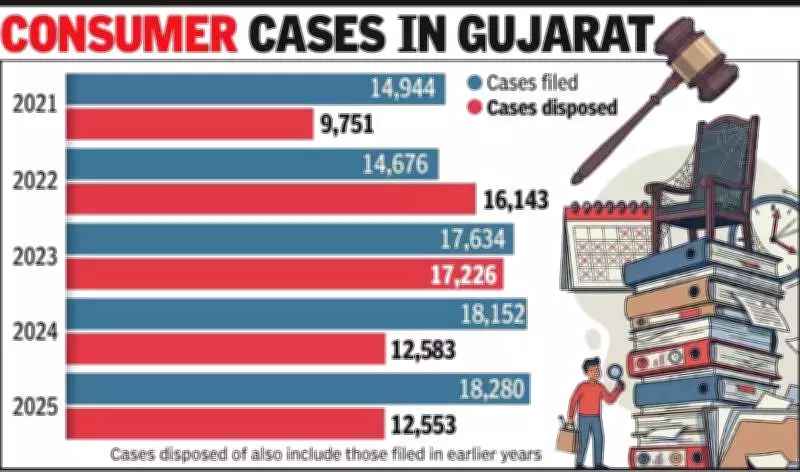
The parliamentary data, provided in response to queries from Lok Sabha MP Tangeela Uday Srinivas, highlights a worrying trend in case management. In the calendar year 2025, a total of 18,280 new consumer dispute cases were filed across all consumer courts in Gujarat.
However, the courts managed to dispose of only 12,553 cases during the same period. It is important to note, as clarified by the minister, that the disposed cases include not only those filed in 2025 but also pending cases from previous years. This indicates a substantial and growing backlog, where the inflow of new cases continues to outpace the system's disposal rate.
Legal Mandate for Timely Resolution Contrasts with Ground Reality
The revelations stand in stark contrast to the legal framework governing consumer protection. Section 38(7) of the Consumer Protection Act, 2019 mandates that every consumer complaint should be disposed of as expeditiously as possible. The law sets a clear target:
- An endeavour must be made to decide a complaint within three months from the date the opposite party receives notice, for cases not requiring commodity analysis or testing.
- For complaints that do require such analysis, the endeavour is to decide the matter within five months.
The current vacancy crisis and the significant gap between filings and disposals suggest that these statutory timelines are being severely challenged on the ground. The MP's query specifically sought information on whether any time-bound targets or norms were prescribed for disposal, underscoring concerns about delays in justice.
The combination of unfilled critical positions and a mounting caseload raises serious questions about the accessibility and effectiveness of consumer justice in Gujarat. The data underscores an urgent need for administrative action to fill these vacancies and strengthen the institutional capacity of consumer forums to fulfill their vital role in protecting consumer rights.