Government Raises Alarm Over Misuse of Insolvency and Bankruptcy Code in Supreme Court
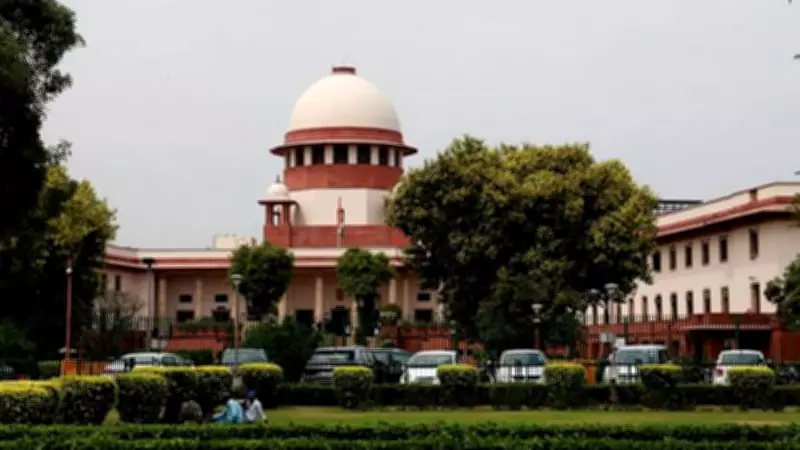
The Indian government has formally alerted the Supreme Court about serious concerns regarding the alleged misuse of the Insolvency and Bankruptcy Code (IBC), 2016, by companies facing financial insolvency. This development came during a crucial hearing before a three-judge bench presided over by Chief Justice of India Surya Kant.
Centre's Serious Consideration of IBC Platform Misuse
Solicitor General Tushar Mehta, representing the Centre, conveyed to the bench that the government is "seriously considering" examining how proceedings under the IBC are being exploited. The bench, which also included Justices Joymalya Bagchi and Vipul M Pancholi, was hearing a petition seeking an investigation into alleged bank frauds involving the Reliance Anil Dhirubhai Ambani Group (RADAG).
During the proceedings, Advocate Prashant Bhushan, appearing for petitioner E A S Sarma, presented a stark example of potential abuse. He informed the court that a group company with outstanding dues exceeding Rs 47,000 crore was sold for a mere Rs 455 crore to a company owned by a brother of the original owners. This case highlighted the dramatic undervaluation of assets that has become a point of contention.
Chief Justice's Strong Observations on IBC Manipulation
Chief Justice Surya Kant expressed deep concern over the current state of IBC proceedings, stating, "Unfortunately, IBC platform is nowadays being misused like anything." He elaborated on the modus operandi, explaining that assets are first significantly undervalued, followed by auctions that are "completely a pre-planned game." The CJI noted that typically, "somebody from the family or close friends comes and buys it," suggesting collusion and lack of transparency in the resolution process.
The Chief Justice further emphasized that such matters are appearing before the court on a daily basis, indicating a systemic issue rather than isolated incidents. He raised questions about the evaluation process, pointing out that companies often have their own people conduct valuations that result in figures "not even 1-10% of the actual market value." Additionally, he expressed doubts about the conduct of resolution professionals, observing that their actions are frequently questionable.
Government's Response and Legal Implications
Solicitor General Tushar Mehta confirmed the government's active engagement with this issue, stating, "The government of India is also seriously considering this issue in IBC." He added that he is personally involved in discussions but could not elaborate further as the matter is under "very serious consideration." This indicates potential policy reviews or amendments to the IBC framework to prevent such misuse.
The term "haircut" was also discussed during the hearing, with Mehta describing it as "phenomenal." In IBC proceedings, a haircut refers to the substantial reduction creditors must accept when a company cannot repay its full debt. Bhushan highlighted another critical aspect, noting that "the bankruptcy is declared by the very company which is facing bankruptcy," raising concerns about conflicts of interest and procedural integrity.
This Supreme Court hearing underscores growing scrutiny of India's insolvency resolution mechanisms and signals possible reforms to ensure the IBC serves its intended purpose of efficient debt resolution rather than becoming a tool for asset stripping or fraudulent transfers.