Centre Places Bar Council of India's Stipend Plan in Lok Sabha, Proposing Rs 20,000 Monthly for Junior Advocates
In a significant move aimed at bolstering the early careers of legal professionals, the Union Ministry of Law and Justice has formally presented a recommendation to the Lok Sabha for establishing a minimum monthly stipend for junior advocates across India. The proposal, outlined in a notice issued by the Press Information Bureau on February 6, 2026, suggests a stipend of Rs 20,000 per month for those practicing in urban areas and Rs 15,000 for those in rural regions.
Details of the Stipend Proposal and Government Action
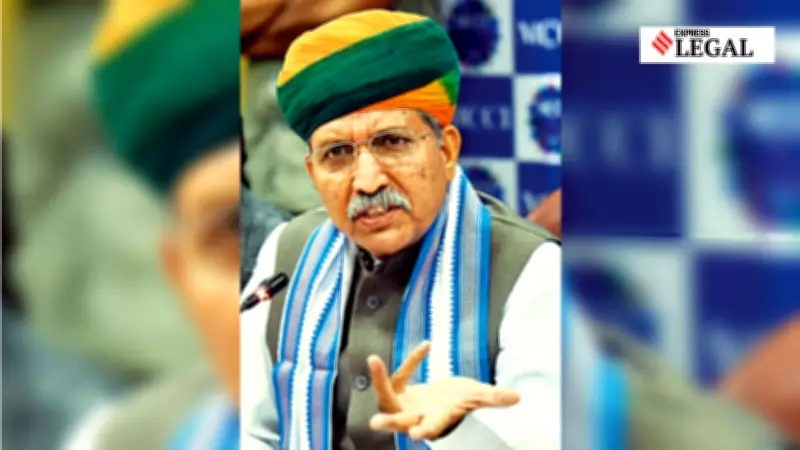
Union Minister of State for Law and Justice, Arjun Ram Meghwal, placed the recommendation before the Lok Sabha last week, following a circular from the Bar Council of India (BCI) that highlighted the income challenges faced by junior advocates. The BCI, in its October 2024 circular addressed to all state bar councils and associations, emphasized the need for financial support, stating, "The Bar Council of India is aware that early-career income challenges are faced by a large segment of junior advocates." This initiative builds on a July 2024 directive from the Delhi High Court, which had instructed the BCI to decide on a minimum stipend after hearing a plea from advocate Simran Kumari.
Senior Lawyers Hail the Move as a Step Towards Democratization
Prominent senior advocates have widely welcomed the proposal, praising it as a necessary measure to ensure dignity and sustainability for young lawyers. Senior Advocate Sidharth Luthra remarked, "It is a noble profession and young lawyers need sustenance and dignity. But along with this, senior members of the Bar must also be sensitised by Bar Councils to be generous to young advocates who train under them." Similarly, Former Additional Solicitor General Pinky Anand commended the government for encouraging budding lawyers, noting that such schemes provide a level playing field and support motivation and growth.

Senior Advocate Vikas Pahwa described the step as "much-needed," highlighting that the early years at the Bar involve intense hard work and limited financial stability. He cautioned, however, that effective implementation requires a uniform framework across states with active involvement from State Bar Councils and associations. Senior Advocate Sanjoy Ghose pointed out that first-generation lawyers, in particular, will benefit from financial support in an ecosystem where junior lawyers often earn less than security guards.
Junior Advocates Call for Annual Reviews and Stronger Implementation
While junior advocates have termed the recommendation a "much needed and long overdue step," they have also raised concerns about its advisory nature and implementation challenges. Mumbai-based advocate Mahir Amir shared his experience of receiving offers as low as Rs 5,000 a month in Delhi, making it difficult to sustain oneself. He urged that the stipend framework be reviewed annually to reflect rising costs and regional realities.
Arvind, a practising advocate at the Madras High Court, noted that the recommendation lacks statutory backing and a uniform definition for "junior advocate," which could hinder verification. Ananya Pattabhiraman, also from the Madras High Court, emphasized the scheme's focus on inclusivity, questioning whether other states will follow suit. Advocates from Patna and Jharkhand High Courts echoed these sentiments, calling for diligent execution to reduce entry barriers and promote equality in the legal profession.
State-Level Initiatives and Future Considerations
It was further noted that states like Kerala, Tamil Nadu, Andhra Pradesh, and Jharkhand have already introduced stipend and financial assistance measures for junior advocates through government schemes or bar council welfare programs. The notice clarified that implementation at the state level, such as in Maharashtra, would require frameworks involving state bar councils and government-backed programs with budgetary support.

Looking ahead, senior advocates like Sajan Poovayya have called for thoughtful augmentations, including structured mentorship certification, transparent compliance systems, and incentivized participation by law firms. Poovayya stressed, "The vitality of constitutional democracy depends upon a Bar that is independent, intellectually rigorous, and socially representative. Supporting junior advocates is, in truth, strengthening the Republic’s justice architecture."
This proposal marks a pivotal moment in addressing the economic fragility faced by junior advocates, with the potential to enhance diversity and depth within India's legal community.