Goa Faces Escalating Sex Trafficking Crisis with Thousands Affected
Panaji: The coastal state of Goa is grappling with a severe and growing crisis of commercial sexual exploitation, with recent estimates indicating a significant increase in the number of individuals involved. According to Arun Pandey, director of Anyay Rahit Zindagi (ARZ), the nodal agency for Goa police in rescuing victims of commercial sexual exploitation (CSE), the figures now range between 13,000 and 14,000 people engaged in these activities.
Alarming Statistics Highlight Vulnerability
Pandey emphasized that this staggering number represents approximately 1% of Goa's total population, underscoring the scale of the problem. "Our field engagement in combating sex trafficking indicates the number of persons involved in commercial sexual activities has increased," he stated, pointing to Goa's status as a major tourist destination that remains vulnerable to organized sex trafficking networks.
The breakdown of these individuals reveals a troubling pattern: nearly 6,800 women are officially listed with the Goa State AIDS Control Society and reside permanently in the state. However, the remaining 7,000 or so are trafficked into Goa on short-term assignments from various other Indian states and foreign countries, highlighting the interstate and international dimensions of this illicit trade.
Urgent Calls for Comprehensive Action and Rehabilitation
While police efforts have led to many rescues and admissions to government protective homes, Pandey raised critical questions about the adequacy of rehabilitation and reintegration programs. "The question arises: are we doing enough for their rehabilitation and reintegration? However, a major concern also remains: are we able to reach out to all the girls and women who are trafficked and commercially sexually exploited in Goa?" he asked, stressing the need for more inclusive and effective support systems.
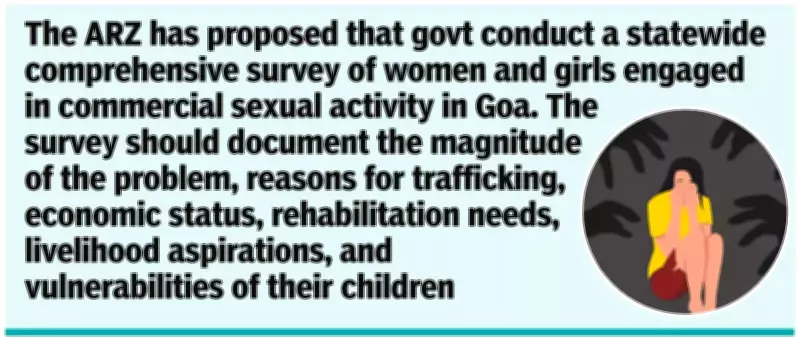
To address these gaps, ARZ has proposed a statewide comprehensive survey that would include a confidential assessment of women and girls engaged in commercial sexual activity. This survey aims to document:
- The full magnitude of the problem
- Underlying reasons for trafficking
- Economic status and family dependencies
- Specific rehabilitation needs and livelihood aspirations
- Vulnerabilities faced by their children
Based on this data, ARZ advocates for the development of an evidence-based policy to enable targeted and measurable interventions that can effectively combat trafficking and support victims.
Protecting Children and Strengthening Anti-Trafficking Units
A particularly concerning aspect highlighted by Pandey is the risk faced by children of women in commercial sexual activities. "Many children of women in commercial sexual activity are at high risk of second-generation exploitation," he warned. To mitigate this, ARZ recommends implementing targeted scholarship schemes, providing secure hostel facilities, offering mentoring support, and creating vocational pathways for adolescents to break the cycle of exploitation.
Furthermore, ARZ has called for urgent strengthening of the anti-human trafficking unit (AHTU) in Goa. "It will enable to increase the number of rescues of victims of sex trafficking, and the prosecution of traffickers, thus contributing towards controlling sex trafficking in Goa," Pandey explained, emphasizing that enhanced resources and capabilities for AHTU are crucial for more effective law enforcement and victim protection.
Pandey also stressed that prevention of commercial sexual exploitation at the source is vital, but experience shows that preventing exploitation among vulnerable women and girls from Goa itself is equally critical. This dual approach requires coordinated efforts between prevention, rescue, rehabilitation, and legal prosecution to create a sustainable solution to Goa's sex trafficking crisis.