

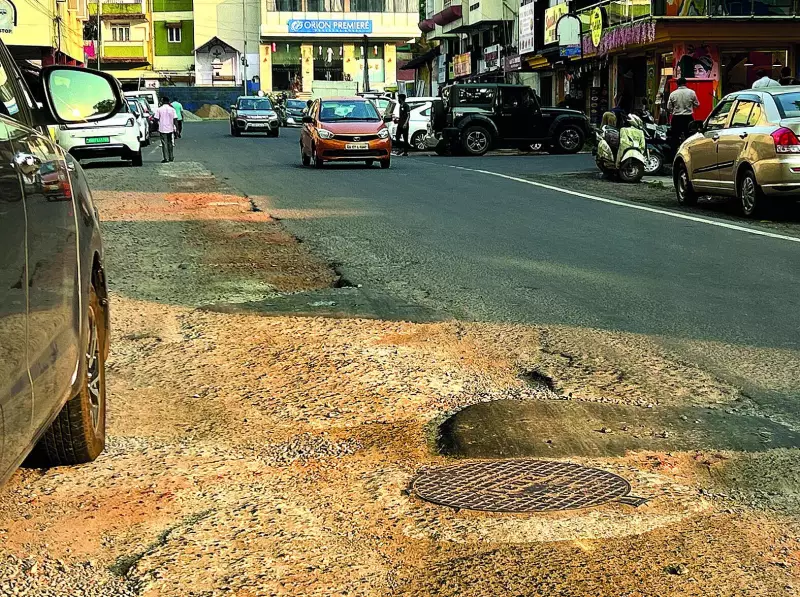
The North Goa Road Safety Council has sounded an alarm over the alarming rise in accidents and a concerning lack of accountability for failures in road infrastructure. At a recent review meeting in Panaji, senior officials and activists highlighted a critical legal provision that has remained unused despite numerous fatal incidents.
Key Legal Provision Remains Dormant
Central to the discussion was Section 198A of the Motor Vehicles (MV) Act. This powerful clause permits legal action against engineers, contractors, and government officials deemed responsible for accidents caused by faulty road design or poor infrastructure. Shockingly, the council noted that this provision has not been invoked even once in the state, despite several opportunities.
Road safety activist Roland Martins pointed to a recent tragedy in Ponda to underscore this failure. "Despite several fatal accidents, including a recent accident in Ponda where a rider was killed in a head-on collision due to roadwork mismanagement, no cases were booked under the provision," Martins stated. He expressed concern that enforcement agencies have consistently failed to act, adding that the Supreme Court could eventually seek accountability for these years of inaction.

Poor Traffic Management During Roadworks a Major Hazard
The meeting meticulously examined how lapses during road construction and repair directly contribute to serious accidents. A primary concern raised was the dangerous practice of allowing two-way traffic on stretches designated as one-way during roadworks. This chaotic traffic management, often without proper signage or supervision, creates extremely hazardous conditions for commuters.
Call for Coordinated Action and Grievance Redressal
To address these systemic issues, the council emphasized the urgent need for better inter-departmental coordination. It was agreed that agencies like the Public Works Department (PWD), the transport department, and the traffic police must work in a synchronized manner to prevent such safety lapses. The meeting concluded with a resolution that all relevant government bodies, including the directorate of panchayats, must establish a time-bound grievance redressal mechanism. This system would ensure public complaints regarding dangerous road conditions are addressed promptly, potentially preventing future accidents.
The council's review serves as a stark reminder that holding individuals and departments accountable for infrastructural negligence is crucial for improving road safety in Goa. The consistent non-application of Section 198A of the MV Act points to a significant gap between law and enforcement that needs immediate correction.






