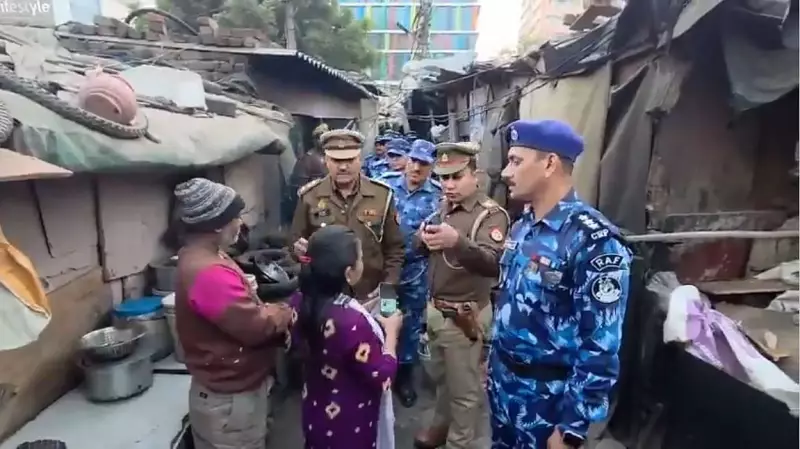
A claim by a police officer in Uttar Pradesh about a device that can determine a person's nationality has ignited a social media storm and raised serious questions about verification procedures. The incident occurred during a routine check in Ghaziabad.
The Controversial Claim
On January 1, 2026, a video clip surfaced on social media platform X (formerly Twitter). In it, Ghaziabad Station House Officer (SHO) Ajay Sharma is heard telling individuals that the police possess a machine capable of detecting whether a person is an Indian citizen or a Bangladeshi national. The officer suggested the device works when placed on a person's back or waist.
The tweet, posted by user @SurajKrBauddh, was captioned with sarcasm: "Machine to detect nationality... Instead of harassing people, why doesn't UP Police get this machine patented first?" The post quickly went viral, drawing widespread criticism and mockery.

Police's Official Clarification
Responding to the growing controversy, the official handle of the Police Commissionerate Ghaziabad (@ghaziabadpolice) issued a clarification on the same day. Their statement framed the action as part of ongoing crime control efforts.
The police stated that the process of questioning and verifying suspicious persons in temporary settlements and slums is carried out periodically. The activity in question was conducted by Kaushambi police under this ongoing process. The official tweet emphasized that the verification was done to test the authenticity of people's documents.
The police clarification made no mention of the alleged 'citizenship detection machine,' focusing instead on standard document verification protocols.
Public Reaction and Lingering Questions
The disparity between the officer's on-ground claim and the official police statement has fueled public skepticism. The incident highlights several key concerns:
- Credibility of Police Methods: The claim of a sci-fi-like detection device undermines public trust in police procedures.
- Potential for Harassment: Critics argue such unverified claims can lead to the profiling and harassment of vulnerable communities during verification drives.
- Protocol vs. Practice: The gap between the official document-checking protocol and the unofficial narrative presented by the SHO points to a need for better training and accountability.
The event has sparked a broader debate on the methods used in citizenship verification drives in India, especially in sensitive border states like Uttar Pradesh. While the police maintain the checks are for crime control, the officer's remark has brought the focus squarely onto the need for transparency, scientific methods, and adherence to legal frameworks during such exercises.