Mumbai-Pune Gas Tanker Crisis Exposes Critical Gaps in India's HazMat Response
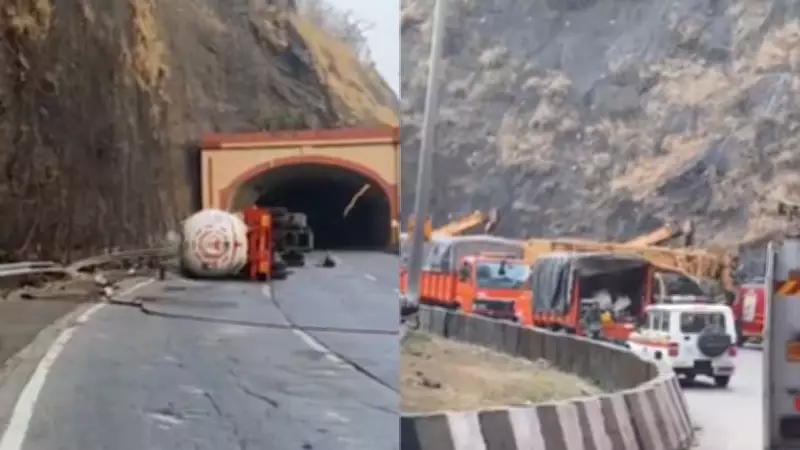
The extended and high-stakes operation to neutralize a dangerous gas tanker on the Mumbai-Pune expressway has starkly revealed profound shortcomings in India's readiness to manage chemical emergencies on its roadways. Experts are now sounding the alarm, identifying the absence of dedicated, 24/7 hazardous materials (HazMat) response teams as a fundamental and critical vulnerability in the nation's emergency infrastructure.
Delayed Decisions and Heightened Risks
According to specialists who conducted post-incident evaluations, the lack of an on-call, specialized HazMat unit directly led to significant delays in making crucial operational decisions. One such critical decision was the adoption of a high-risk decanting strategy, which involved transferring the hazardous gas from the damaged tanker into empty containers. These experts emphasize that such procedural delays substantially escalate the danger to both emergency personnel and the general public, turning a contained incident into a prolonged crisis.
The decanting process itself is an operation of immense technical complexity and time sensitivity. It demands precise pressure management, the use of specialized hoses, and continuous, vigilant monitoring. These challenges are compounded when the tanker's valves have become loosened or the vehicle itself has become mechanically unstable following an overturn. Specialists confirm that these exacting constraints stretched the recent operation over many tense hours, testing the limits of the available response capabilities.
Another phase of extreme peril was the eventual lifting of the overturned tanker. This maneuver could only be safely attempted after the level of liquid gas inside had been sufficiently reduced. Any attempt at premature lifting risked triggering a sudden, catastrophic release of gas, with the potential to cause a devastating explosion.
Experts Demand Structural Reforms and Immediate Action
Amit Bhargava, co-founder and CEO of the Canada-based firm EnviroApps, stated that this incident powerfully underscores the dangers inherent in the largely unregulated movement of hazardous materials on Indian highways. "India has thousands of hazardous material tankers moving daily. It is absolutely essential to establish and enforce designated routes for the transportation of dangerous goods to prevent incidents like this from occurring," he asserted.
Major General P K Shrivastava (retd), an expert in chemical, biological, radiological, and nuclear (CBRN) threats, said the episode has reignited urgent calls for institutional reform. "Maharashtra, and indeed India, needs to invest in dedicated HazMat units, mandate industry-linked emergency responders, and implement faster activation protocols. The goal must be to ensure that highway accidents do not inevitably turn into prolonged, high-stakes emergencies," he emphasized.
In response to the crisis, experts and emergency planners have outlined a comprehensive series of urgent measures designed to mitigate risks from future chemical and gas tanker accidents:
- Development and enforcement of a clearly defined, legally binding Standard Operating Procedure (SOP) for chemical and gas tanker emergencies. This SOP must detail specific roles and enforce strict response timelines for all involved parties, including oil companies, district administrations, police, fire brigades, and disaster response agencies.
- Mandatory deployment of industry-backed rescue and recovery vans, specifically equipped to handle compressed gas leaks, by petroleum companies, gas refineries, and chemical manufacturers.
- Strategic stationing of these specialized response units along major national highways and key industrial corridors to guarantee rapid deployment and intervention.
- Restricting the movement of highly hazardous gas tankers to designated time windows, preferably during low-traffic hours, to minimize public exposure and allow for quicker isolation of accident sites.
- Implementation of compulsory emergency-response training for all drivers who transport hazardous materials.
- Ensuring every tanker carries a basic emergency kit to manage minor leaks, alongside real-time communication systems to alert authorities immediately in case of an incident.
- Increased investment by state governments in specialized, advanced training for fire services, police, and disaster management personnel. This training must be supported by regular, realistic mock drills conducted on highways and near major industrial hubs.
A Growing and Unchecked Risk on National Highways
The scale of hazardous material transport across India is rising at a sharp and alarming rate. Industry data indicates that nearly 1,000 propylene gas tankers move daily from refineries in Kochi, Visakhapatnam, Chennai, and Jamnagar to industrial consumers nationwide. Furthermore, approximately 4,000 ammonia tankers originate from Maharashtra's dense industrial clusters, such as Taloja and Chembur, supplying southern states and other regions.
While propylene is highly flammable, experts issue a grave warning that an ammonia leak could prove even more catastrophic. Such an event would release toxic gases that would be extremely difficult, if not impossible, to contain in densely populated urban areas or high-traffic zones, leading to potential mass casualties.
Specialists caution that without urgent and comprehensive reforms to regulation, routing protocols, and emergency preparedness frameworks, it may only be a matter of time before a manageable highway accident escalates into a large-scale, national disaster. The Mumbai-Pune expressway incident serves as a critical wake-up call, highlighting the pressing need for systemic change to safeguard public safety on India's roads.