
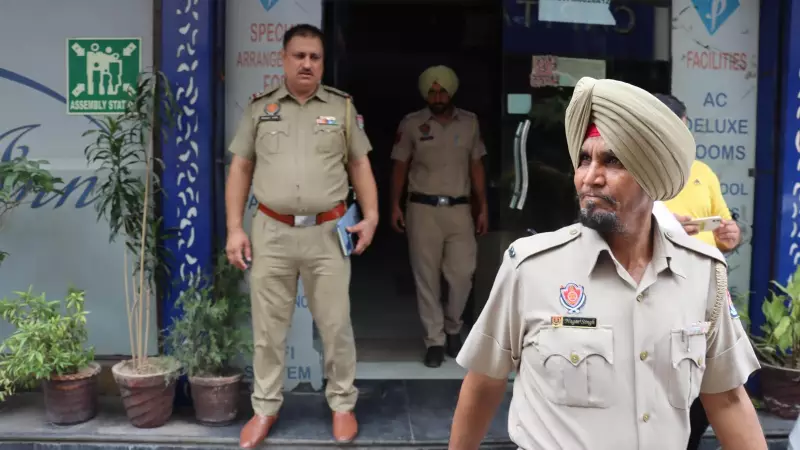
The Punjab Police Special Investigation Team (SIT) has made a significant arrest in the high-profile case involving the disappearance of 328 saroops (holy volumes) of the Guru Granth Sahib. On Saturday, the SIT arrested Kanwaljit Singh, a former assistant supervisor in the publication department of the Shiromani Gurdwara Parbandhak Committee (SGPC), who had originally exposed the scandal in 2020.
The Arrest and Raids
Kanwaljit Singh's arrest marks the second apprehension in this sensitive case. The police had earlier, on Thursday, arrested chartered accountant Satinder Singh Kohli. The SIT conducted simultaneous raids at 15 locations across multiple cities, including eight places in Amritsar, two in Chandigarh, and others in Gurdaspur, Rupnagar, and Tarn Taran districts.
Amritsar Police Commissioner Gurbhej Singh Bhullar stated that the investigation is being driven purely by facts and evidence. "Whatever evidence we will get will be placed on record. The raids were conducted at the residence of CA Kohli in Chandigarh and at places linked to the other accused," he said.
The Whistleblower's Role and the Case History
Kanwaljit Singh was the official record-keeper for the saroops during his tenure at the SGPC. Upon his retirement in May 2020, he formally flagged that 267 saroops were unaccounted for and even gave a written pledge to compensate the SGPC for the loss. Subsequently, on June 29, 2020, he filed a police complaint against the SGPC itself, accusing it of negligence.
The current police case was registered in Amritsar on December 7 against 16 individuals. The First Information Report (FIR) includes serious charges under the Indian Penal Code, such as:
- Section 295: Injuring or defiling a place of worship or sacred object with intent to insult a religion.
- Section 295-A: Deliberate and malicious acts intended to outrage religious feelings.
- Section 409: Criminal breach of trust.
- Section 465: Forgery.
- Section 120-B: Criminal conspiracy.
SGPC's Strong Opposition and Allegations of Political Interference
As the police intensified their probe, SGPC President Harjinder Singh Dhami launched a sharp critique against the ruling Aam Aadmi Party (AAP) government in Punjab. He accused the state administration of interfering in the SGPC's administrative rights for "political mileage."
"Being the president of the SGPC, I will not allow any kind of government interference in matters that are under the apex gurdwara body’s jurisdiction," Dhami told the media. He asserted that under the Sikh Gurdwaras Act, 1925, the SGPC has the sole authority to initiate departmental action against its employees for any lapses.
Dhami questioned the police's jurisdiction, stating, "We have nothing to do with 16 people (named in the FIR). It was an internal matter of the SGPC." He criticized the police for summoning SGPC employees and demanding call records, framing it as an excuse to undermine the Sikh institution.
The SGPC chief further cited a report by an Akal Takht-appointed committee, which stated that justice cannot be expected from the police in such matters. He emphasized that the report also warned against politicizing the issue, stating that doing so would violate the edict of Sri Akal Takht Sahib.
Political Backdrop and Government's Stance
The political tension around the case is palpable. On December 29 last year, Punjab Chief Minister Bhagwant Mann defended the registration of the FIR, saying it was done after several Sikh bodies demanded a thorough probe. He accused the SGPC of failing to locate the missing saroops and of "using the Akal Takht as a shield" to protect individuals close to their "masters."
This case, which first came to light in 2020, had previously been investigated by a panel appointed by the Akal Takht, which found several SGPC officials guilty of misconduct. The current police investigation represents a new and contentious chapter, pitting the state government's legal authority against the SGPC's claim of religious and administrative autonomy.