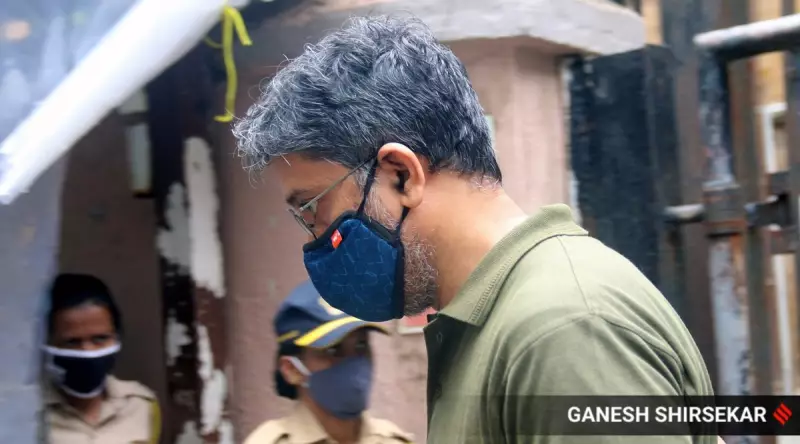
The long-running Elgaar Parishad case has reached another milestone, with the number of accused behind bars shrinking to just three. On Thursday, December 4, 2025, the Bombay High Court granted bail to former Delhi University professor Hany Babu, who was arrested by the National Investigation Agency (NIA) in 2020.
A Case Marked by Delays and Bail
With Babu's release, the landscape of the case has shifted dramatically. Of the 16 individuals originally arrested by the Pune police and later the NIA, only three now remain in judicial custody. The case, which alleges links to the banned CPI (Maoist), has been crawling through the legal system for years without the formal framing of charges.
The court, in granting bail to Hany Babu, cited his long period of incarceration without trial as a primary ground. This reasoning echoes the bail orders for 11 other accused who have been released over the past few years. Tragically, one accused, 84-year-old tribal rights activist Stan Swamy, died in custody in July 2021.
In a significant order in January 2025, the Bombay High Court had directed the special court in Mumbai to expedite the process and frame charges within nine months. That deadline has now passed, and charges are yet to be formally framed, a necessary step before the actual trial can begin.
The Stumbling Blocks: Evidence and Procedure
The prosecution's case hinges on electronic evidence and letters allegedly recovered from the accused. The NIA claims these materials prove the accused were members of the CPI (Maoist) and engaged in activities furthering its cause. They have been booked under stringent sections of the Unlawful Activities (Prevention) Act (UAPA) and the Indian Penal Code, including Sections 153A (promoting enmity), 121 (waging war), and 124A (sedition).
However, the defense has consistently challenged this evidence. Accused individuals have pointed to independent forensic reports suggesting the seized electronic devices were infected with malware, casting doubt on the integrity of the evidence. This argument has found resonance in several bail hearings.
The procedural journey has been complex. After the NIA took over the case in 2020, it filed a chargesheet against 16 accused. Since 2021, the special court has been hearing arguments on discharge applications filed by most of the accused in 2023. While the arguments for the accused are complete, the NIA's counter-arguments are scheduled to begin this month. The court will rule on these discharge pleas only after hearing both sides.
A Timeline of Releases and Legal Scrutiny
The bail journey for the accused reveals a pattern of courts questioning the evidence and emphasizing the right to a speedy trial.
Notable bail orders include:
- November 2022: Anand Teltumbde became the first to get bail on merits. The High Court noted that a key letter was not recovered from him and that merely being the brother of a Maoist leader was not grounds for indictment.
- July 2023: The Supreme Court granted bail to Vernon Gonsalves and Arun Ferreira, stating the evidence letters had "weak probative value."
- December 2023: The High Court granted bail to Gautam Navlakha, observing that no terrorist act was attributed to him and that evidence linking him to other cases was irrelevant.
- April 2024 & January 2025: Shoma Sen, and later Rona Wilson and Sudhir Dhawale, were granted bail primarily on grounds of prolonged incarceration.
- September & November 2025: Mahesh Raut got interim bail on medical grounds, and Jyoti Jagtap received interim bail from the Supreme Court citing the long delay in trial.
In many of these orders, courts have made pointed observations. They have differentiated between mere membership of a banned organization and committing terrorist acts, often finding the evidence for the latter lacking. The sheer volume of the case—with a chargesheet of about 20,000 pages and 363 witnesses cited—has also been noted as a factor making a swift trial unlikely.
The three accused who remain in jail are lawyer Surendra Gadling (arrested June 2018) and cultural activists Sagar Gorkhe and Ramesh Gaichor (arrested September 2020). Gorkhe's bail plea is currently pending before the High Court.
As the legal arguments on discharge continue in Mumbai, the Elgaar Parishad case stands as a stark example of the challenges in prosecuting complex cases under anti-terror laws, where the journey to trial itself can span many years.