

Devprayag Police Station: A Glacial Pace of Crime in Uttarakhand's Hills
In the serene hills of Uttarakhand, the Devprayag police station in Pauri Garhwal district presents a unique paradox. While police stations across India grapple with rising crime rates, this station registered a mere four cases in the entire year of 2025. This remarkably low number highlights a deeper story of demographic shifts and economic challenges in the Himalayan region.
The Statistics That Tell a Story
According to official data, the Devprayag police station, which has jurisdiction over 80 hamlets and 70 revenue police villages, reported just four cases in 2025. This places it among the police stations with the lowest crime registration in Uttarakhand. For context, the National Crime Records Bureau (NCRB) data reveals that two police stations in Pithoragarh district registered zero cases, while stations in Bageshwar and Champawat districts recorded only three cases each in the same year.
Station House Officer (SHO) Amarjeet Singh Rawat, who arrives punctually at 9:45 AM each day, describes the station's environment as "quiet and slow." Having previously served at the Raipur police station in Dehradun district, which registered around 450 cases in 2025, Rawat finds the contrast striking. "Devprayag is different; it's quiet and slow," he observes, noting that many disputes in the area are resolved through panchayats and gram sabha meetings rather than formal police intervention.

The Human Element Behind the Numbers
The Devprayag police station, established in 1987, has historically recorded few cases annually. Originally catering to pilgrims traveling to Badrinath on foot, the station now serves a dwindling population. SHO Rawat estimates that only about 4,500 residents fall under the civil police limits, with many villages being manned by revenue officials—a system being phased out following Uttarakhand High Court orders in May 2025.
The 2011 Census recorded Pauri Garhwal district's population at 6.86 lakh, but subsequent migration has dramatically altered the landscape. Between 2011 and 2017, the Migration Commission found that 734 villages in Uttarakhand were completely vacated, while 565 others saw their populations halve. This exodus has left behind aging communities and hollowed-out settlements.
Daily Life at India's Quietest Police Station
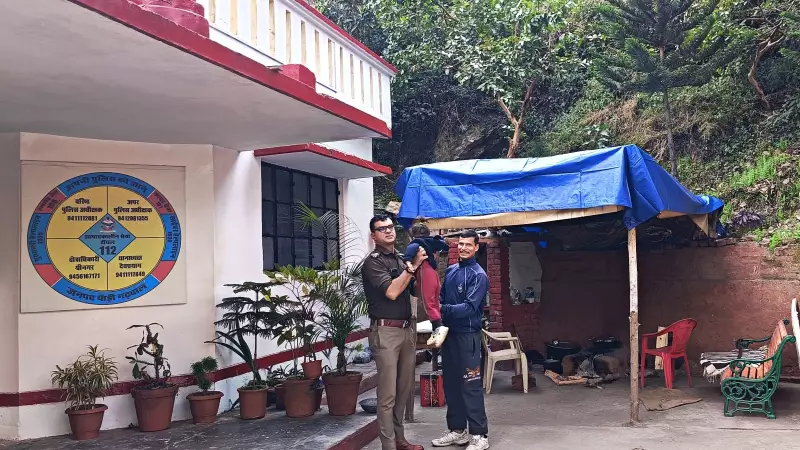
A typical day at Devprayag police station begins with the morning chill broken by the crackle of a fire in the front yard. An Alsatian dog basks in the warmth while three policemen sip lemon tea nearby. The station's pale yellow paint, applied months earlier, still smells fresh—a testament to how little activity disturbs the environment.
The station's holding cell, secured with a black grill door and padlock, has housed an accused only twice in the past six months—both times for non-bailable warrants in old cases. The four cases registered in 2025 involved minor infractions: illegal transportation of whiskey, a hotel owner being heckled, a missing person complaint after a vehicle fell into the river, and a family dispute where a drunk brother allegedly hit his sibling with a stick.
"The first case was registered when a man illegally transported 240 bottles of whiskey from Punjab," Rawat explains. "Then, a hotel owner was heckled by a group of people... Another case was a missing person complaint because a man fell into the river in his vehicle. Recently, a man accused his drunk brother of hitting him with a stick. He insisted we file an FIR."
The Economic Context: Collapse and Migration
Pradhan Badrish Kumar of Chaprauli village, located 10 km from the police station, attributes the lack of crime to the region's economic collapse. "Almost all young adults and children live outside the state," he says, sitting on his terrace with his wife Kalpeshwari Devi and acquaintance Surender Singh. "Those left behind work to feed their families. No one here has more than Rs 1,000 in their pocket at a time. The economy is largely afloat thanks to the money the children send us from outside."

Kumar notes that agriculture, once the backbone of the local economy, has nearly collapsed. "Only 3% of arable land is cultivated now," he reveals. "Since crops were being raided by wild animals, we started growing turmeric instead of wheat and millets. We consume whatever we grow; nothing is for sale. That too resulted in a drop in income. Why would someone want to stay back here?"
The migration trend has been exacerbated by changes in recruitment patterns. Kumar observes that many youth from the village previously joined the armed forces, but this opportunity "took a hit after the Agnipath scheme was launched." Most young people now work in the informal sector, with some remaining residents employed through MGNREGA (now VB-G RAM G) or construction work.
Policing in a Depopulated Landscape
Despite the low crime rate, the police personnel at Devprayag station remain active. Two sub-inspectors, an assistant SI, 10 head constables, and four constables engage in various community initiatives. They conduct outreach programs to tackle drug abuse in 40 educational institutions, spread awareness about cyber crimes and crimes against women, and participate in an Uttarakhand Police initiative for the elderly.
"We visit the elderly in villages under our jurisdiction, since the once close-knit hill communities have been hollowed out by migration," Rawat explains. This community policing approach helps maintain connections in isolated villages like Chaprauli, where most residents retire for the day by 3 PM due to increasing human-wildlife conflicts.
Contrast with the Other Side of the River
Interestingly, another police station named Devprayag exists just across the river in Tehri Garhwal district, connected by a bridge. While sharing the same name due to the eponymous temple town, the two stations have dramatically different workloads. In 2025, Tehri Garhwal's Devprayag station registered around 40 cases—ten times more than its Pauri Garhwal counterpart.
Rawat attributes this disparity to demographic differences. "This side of the river has small villages. Most disputes are not reported to the police. Instead, they are resolved at panchayats and gram sabha meetings. Crime in the hills is low because there is hardly anyone left here now," he explains.
The Psychological Impact of Khaki
Despite the low crime rate, the sight of police uniforms still evokes fear in some villages under Devprayag station's jurisdiction. At Sabdarkhal village, nearly 20 km away, resident Sunil Kumar and his wife Beena Devi react with visible anxiety when police approach their one-room house at the edge of the Dalit settlement.
"We don't speak to them unless spoken to. I am scared of them. I don't want to get into any of their business," Devi confesses, noting that she has only interacted with police once—when she needed help carrying her son's hostel belongings. Head constable Budhi Ballabh Singh Negi acknowledges this dynamic but emphasizes that most matters get resolved informally. "A man called us one night. He claimed his brother had staked a claim on his land. We told him we would come over in the morning. When we called for directions in the morning, he told us they had made up," Negi shares.
Looking Ahead: Challenges and Realities
As evening descends on Devprayag, the police station empties by 4 PM. While three personnel man the check-post on the link road to Pauri—monitoring illegal liquor dispatches that constitute the majority of crime in the area—SHO Rawat sits alone by the fire. "It is the most mundane town. Nothing happens here," he reflects. "Nobody comes, nobody goes."
Yet, this tranquility comes at a cost. The region's depopulation, driven by economic collapse and lack of opportunities, presents challenges that extend beyond crime statistics. As Uttarakhand continues to grapple with migration from its hill districts, places like Devprayag serve as quiet indicators of broader socio-economic shifts affecting India's Himalayan communities.





