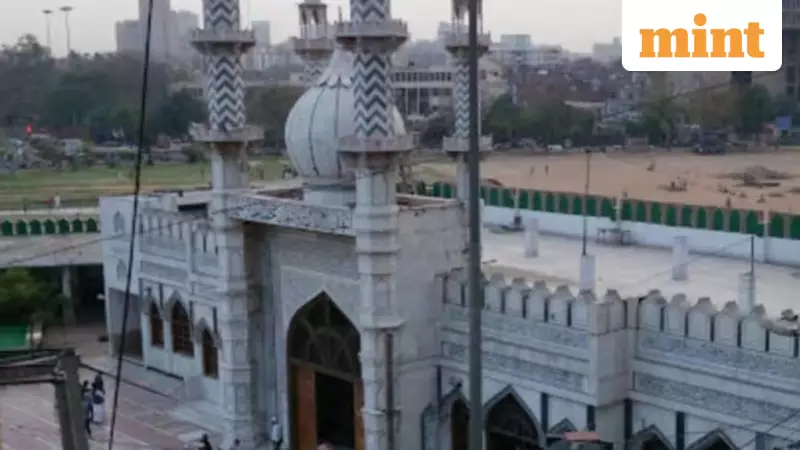
A pre-dawn demolition operation conducted by civic authorities near a historic mosque in Old Delhi's Turkman Gate area triggered significant tension and a brief clash between police and local residents in the early hours of Wednesday, January 7, 2026. The Municipal Corporation of Delhi (MCD), backed by a heavy police contingent, moved in to remove structures it alleged were encroachments on government land in the vicinity of the century-old Faiz-e-Elahi Masjid.
Operation Begins Hours Ahead of Schedule
While the demolition was officially scheduled to commence at 8 am, the authorities began the operation around 1:30 am, taking locals by surprise. Videos from the scene showed bulldozers demolishing portions of the area under the glare of lights, with a substantial number of police personnel deployed to secure the perimeter.
Officials stated the action was based on a Delhi High Court order from November 12, 2025, which directed the MCD and the Public Works Department (PWD) to clear encroachments measuring approximately 38,940 square feet at the Ramlila Ground near Turkman Gate. A subsequent notice was issued by the MCD on December 22, 2025, stating that all structures beyond a demarcated 0.195-acre plot, which includes the mosque building itself, were illegal and liable for removal.

Stone-Pelting and Police Response
According to police statements, some individuals attempted to disrupt the demolition by pelting stones at the officials and machinery on site. Madhur Verma, the Joint Commissioner of Police for the Central Range, told ANI that the situation was brought under control promptly. He emphasized that this was achieved through what he described as "measured and minimal use of force," which prevented any escalation and restored normalcy to the area.
This incident followed a similar confrontation on January 4, when MCD officials visited the site to mark the encroached area and faced resistance from local residents, leading to increased police deployment in anticipation of the demolition drive.
Legal Challenge and Waqf Board Claim
The demolition proceeded despite the Delhi High Court having issued a notice just a day earlier, on Tuesday, January 6, on a petition filed by the managing committee of the Faiz-e-Elahi Masjid. The committee's plea challenged the MCD's decision to remove the alleged encroachments from land adjoining the mosque and its graveyard at Ramlila Maidan.
In their petition, the mosque committee argued that the property in question is a notified waqf property governed by the Waqf Act, and therefore, any disputes concerning it fall under the exclusive jurisdiction of the Waqf Tribunal. They also claimed to be in possession of the land, paying lease rent to the Waqf Board, and sought the quashing of the MCD's demolition order.
A bench headed by Justice Amit Bansal acknowledged that the matter required consideration. The court directed the MCD and the Land & Development Office (L&DO) to file their replies and scheduled the next hearing for April 22, 2026.
Background and Security Context
The location has been under heightened scrutiny since a tragic security incident in late 2025. Reports indicate that Umar Un Nabi, the suicide bomber responsible for a high-intensity car explosion near the Red Fort on November 10, 2025, had visited the Faiz-e-Elahi Masjid and stayed there for over ten minutes before carrying out the attack that claimed 15 lives.
The authorities' survey, conducted jointly in October 2025, recorded that encroachments existed on land parcels belonging to various government bodies, including the MCD, PWD, and L&DO. The MCD's December notice concluded that no documentary evidence had been produced by the mosque's managing committee or the Delhi Waqf Board to establish lawful ownership or possession of the land beyond the specified 0.195 acres.
The early morning operation has reignited debates over urban encroachment drives, legal due process, and the sensitive nature of actions around religious sites in densely populated historical quarters of the national capital.