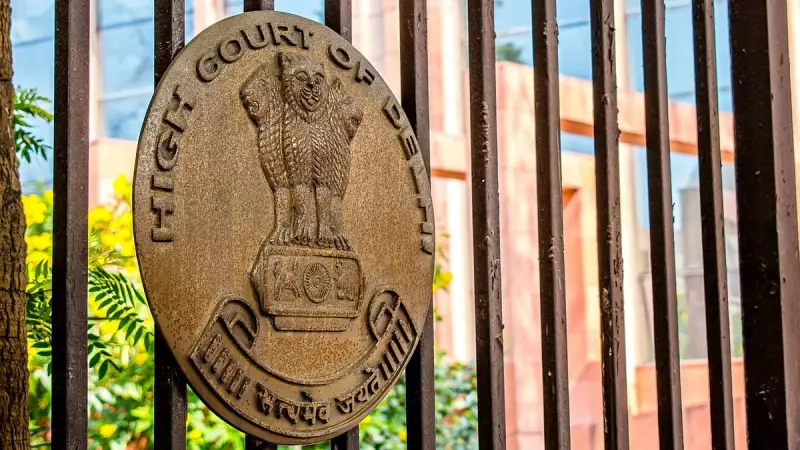
The Delhi High Court has delivered a significant verdict, dismissing a petition filed by the two sons of Hizbul Mujahideen chief Syed Salahuddin. The plea sought to quash the charges framed against them in a high-profile terror funding case investigated by the National Investigation Agency (NIA).
Court Upholds Charges in NIA's Terror Funding Probe
Justice Anoop Kumar Mendiratta, presiding over the case, firmly rejected the arguments presented by Shahid Yousuf and Syed Ahmad Shakeel. The brothers had challenged a trial court order from March 2022, which had formally framed charges against them for allegedly conspiring to wage war against the Indian state and raising funds for terrorist activities.
The court meticulously examined the evidence presented by the NIA. It found that the material on record, including financial transaction details and witness statements, prima facie indicated a conspiracy. The judge stated that at the stage of framing charges, the court only needs to see if there is sufficient ground to proceed with the trial, not conduct a mini-trial to determine guilt.

The NIA's case alleges that the two accused were actively involved in receiving and collecting funds through hawala channels. These funds were purportedly sent from Saudi Arabia by their father, Syed Salahuddin, to support and promote terrorist acts in Jammu and Kashmir. The agency claims the money was used to fuel secessionist activities in the region.
Legal Arguments and the Court's Reasoning
Counsel for the accused argued that the evidence was insufficient and that mere receipt of money did not constitute a terrorist act. They contended that the charges under the stringent Unlawful Activities (Prevention) Act (UAPA) were not made out.
However, the High Court was not convinced. It emphasized that the larger conspiracy of terror funding to destabilize the region was a critical aspect of the case. The judge noted that the accused, being the sons of the proclaimed terrorist chief, were allegedly part of a network facilitating the transfer of illicit funds intended for unlawful activities.
The court underscored that the intent and purpose behind the fund collection were paramount. If the funds were meant to support a terrorist organization's objectives, the act falls squarely within the ambit of anti-terror laws. The detailed chargesheet and supporting documents presented a coherent picture warranting a full trial.
Implications and Next Steps in the Legal Process
With this dismissal, the legal roadblock for the trial is cleared. The proceedings in the special NIA court will now continue from where they were paused. Shahid Yousuf and Syed Ahmad Shakeel will face trial on the charges already framed, which include sections of the UAPA and the Indian Penal Code related to conspiracy and waging war.
This ruling reinforces the judiciary's stance on taking a firm view in terror funding cases, recognizing them as the lifeblood of terrorist organizations. It sends a strong message that those accused of facilitating terrorism through financial means will be held accountable under the full force of the law.
The case is a part of India's broader crackdown on networks financing terrorism in Kashmir. The NIA has been actively pursuing several such cases to dismantle the economic infrastructure that supports militant groups. The trial's outcome will be closely watched as it involves the immediate family of one of the most-wanted terrorists in India.