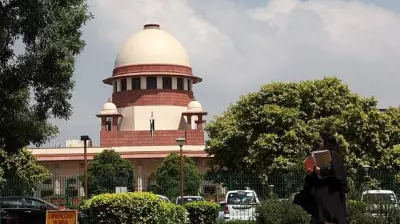
In a significant ruling, the Delhi High Court has directed the Central Industrial Security Force (CISF) to appoint a man whose job offer as a constable was revoked due to his involvement in a criminal case, despite his subsequent acquittal. The bench, comprising Justices C Harishankar and Om Prakash Shukla, termed the cancellation of his candidature a "complete travesty of justice."
Court Quashes CISF's 'Unsuitable' Declaration
The court, in its order dated December 3, 2025, quashed the CISF's decision to cancel the petitioner's appointment. The ruling emphasized that the mere institution of a criminal case against an individual cannot be an automatic ground for disqualification from government service. The authorities must examine the nature of the charges and the final outcome of the case.
The petitioner had applied for the post of General Duty Constable in the CISF and was issued an appointment offer on December 20, 2024. However, his candidature was cancelled on May 9, 2025, after a Standing Screening Committee declared him "unsuitable" due to his past involvement in a criminal case.
Background of the Criminal Case and Acquittal
The case against the petitioner was registered on September 23, 2019, in Malda, West Bengal. He was charged under various sections of the Indian Penal Code, including Section 354 (assault or criminal force to woman with intent to outrage her modesty), Section 447 (criminal trespass), and Section 323 (voluntarily causing hurt), read with Section 34 (common intention).
Crucially, the trial court acquitted the petitioner and 11 others on January 29, 2025, stating that the prosecution failed to prove the charges beyond reasonable doubt. The High Court noted a key detail: the complainant herself testified that the entire episode was a "misunderstanding" and that she held no grievance against the petitioner.
High Court's Rationale and Key Observations
Advocate Sahil Mongia, representing the petitioner, argued that his client had never concealed the pending case and that the cancellation was illegal and violated constitutional rights. The court agreed with this contention.
The bench found that the screening committee had acted "mechanically" by focusing solely on the fact that a case was once registered, while completely ignoring the final order of acquittal. The judgment stated that courts must examine acquittal orders "holistically" to determine if they are honourable, and should not be unduly influenced by phrases like "benefit of doubt."
The court set aside the cancellation letter and ordered the authorities to process the petitioner's appointment, holding that the decision was "not sustainable in law." This ruling reinforces the legal principle that a person cannot be penalized indefinitely after being judicially cleared of charges, ensuring that past allegations do not irreparably damage future employment prospects in government service.