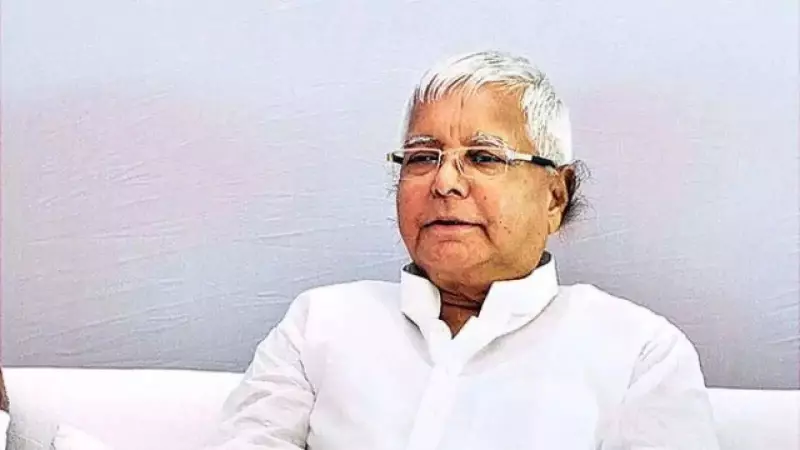
The Delhi High Court on Monday declined to put a hold on the trial proceedings against former Union Railway Minister Lalu Prasad Yadav in the high-profile IRCTC hotels scandal. The court has instead issued a formal notice to the Central Bureau of Investigation (CBI), directing the agency to submit its response.
Court's Firm Stance on Procedural Delay
Justice Swarana Kanta Sharma, presiding over the single-judge bench, made it clear that a stay on the trial would not be granted without first hearing the CBI's side of the argument. The judge pointed out the delay in approaching the higher court, remarking to Yadav's senior advocates, Kapil Sibal and Maninder Singh, "You should have come earlier; you didn't come. The trial court order was passed earlier." The bench has scheduled the next hearing for January 14, allowing time for the CBI counsel to file a detailed reply.
The Core of the IRCTC Scam Allegations
The case revolves around serious allegations of corruption during Lalu Prasad Yadav's tenure as the Railway Minister between 2004 and 2009. The CBI's chargesheet outlines a conspiracy where two prime Indian Railway hotels—BNR Hotels in Puri, Odisha, and Ranchi, Jharkhand—were first transferred to the Indian Railway Catering and Tourism Corporation (IRCTC) and then allegedly leased out in a manipulated tender process to a private Patna-based firm, Sujata Hotels Private Limited.

The trial court, which framed charges against Yadav and 13 others in October last year, had made a sharp observation. It stated that the land and share transactions appeared to be "possibly an instance of crony capitalism" disguised as private participation. The other accused include Yadav's wife and former Bihar Chief Minister Rabri Devi, and his son, former Deputy Chief Minister Tejashwi Yadav.
What Happens Next?
With the High Court's refusal to grant an immediate stay, the legal process at the trial court level continues to loom over the prominent political family. The CBI has alleged that the tender conditions were rigged and tweaked specifically to favour the private entity. All eyes are now on the agency's reply, which will be crucial in determining the future course of this politically sensitive case when the High Court reconvenes in January.