Delhi Court Grants 11-Day Police Custody in Myanmar-Linked Terror Case
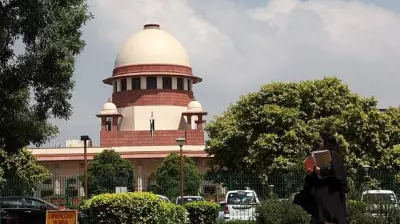
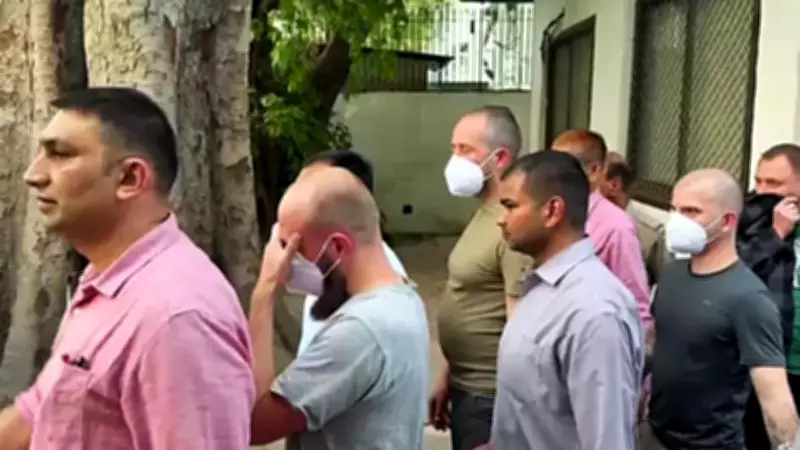
A Delhi court on Monday granted 11-day police custody to six Ukrainians and a US citizen arrested for illegally entering Myanmar via India and establishing contact with ethnic war groups. The order was passed by Additional Sessions Judge Prashant Sharma at Patiala House Courts on March 16, following a plea by the National Investigation Agency (NIA).
Arrests and Allegations
The NIA arrested three Ukrainians from Delhi, three from Lucknow, and one US citizen from Kolkata. The accused are identified as Matthew Aaron Van Dyke (US), Hurba Petro, Slyviak Taras, Ivan Sukmanovskyi, Stefankiv Marian, Honcharuk Maksim, and Kaminskyi Viktor.
According to the agency, the individuals were in direct communication with and abetted terrorists armed with AK-47 rifles. They are linked to ethnic armed groups in Myanmar and are accused of supporting certain proscribed Indian insurgent groups by:
- Supplying weapons and terrorist hardware
- Imparting training
- Assisting in drone-related operations
Route to Myanmar and Drone Consignment
As per news agency AFP, the group first illegally entered Mizoram without an official permit. From there, they allegedly crossed into neighbouring Myanmar. It is also alleged that they brought a large consignment of drones from Europe via India, though details on the type or origin of these drones remain unclear.
Background on Myanmar Conflict
Myanmar has been embroiled in civil war since a junta seized power in a 2021 coup, with pro-democracy guerrillas and ethnic-minority armed groups fighting for control. New Delhi has expressed concerns over certain Myanmar factions that share ethnicity with populations on the Indian side of the border, fearing potential spillover of violence and unrest.
Profile of Matthew Aaron Van Dyke
Matthew Aaron Van Dyke, the US citizen involved, is no stranger to controversies. An adventurer-turned-filmmaker, he has gained attention for embedding himself in conflict zones and aligning with rebel movements.
According to The Guardian, Van Dyke first came into the spotlight during the 2011 uprising in Libya, where he fought alongside anti-Gaddafi rebels. He was captured and detained for six months in Tripoli’s Abu Salim prison before escaping after the regime fell.
Van Dyke describes himself as a "freedom fighter" and documentarian. He later surfaced in Syria during the Aleppo uprising, claiming to film a documentary on rebel movements. However, he admitted to advising fighters on weaponry based on his Libyan experience, blurring lines between observer and participant.
Critics accuse him of being a reckless thrill-seeker rather than a neutral storyteller, arguing that his combat involvement undermines journalistic integrity and poses risks. Van Dyke has used social media and crowdfunding to promote projects aimed at drawing global attention to conflicts and generating support for rebel groups.
Court Observations and Order
The court noted that the FIR contains serious allegations, including travel to prohibited areas in Mizoram, illegal crossing into Myanmar, and links with ethnic armed groups and proscribed insurgent organisations. It emphasized that these aspects "definitely affect national security and interests of India" and cannot be treated as routine.
Upon reviewing the case diary, the court observed that the investigation is at a nascent stage but showing progress. While custody orders should not be passed mechanically, sufficient material exists to justify further police custody.
The court allowed the NIA’s plea, stating that custodial interrogation is necessary to:
- Unearth the larger conspiracy
- Identify accomplices
- Trace funding sources
- Analyse digital evidence, including mobile phones and social media accounts
Disclosures from initial interrogation indicate a wider conspiracy involving cross-border activities and links with insurgent groups. The court found no grounds to suspect the FIR registration or investigation process, concluding that given the gravity of allegations—especially those involving national security—continued custodial interrogation is justified, rejecting all defence objections.