
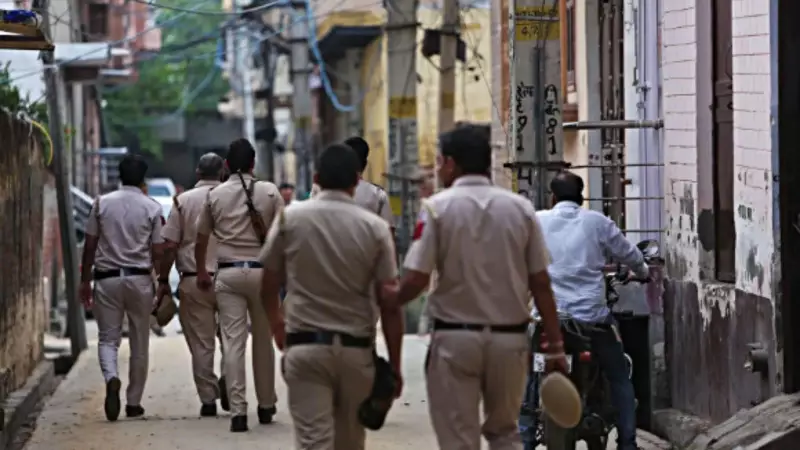
A Delhi court has acquitted three men accused of conspiring in a 2009 acid attack on a woman, delivering a scathing indictment of the police investigation which it termed "shoddy" and lacking in seriousness from the very beginning. The Rohini court's order, made public recently, highlights a series of critical lapses that ultimately led to the accused walking free due to a lack of incriminating evidence.
A 16-Year Wait Ends in Acquittal
Additional Sessions Judge Jagmohan Singh, in his order dated December 24, acquitted the three accused, noting that apart from the "strong suspicion" raised by the victim, there was no legal proof to convict them. The court expressed empathy for the victim, now 40 years old, but stated that suspicion cannot substitute for concrete evidence. The woman, reacting to the verdict last week, said, "Tears started rolling down my eyes. I told the judge I don't want your sympathy, I want justice." She called the outcome a "mockery of the justice system" after waiting for 16 years.
The case dates back to 2009 when the victim, then 23, moved to Panipat for a job as a student counsellor at a college. According to the prosecution, she faced harassment and threats from the college owner. Despite putting in her resignation, she was attacked with acid just 11 days before her last working day. The prosecution alleged that the college owner, his wife, and two students planned the attack. One accused, a juvenile at the time, was convicted in 2015.
Court Exposes Grave Investigation Lapses
Judge Singh pulled up the investigation officer (IO) for a profoundly negligent approach. "The IO was non-serious from day one," the court observed, pointing out that an 'untrace report' was initially filed in this serious acid attack case. The judge noted that for four years, the IO showed no interest in finding or arresting the culprits.
The court listed specific failures that crippled the case:
- Failure to trace acid purchase: No effort was made to examine whether the acid was bought from Chopra Chemicals, a store identified by the prosecution. The store owner, Prem Kumar Chopra, who allegedly sold the acid, died before his testimony could be recorded.
- No call record analysis: The police did not collect the call detail records (CDRs) of the accused or seize their mobile phones. This evidence could have proven the alleged conspiracy by showing communication or meetings between them.
Consequently, the court directed the Superintendent of Police, Panipat, to conduct an enquiry and "fix the responsibility of erring police officials and to take action" against them.
Court Questions Victim's Actions, Calls Relationship 'Complicated'
In its order, the court also commented on the victim's conduct, noting her alleged reluctance to leave her job despite receiving threats. The judge stated that it was "amply clear" she continued to work despite the accused's "possessive and aggressive behaviour."
The court referenced her testimony about tolerating beatings and injuries from the college owner without complaining to anyone. ASJ Singh described their relationship as "deeply emotional" and "complicated," calling it "beyond the arena of normal employer-employee relation." The court also noted that after an alleged attempt to rape in 2009, the victim had the opportunity to leave the job and Panipat but did not do so.
This ruling underscores a tragic failure of the investigative machinery, where procedural lapses over years have denied justice to an acid attack survivor, leaving her to grapple with the legal system's shortcomings after a decade-and-a-half-long battle.