CJI Surya Kant Advocates for Mediation as India's Primary Justice Delivery System
In a significant address at a State Legal Services Authority symposium held in Vijayawada on Sunday, Chief Justice of India Surya Kant declared that mediation should transcend its status as an alternative dispute resolution mechanism and become the preferred mode of delivering justice across the nation. The event, attended by judges, mediators, legal professionals, and academics, focused on reinforcing mediation's role in India's judicial framework.
Mediation Rooted in India's Civilizational Ethos
CJI Surya Kant emphasized that mediation is deeply embedded in India's historical and cultural traditions. "Justice is not always about declaring winners and losers. It is about healing differences and restoring relationships," he stated, highlighting the philosophical shift needed from adversarial litigation to collaborative resolution. He drew upon mythological references, citing Lord Krishna's role as a mediator in the Mahabharata to illustrate how dialogue has always been central to conflict resolution in Indian society.
The Chief Justice pointed to the Mediation Act, 2023 as a pivotal development, providing statutory recognition that enhances the enforceability and credibility of mediated settlements. "In a system burdened with mounting litigation, mediation offers time-bound, cost-effective, and harmonious solutions," he observed, stressing that trust in mediators and robust institutional backing from the judiciary are critical for the success of this movement.
Supreme Court Judges and Legal Leaders Echo Support
The symposium saw participation from five Supreme Court judges—J K Maheshwari, P S Narasimha, Prashant Kumar Mishra, S C Venkatanarayana Bhatti, and Joymalya Bagchi—alongside judges of the Andhra Pradesh High Court. Justice J K Maheshwari, who chairs the Supreme Court Legal Services Committee, reinforced the message by describing mediation as "consensus, not conquest," and advocated for it to be seen as the cornerstone of justice in India.
He elaborated that true justice involves more than merely declaring rights or identifying winners; it encompasses the healing of differences and preservation of relationships. Referring to Section 89 of the Civil Procedure Code alongside the Mediation Act, 2023, Justice Maheshwari noted that institutional mediation now possesses statutory strength, urging a collective shift from a litigation mindset to one that prioritizes dialogue as the initial step in dispute resolution.
Policy Push: Incentivizing Mediation for Greater Adoption
In a major policy initiative, Andhra Pradesh High Court Chief Justice Dheeraj Singh Thakur addressed practical barriers slowing the mediation movement, particularly low incentives for mediators. He proposed increasing the fee for successful mediation from Rs 3,000 to Rs 10,000 and introducing a minimum payment for unsuccessful attempts to encourage participation.
Sharing a personal anecdote from his tenure in Jammu and Kashmir, Chief Justice Thakur recounted persuading a wealthy NRI to avoid litigation against his own brother. "Even if you suffer financial loss, don't lose your brother. That is a bigger loss," he said, illustrating the emotional and relational benefits that mediation can deliver beyond mere financial outcomes.
Government Backing and Infrastructure Developments
Chief Minister N Chandrababu Naidu promptly accepted the proposal, announcing that "if disputes are resolved amicably, Rs 10,000 is not an issue." He assured a payment of Rs 10,000 for successful mediation and Rs 1,000 for unsuccessful efforts, demonstrating governmental support for enhancing mediation incentives.
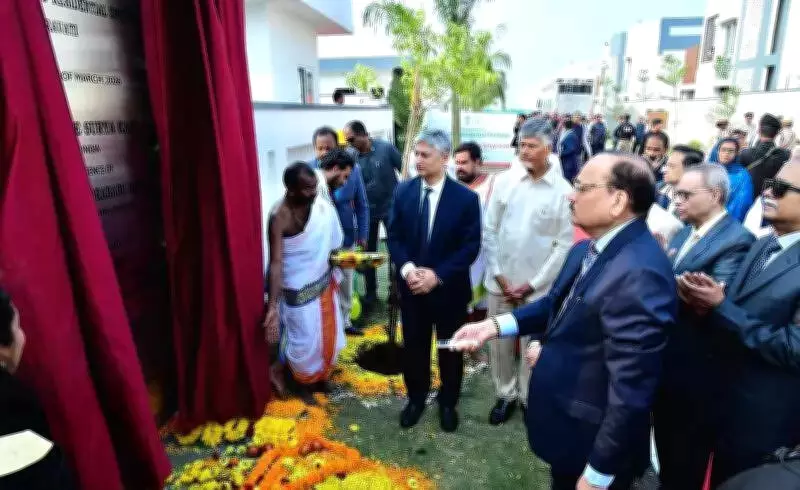
Additionally, Naidu urged CJI Surya Kant to allocate the National Judicial Academy in Amaravati, pledging to provide the necessary land for the project. Earlier in the day, the CJI laid the foundation for the Andhra Pradesh Judicial Academy and a guest house for High Court judges near the AP High Court in Amaravati, also inaugurating a judges' residential enclave to bolster judicial infrastructure.
Conclusion: A Paradigm Shift Towards Harmonious Justice
The symposium underscored a collective judicial and governmental commitment to transforming mediation from an alternative to a mainstream justice delivery mechanism. By leveraging India's civilizational heritage, statutory frameworks, and enhanced incentives, leaders aim to reduce litigation burdens and foster a more harmonious legal environment. This initiative marks a significant step towards making mediation the preferred path for dispute resolution in India, aligning with broader goals of efficiency, cost-effectiveness, and social cohesion.